
HGVs over 12 tonnes entering or operating in Greater London need a valid HGV Safety Permit. Since 28 October 2024, they need a three-star Direct Vision Standard rating or a Progressive Safe System; according to Transport for London, vehicles rated zero, one or two stars must have that system fitted to receive a new permit. Applying for a permit is free.
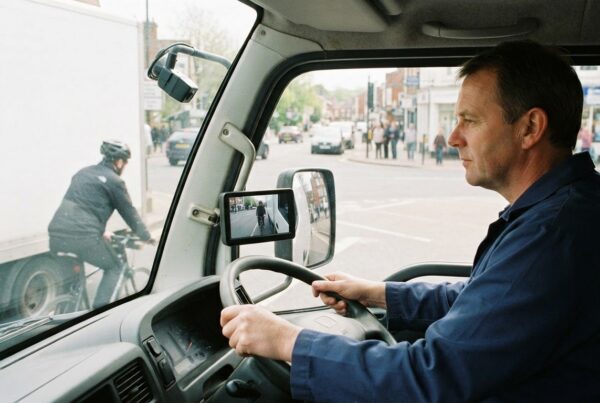
A permit requirement is only part of the picture: the rating measures how much a driver can see directly through the cab windows, without mirrors or cameras. If you manage HGVs, knowing the difference helps you identify which vehicles need safety equipment and a permit.
This guide explains why the rules apply, how direct vision standard safety permits in the UK relate to cab visibility ratings, and what low-rated vehicles need to meet the requirements. It also covers enforcement, including the penalty charge of up to £550 for operating in most of Greater London without a valid permit, according to Transport for London.
Key Takeaways
- Check each HGV’s star rating and permit status before it operates in Greater London, as low-rated vehicles have additional safety-system requirements.
- Understand what the rating measures: direct visibility from the cab, rather than what a driver can see using mirrors or cameras.
- Factor enforcement into fleet planning: according to Transport for London, operating in most of Greater London without a valid permit may lead to a penalty charge of up to £550.
- Use fleet oversight tools to keep vehicle information organised and support day-to-day compliance management.
What to do if your vehicle is 0, 1 or 2-star rated?
A low star rating affects what a vehicle needs to qualify for a new Greater London HGV Safety Permit. When managing direct vision standard safety permits in the UK, keep each vehicle’s rating, equipment and permit status distinct in your fleet records.
Understanding Direct Vision Standard star ratings
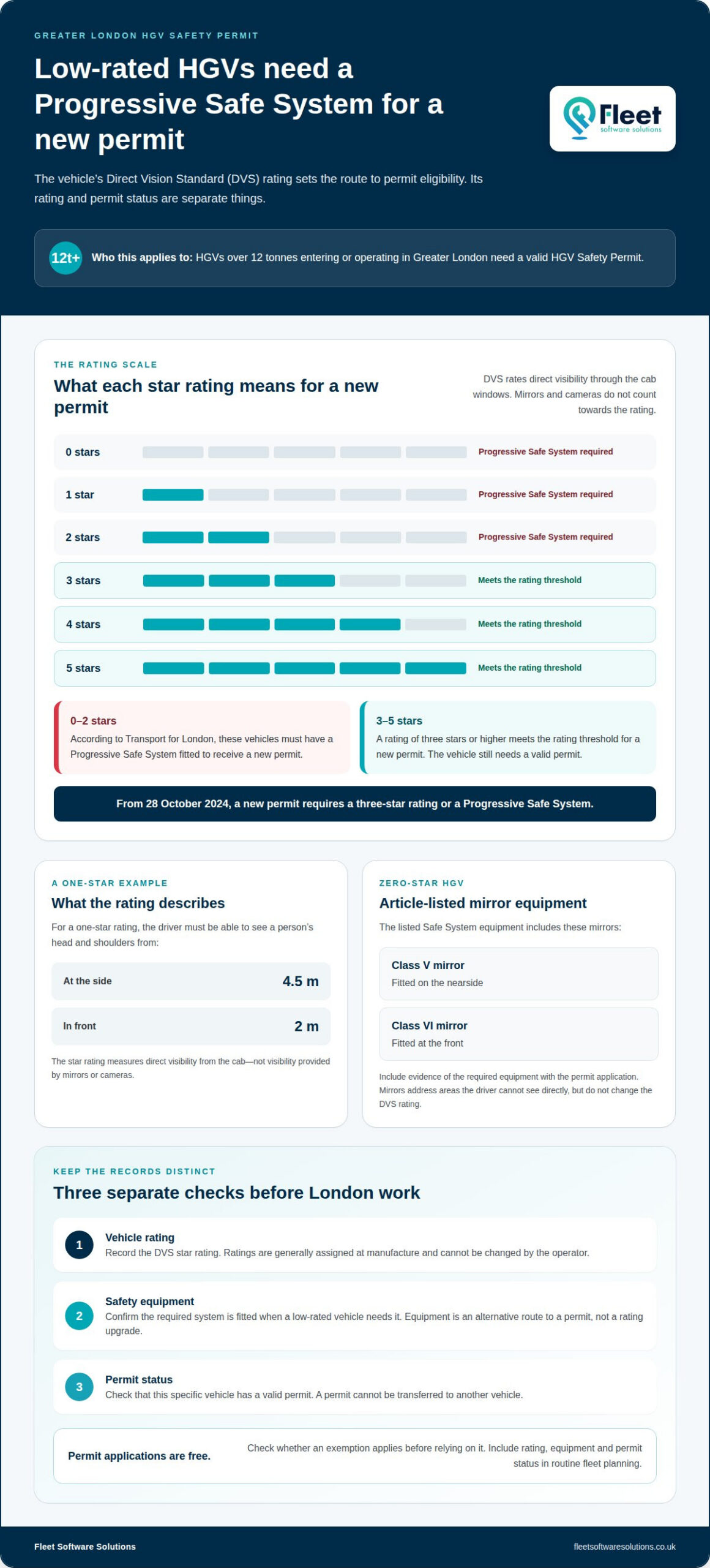
The Direct Vision Standard rates HGVs from zero to five stars according to what drivers can see directly through cab windows. Mirrors and cameras do not count towards that direct-visibility rating. A one-star rating, for example, requires the driver to see a person’s head and shoulders from 4.5m at the side and 2m in front. The star rating describes visibility, not whether a permit has been issued.
Applying for a permit by star rating
A vehicle’s rating determines whether it meets the minimum through direct vision or needs additional safety equipment. From 28 October 2024, HGVs need a three-star rating or a Progressive Safe System to receive a new permit. According to Transport for London, vehicles rated zero, one or two stars must have the Progressive Safe System fitted to receive one.
For a zero-star HGV, the listed Safe System equipment includes a Class V mirror fitted on the nearside and a Class VI mirror fitted at the front. Include evidence of the required equipment with the permit application. These mirrors help address areas the driver cannot see directly, but they do not change the vehicle’s DVS rating.
Star ratings are generally assigned at manufacture and cannot be changed by the operator. Installing equipment is therefore an alternative route to a new permit, not a way to upgrade the vehicle’s rating. This distinction helps with vehicle allocation: a lower-rated HGV needs the specified system, while a vehicle rated three stars or higher still needs a valid permit.
Before scheduling work in London, record each vehicle’s rating, equipment and permit status separately. Exempt vehicles are treated differently, so establish whether an exemption applies before relying on it. Including these checks in routine fleet planning makes direct vision standard safety permits in the UK less likely to become a last-minute dispatch issue.
Why do I need an HGV safety permit?
Greater London’s HGV Safety Permit scheme requires eligible vehicles to hold a valid permit before entering or operating in the area. The scheme aims to improve safety for vulnerable road users, including pedestrians, cyclists and motorcyclists.
Where a DVS safety permit is required
The permit requirement applies across most of Greater London, rather than only central London or selected roads. HGVs over 12 tonnes gross vehicle weight need a valid permit to enter or operate in the area, including vehicles registered outside the UK. The scheme came into effect on 1 March 2021. Transport for London’s permit scheme operates 24 hours a day, every day of the year, so plan routes and vehicle use around the full area covered, not just peak-hour journeys.
Permit costs and approval times
Applying for an HGV Safety Permit is free. Approval timing depends on the application review and the supporting information provided for the vehicle, so allow time for the process before scheduling London work. Record the permit status alongside the vehicle’s registration: a permit applies to a specific vehicle and cannot be transferred to another.
The DVS permit scheme and Euro VI requirements address different issues. DVS considers how much a driver can see directly from the cab, while Euro VI relates to vehicle emissions. Meeting one requirement does not replace the other, so treat visibility and emissions compliance as separate considerations when planning HGV operations.
Transport for London introduced the permit scheme to support measures intended to reduce risks to vulnerable road users. The reported number of serious injuries involving HGVs in London fell from 48 in 2017 to 17 in 2021. For fleet operators, the practical point is to identify which vehicles enter Greater London and ensure each has the required permit before it makes those journeys.
Organising vehicle movements and permit records together can help keep London operations visible to fleet managers. Vehicle tracking tools can support oversight of vehicle activity as part of that process.
Permit enforcement and penalty charges
Greater London’s HGV Safety Permit scheme applies to vehicles operating in most of the area. Make permit status part of vehicle allocation before a journey begins.
Permit enforcement rules
An HGV operating in most of Greater London without a valid permit may receive a penalty charge of up to £550, according to Transport for London. The scheme is enforced seven days a week, so a journey outside standard working days still requires a valid permit. Operators should match each vehicle’s registration to its permit before dispatch, rather than relying on a permit held for another vehicle.
Drivers and operators each have a practical role: operators need to maintain accurate vehicle and permit records, while drivers need to use a vehicle with the required permit. A Progressive Safe System does not replace the permit. Before sending a low-rated HGV into London, account for both its safety-system requirements and its permit status.
Penalty charges and fines
Transport for London sets the maximum penalty charge at £550 for an HGV operated in most of Greater London without a valid permit. The charge is reduced to £275 if paid within 14 days. These are penalty charges, not the cost of applying for a permit, which is free.
Record the permit expiry and registration against each vehicle, then review them before assigning London journeys. If a vehicle’s permit is missing or invalid, another HGV’s permit is not a substitute: permits cannot be transferred between vehicles or Vehicle Registration Marks. This check can catch a status problem before the driver sets off.
Keep evidence of the vehicle’s rating and any required Progressive Safe System with its permit record. This helps operators distinguish a vehicle that meets the three-star threshold from one relying on the Progressive Safe System. Both still need a valid permit: equipment alone does not authorise a vehicle to operate in Greater London.
How the Direct Vision Standard measures HGV cab visibility
The Direct Vision Standard rates HGVs from zero to five stars according to what drivers can see directly through the cab windows. It excludes views provided by mirrors and video cameras, focusing instead on the cab’s direct sightlines. This explains why fitting equipment does not change a vehicle’s star rating.
The assessment considers visibility around the cab, where a driver may need to identify a road user close to the vehicle. A one-star rating has a specific example: the driver must be able to see a person’s head and shoulders from 4.5m at the side and 2m in front. Those distances make the measure more tangible than a general description of visibility.
Treat the stars as an indication of direct vision, not a complete safety score for every journey. A vehicle’s rating is generally assigned at manufacture and cannot be changed by an operator. Adding mirrors or other equipment may support a safe system, but it does not raise the vehicle’s star rating.
This difference became operationally important in October 2024, when the minimum requirement rose to three stars for HGVs entering Greater London. Vehicles with lower ratings need the Progressive Safe System fitted to receive a new permit. The permit decision therefore combines the vehicle’s existing rating with the required safety measures, rather than treating equipment as a star-rating upgrade.
The wider purpose is protecting people outside the cab. The Mayor of London’s Vision Zero plan aims to eliminate deaths and serious injuries on London’s transport network by 2041. Better direct sightlines help explain the standard’s focus, while a compliant permit remains a separate requirement for eligible HGVs, including those over 12 tonnes.
For fleet planning, record each vehicle’s rating separately from its permit and equipment status. That makes it easier to identify which vehicles need a Progressive Safe System before allocation to London work, and to avoid confusing an installed system with permit approval. Review your fleet’s DVS compliance needs as part of that planning.
Fleet Software Solutions: Vehicle Tracking
Fleet Software Solutions offers Vehicle Tracking to help businesses oversee vehicle activity and manage fleet operations. It can support the operational side of DVS compliance by giving fleet managers a clearer view of vehicle use. Permit status and star ratings must still be managed as separate compliance records.
Consider Vehicle Tracking if your operation needs closer oversight of fleet movements, or Vehicle Cameras if cameras form part of your vehicle safety approach. Fleet Software Solutions also offers Grey Fleet Management and Mileage Capture for businesses managing these areas alongside HGV operations.
For help with fleet oversight, contact Fleet Software Solutions or visit fleetsoftwaresolutions.co.uk.
Make compliance part of everyday fleet planning
Include DVS checks in the routines you already use to allocate vehicles and plan journeys. Clear responsibility for vehicle records, equipment status and permit administration helps prevent compliance becoming a last-minute task when work in London is scheduled.
A consistent process for managing direct vision standard safety permits in the UK also helps teams make informed decisions when vehicle use changes. Keep compliance information in the fleet’s working records so journey planners can act on current, relevant details rather than assumptions.
For support with fleet oversight, contact Fleet Software Solutions today. A considered approach can help your team manage its responsibilities with greater clarity and confidence.
Frequently Asked Questions
Are any HGVs exempt?
Yes, a vehicle receiving the full 100% Showman’s discount is exempt from the Direct Vision Standard and HGV Safety Permit scheme. This is a specific exemption, not a general exception for vehicles with a low star rating or additional safety equipment. If your vehicle does not qualify for that discount, assess its rating and permit requirements before assigning it to Greater London work.
How are DVS ratings assessed?
DVS ratings run from zero to five stars and reflect the driver’s direct view through the cab windows. Mirrors and video cameras are not included in that visibility assessment. For example, the one-star threshold requires the driver to see a person’s head and shoulders from 4.5m at the side and 2m in front. The rating is generally assigned at manufacture.
How do I apply for a DVS Permit?
Apply for an HGV Safety Permit for the specific vehicle that will operate in Greater London. First establish its star rating. If it has zero, one or two stars, fit the required Progressive Safe System and provide supporting evidence with the application. Keep the permit linked to that vehicle’s registration, because it cannot be transferred to another vehicle or Vehicle Registration Mark.
How long will my DVS permit last?
Permit validity depends on the vehicle’s rating and permit route. Three-, four- and five-star HGV permits were valid for 10 years. New permits granted subject to the Progressive Safe System are valid until 28 October 2030. Keep the permit expiry or end date in the vehicle’s records, and review it before planning journeys into Greater London.
Is my Vehicle DVS Compliant?
A vehicle’s DVS position depends on its rating, required equipment and valid HGV Safety Permit. For example, a vehicle rated three stars or higher still needs a valid permit to operate in Greater London. A lower-rated HGV needs the Progressive Safe System to qualify for a new permit. Record these details against the correct registration when checking a vehicle for planned work.
What is the UK Direct Vision Standard (DVS) and which vehicles does it apply to?
The Direct Vision Standard is a cab-visibility rating scheme used for HGV access to Greater London. It applies to HGVs over 12 tonnes gross vehicle weight entering or operating in most of Greater London, including vehicles registered outside the UK. It assesses the driver’s direct view from the cab, helping distinguish visibility requirements from other vehicle obligations such as emissions standards.