
A machine can be productive on site while managers still lack the information they need to plan its next move. Heavy machinery telemetry systems collect equipment data through GPS units, onboard diagnostics or sensors, then send it over a mobile network, Wi-Fi or satellite connection to software for analysis. Construction telematics combines telecommunications and informatics, allowing authorised teams to review information such as location, operating hours and fuel consumption. The connection method depends on coverage at the site.
Telemetry can clarify where equipment is, how it is being used and when it may need attention. Its value is not simply in collecting more information, but in turning relevant readings into practical decisions about utilisation, availability and site operations.
This guide explains how telemetry moves from machine hardware to a software platform, which lifting-equipment metrics can matter, and how 4G supports real-time data transmission. You’ll also learn what affects connectivity and how to assess the hardware, software and services that make a system useful across construction operations.
Key Takeaways
- Distinguish telemetry, telematics and monitoring to understand how equipment data is collected, transmitted and used.
- Identify which lifting-equipment readings, such as boom angle and active alarms, can support safer, better-informed operations.
- Assess how GPS units, sensors, onboard diagnostics and analysis software work together to turn machine data into operational insight.
- Understand how 4G can support real-time data transmission, and why coverage at the operating site affects connectivity.
- Compare telemetry platforms by the equipment data they provide, how clearly they present it and whether it supports your operational needs.
Telemetry vs Telematics vs Monitoring: What’s the difference?
Telemetry measures data from equipment and transmits it to another system. A GPS unit, for example, can send a machine’s location to a receiver. Telematics combines telecommunications and informatics, linking data with communications and software so teams can review it. Monitoring is the ongoing process of examining readings, such as operating hours, fuel consumption or engine status, and responding to relevant changes.
A heavy equipment monitoring system brings together data collection, communication and review. On a construction machine, onboard diagnostics may supply operating information while GPS reports location. A telematics platform can transmit these readings to a cloud-based system, where managers can view reports and assess equipment use. The system is the connected setup; monitoring is how people use its information.
IoT, or the Internet of Things, describes connected devices such as sensors that collect and share machine data. In agricultural machinery, telemetry can transmit operating hours, area covered, engine temperature, fuel consumption and location to a receiver. Remote monitoring lets farm teams review these readings through an information system, with data transferred automatically using an on-site server or the cloud.
Cloud-based analytics can bring machinery readings together for comparison and reporting. For example, a manager can compare operating hours with expected use, then investigate equipment that appears underused. Maintenance teams can use operating data to identify components showing signs of wear and schedule work during quieter periods, rather than waiting for a fault to interrupt operations.
For UK projects, assess data protection requirements if telemetry records identify an operator or reveal their location and behaviour. Define why the data is collected, limit access to relevant staff, and set clear retention and security controls for those records.
In the UK, the cost depends on the project and is provided after a quote request. Key factors include the number and type of machines, hardware, installation, connectivity and software scope.
Telemetry can help teams improve utilisation, identify maintenance needs earlier and review equipment movements, supporting operational planning and safety oversight. Its return depends on whether managers use the insights to change decisions, such as reallocating underused machinery or scheduling maintenance around expected workloads.
Cybersecurity risks include unauthorised access to equipment data, exposure of operator information and disruption if connected systems are compromised. Use controlled account access, secure data handling and clear responsibility for reviewing alerts. For example, restrict access to location history to staff who need it for operational decisions.
Key telemetry metrics for lifting equipment
Useful telemetry starts with the decisions a construction team needs to make. A crane operator and a fleet manager may need different readings, so choose metrics that reflect the task, equipment and site risks. For lifting operations, data can show whether equipment is working within expected conditions and help managers investigate unusual readings before they disrupt a lift.
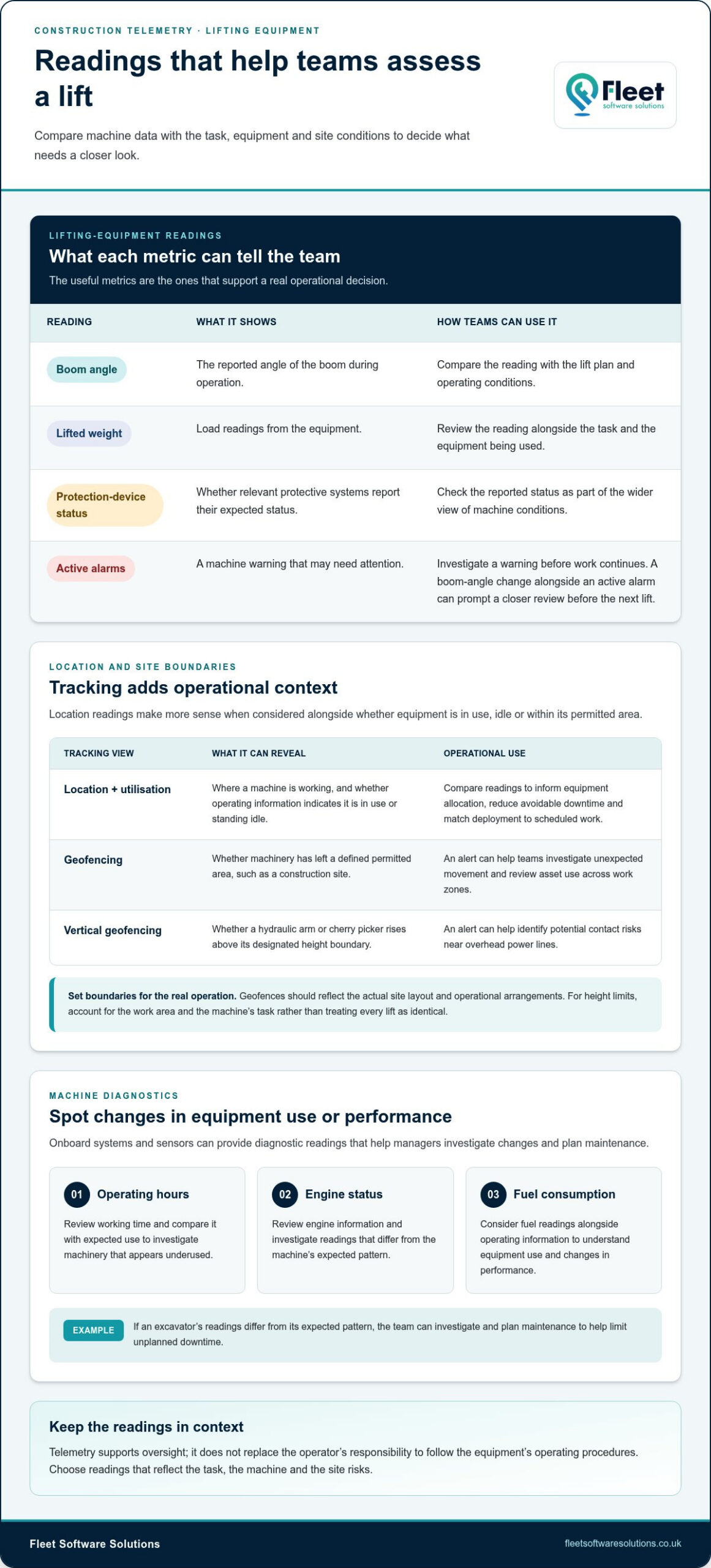
Crane and lifting-equipment telemetry can include boom angle, lifted weight, protection-device status and active alarms. These readings give teams a clearer view of the machine during operation. For example, a change in boom angle alongside an active alarm can prompt a closer review before the next lift. Telemetry supports oversight, but operators must still follow the equipment’s operating procedures.
- Boom angle: compare the reported angle with the lift plan and operating conditions.
- Lifted weight: review load readings alongside the task and equipment being used.
- Protection-device status: see whether relevant protective systems report their expected status.
- Active alarms: identify a machine warning that needs attention before work continues.
Location tracking and utilisation data support fleet management across a construction site. Location can show managers which machine is working in a particular area, while operating information indicates whether it is in use or standing idle. Comparing these readings can inform equipment allocation, reduce avoidable downtime and help teams match deployment to scheduled work.
Geofencing adds a location rule to equipment tracking. Managers can define a permitted area, such as a construction site, and receive an alert if machinery leaves it. This can help teams investigate unexpected movement and review asset use across multiple work zones. The value depends on defining boundaries that reflect the actual site layout and operational arrangements.
Vertical geofencing applies a height boundary to lifting equipment. For example, an alert can trigger when a hydraulic arm or cherry picker rises above its designated height, helping teams identify potential contact risks near overhead power lines. Set the boundary to reflect the work area and machine’s task, rather than treating every lift as identical.
Earthmoving equipment can also provide diagnostic information through onboard systems and sensors. Managers can review operating hours, engine status and fuel consumption to spot changes in use or performance. If an excavator’s readings differ from its expected pattern, the team can investigate and plan maintenance to help limit unplanned downtime.
For construction fleets that need clearer asset visibility, plant and machinery tracking can bring location information into day-to-day fleet management.
Construction telemetry hardware, software and services
A construction telemetry system links a machine, a communication connection and analysis software. A device collects equipment information, such as location or operating data, and sends it to a platform. Managers can review the information to understand machine use, plan work and identify patterns affecting operational efficiency. For example, comparing engine hours with work schedules can reveal equipment that is available but underused.
Hardware may include a GPS tracker, wireless communication device, onboard diagnostics and sensors. These components have distinct roles: GPS provides location, diagnostics expose information produced by the machine, and sensors measure selected conditions. Machines built in the last twenty years commonly use CAN bus to connect control units. J1939 and CANopen are protocols that can connect a telematics control unit to machine electronics.
Existing mobile machinery can often be retrofitted to read data already generated by onboard sensors, without altering original electronics or adding sensors. This can make telemetry practical for mixed fleets, where machines differ in age or configuration. Before installation, identify the information needed for a decision, such as machine location, operating hours or fuel consumption, and match it to an available data source.
Software turns incoming readings into information teams can use. A fleet manager might compare equipment utilisation across a site, review fuel consumption or examine idling alongside operating hours. Reports can help teams optimise routes and equipment allocation. Operator-behaviour information, such as speeding or harsh braking, can also reveal patterns for review. Alerts can flag selected events, but they are useful only when thresholds are relevant and someone is responsible for responding.
The system works best when its technology is connected to day-to-day operations. Set up devices to capture the required readings, organise equipment records in the platform and decide which roles need access. Then agree how managers will review reports and respond to alerts. For example, a plant manager could use utilisation information to reallocate an idle machine before arranging another asset for the same task.
Connectivity interruptions affect when live information reaches the platform. According to Transport Scotland, stored data is automatically retransmitted after a transmission break or equipment problem. This allows the system to preserve readings during a disruption and send them when communication resumes, helping keep records more complete. Teams should distinguish delayed updates from current readings when making time-sensitive operational decisions.
To assess whether a setup can improve efficiency, trace an operational decision from machine to report: identify the source reading, confirm how the device transmits it, and check that the software presents it clearly. This practical walkthrough shows whether the hardware, data and reporting process support the intended task.
4G networks and real-time telemetry
A 4G connection can carry machine readings from a construction site to a central database, where authorised staff view them through a web interface. The telemetry unit collects data such as engine status, then sends it over the mobile network. The platform presents the received information so managers can see equipment activity without travelling to the machine.
Telemetry can also use 5G, Wi-Fi or satellite, depending on connectivity in the operating area. For example, a machine near a site office might connect through Wi-Fi, whilst equipment further away relies on mobile coverage. The best connection depends on site conditions, data needs and the route between the machine and the platform.
How reliable is telemetry at remote UK construction and mining sites? Reliability depends on mobile coverage where the machine is working, which can vary across a large or remote site. The UK Government notes that remote sites may lack phone-line or broadband infrastructure, and mobile-network access can be patchy.
A 4G connection supports real-time transmission when equipment is within network coverage and the device can communicate with the platform. A study applied a 4G mobile data network to agricultural robot telemetry, where real-time transmission supported high bandwidth requirements. For construction equipment, the information sent and local connectivity shape how current remote readings appear.
Plan connectivity around the actual work area, not just the site entrance. Map where machines operate, identify locations with weak mobile access, and decide which readings need prompt delivery. For example, a manager reviewing an excavator’s engine status remotely needs to know whether the latest reading arrived live or after a connection interruption.
Real-time visibility can support operational decisions, while accumulated readings provide a basis for predictive maintenance. Teams can review machine operating data to identify components at risk of failure or wearing faster than expected. Scheduling work during quieter periods can help avoid interruptions during peak operating hours, provided the data is reviewed and acted on.
A comprehensive telemetry setup also needs a response process. Decide who reviews alerts, what information requires escalation and how teams record follow-up actions. For example, if a machine’s status changes during a shift, an assigned manager can assess the latest available reading and coordinate the next operational step.
Where network coverage is inconsistent, telemetry records may arrive later, affecting decisions that depend on current information. Match the connection method to the site, distinguish live readings from delayed data, and use stored operating history for analysis when a real-time view is unavailable.
How do major heavy machinery telemetry platforms compare?
Compare platforms by the decisions they support, not just by dashboard appearance. A construction fleet needs equipment data that is accessible, useful across its machines and clear enough to guide action. A platform built around one manufacturer may suit a fleet using that manufacturer’s equipment, while a mixed-fleet system may better suit operations with different machine makes.
Start with machine compatibility. Check whether the platform can bring the required readings from each machine into one view, including older equipment and newer models. For example, a contractor operating an excavator, crane and telehandler should understand what data each machine contributes, rather than assume that every asset reports identical information.
Next, compare each system’s operational focus. One may prioritise machine condition and maintenance information; another may emphasise asset location, utilisation and fleet oversight. Decide which tasks matter most. A site manager allocating equipment across projects needs clear availability information, while a maintenance team needs data that helps identify changes requiring investigation.
- Data coverage: identify the equipment and readings the platform can bring together.
- Usability: assess whether managers can find relevant information without navigating unrelated reports.
- Alerts and reporting: consider whether events and summaries support specific operational decisions.
- Connectivity: understand how the platform displays delayed readings when a machine loses its connection.
- Workflows: establish who reviews information and how findings lead to action.
Compare reporting in practical terms. Consider how the team would answer a real question, such as which machines are available for tomorrow’s work or which assets show changing utilisation. A useful platform makes relevant information clear to the people who plan work, manage equipment or organise maintenance. Clear reports help teams turn telemetry into operational decisions instead of adding another screen to check.
Consider how the platform handles a mixed equipment estate over time. A contractor may add machines, move assets between sites or change how teams use reports. Compare how equipment records, access and reporting adapt to those changes to see whether the system supports the organisation’s actual operating model.
Finally, test the decision process with a specific example. Follow one machine from its data record to the report a manager uses, then identify who acts on the result. This reveals gaps between available data and day-to-day use. A platform’s practical value depends on the complete process, not the number of dashboard features.
If asset visibility is a priority, explore equipment tracking options as part of your platform comparison.
Fleet Software Solutions: Vehicle Tracking
Fleet Software Solutions provides tracking solutions for businesses that need better oversight of vehicles and machinery. Its Vehicle Tracking and Plant & Machinery Tracking offerings help monitor asset location and support day-to-day fleet decisions and equipment allocation. Vehicle Cameras can add a visual record for vehicle operations, while Grey Fleet and Mileage Capture help organise work-related vehicle use and journeys.
These services are suited to businesses prioritising tracking of vehicles or plant, rather than detailed machine-health readings for predictive maintenance. Matching the tracking approach to the assets you manage keeps operational information relevant and easier to use.
Contact Fleet Software Solutions to discuss your tracking requirements.
Turn equipment data into a practical next step
Start by choosing the operational decision you want better information to support. It might be planning asset use, reviewing vehicle movements or organising business journeys. Set that priority first, then identify what information your team needs and who will use it. This keeps technology aligned with everyday work instead of adding data without a clear purpose.
Heavy machinery telemetry systems can inform equipment decisions, while connected fleet tools support oversight of vehicles and work-related travel. Fleet Software Solutions offers Vehicle Tracking, Vehicle Cameras and Grey Fleet, with options for these related fleet requirements.
If vehicle visibility, camera coverage or grey fleet oversight is your next priority, contact Fleet Software Solutions to discuss your requirements. A clear operational objective is a useful starting point for a focused conversation and a more considered next step.
Frequently Asked Questions
Telematics in construction equipment: How does it work?
Construction telematics collects machine information and makes it available to people managing site operations. For example, a project manager can use equipment location and operating records to check whether a machine is at the intended site. Start by identifying the decision, selecting relevant readings and ensuring the right team reviews them. This helps avoid collecting data without a clear operational purpose.
What is a Heavy Equipment Monitoring System?
A heavy equipment monitoring system combines equipment data with a process for reviewing it. A site team might use engine information to see whether a machine is active, then compare its status with the day’s work plan. Monitoring is useful when someone can interpret the information and decide what to do next. For instance, a supervisor could investigate an unexpected change before adjusting equipment allocations.
What is industrial telemetry?
Industrial telemetry measures information from equipment or processes and communicates it to another system for review. On a construction site, a machine can send operating readings to a platform that managers use away from the work area. The term describes the data-gathering and transmission process, not the decision made from it. Teams can use the information received to compare operating patterns or investigate a specific event.
What is telemetry used for on cranes and lifting equipment?
On cranes and lifting equipment, telemetry can help teams review machine and lifting-operation information. For example, a supervisor can examine boom angle, lifted weight, protection-device status and active alarms alongside the lift in progress. These readings can provide context for an operational review or help identify an alarm requiring attention. Telemetry supports oversight, while the operator continues to follow the machine’s instructions and site procedures.
What are heavy machinery telemetry systems and how do they work?
Heavy machinery telemetry systems collect equipment readings and transmit them to software for review. A machine’s onboard electronics can provide data, while a connected unit sends it onwards using an available communication route. For example, a manager could view equipment records remotely when planning work across different sites. Begin by defining what the team needs to decide, then select readings that inform that decision.
What data do heavy machinery telemetry systems collect?
The data collected depends on the machine and connected hardware. Equipment records can include location, operating hours, engine status and fuel consumption; lifting machinery may also report boom angle, lifted weight, protection-device status and alarms. For example, reviewing operating hours alongside location can help distinguish a machine working on site from one that has moved elsewhere. Available readings determine which operational questions teams can answer.
Which telemetry systems are best for construction and mining equipment?
The most suitable system provides useful information for the machines, working conditions and decisions involved. Compare whether it can capture relevant readings across your equipment, present them clearly and make them accessible to the people responsible for operations. For a mixed fleet, consider how different machine records appear together. At remote sites, include available connection methods and how staff will interpret delayed information in your assessment.
How can telemetry integrate with fleet management and maintenance software?
Telemetry can support fleet management and maintenance workflows by making equipment records available for operational review. For example, teams can use location and utilisation information when allocating assets, then use operating history to inform maintenance planning. Integration depends on how systems exchange and organise data, so map the information each team needs and the decisions it supports. Fleet Management Software can help organise relevant business fleet information alongside day-to-day processes.