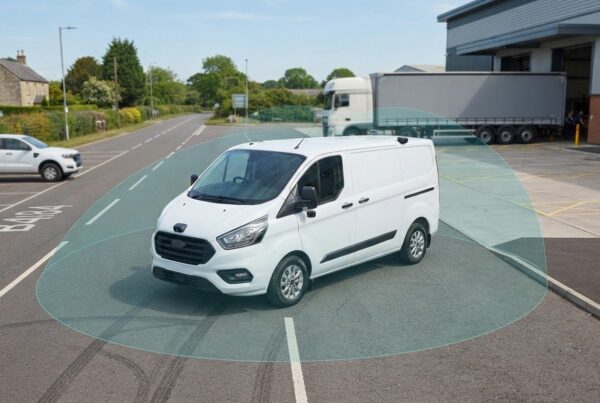

HGVs operating in Greater London need a valid safety permit, and since 28 October 2024, vehicles rated below three stars must meet Progressive Safe System requirements to qualify. The rules cover vehicles over 12 tonnes, including those travelling into London from outside the UK. Practical HGV DVS compliance solutions start with knowing each vehicle’s rating and permit position.
For fleet managers, understanding the threshold is only part of the task: vehicles, routes and safety records all need to be managed together. The Direct Vision Standard rates vehicles from zero to five stars according to the driver’s direct view, so added safety equipment does not change a vehicle’s rating.
This article explains what the legislation requires and how fleet software can help identify affected vehicles, organise London routes, manage video evidence and prepare records for TfL audits. You’ll see how these tools support day-to-day oversight, while keeping the focus on the practical steps needed to operate compliantly.
Key Takeaways
- Understand which HGVs need a Greater London safety permit and how the vehicle’s star rating affects the required safety measures.
- Use fleet software to bring vehicle ratings and London journeys into view, helping you identify where compliance needs attention.
- See how vehicle-camera footage can support incident reviews and driver coaching, alongside effective use of fitted safety equipment.
- Prepare for TfL enforcement by keeping permit and vehicle records organised and understanding how roadside checks and camera monitoring work.
What is the Direct Vision Standard Legislation?
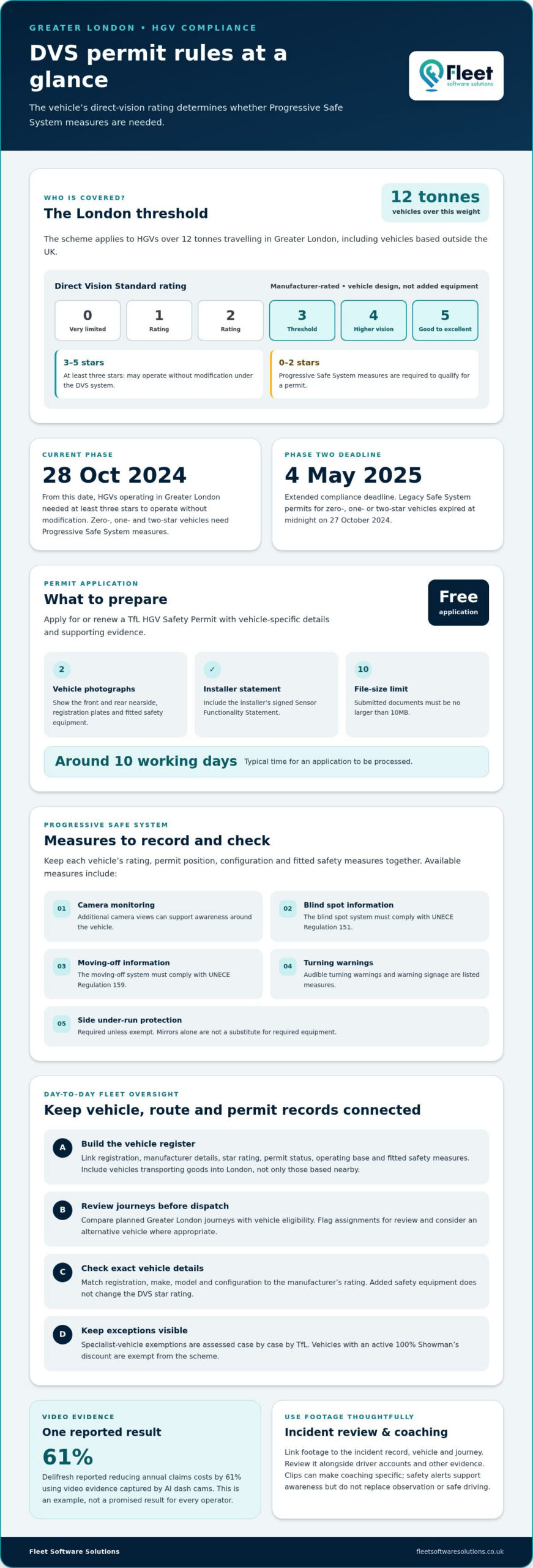
Greater London’s Direct Vision Standard (DVS) scheme sets requirements according to how much drivers can see directly from their HGV cabs. It applies to vehicles over 12 tonnes, including vehicles based outside the UK that travel into London.
Star Ratings and Direct Vision
DVS star ratings measure a vehicle’s direct vision, not the technology fitted to it. The manufacturer determines the rating, which ranges from zero to five stars: zero indicates very limited direct vision, while three to five stars represent good to excellent direct vision. This helps operators understand how vehicle design affects visibility of pedestrians and other road users.
To check a rating, use the registration to identify the exact vehicle, then obtain its DVS rating from the manufacturer’s vehicle details. Confirm that the make, model and configuration match, as the rating relates to the vehicle itself, not added safety equipment.
Rating Thresholds and Compliance Deadlines
The threshold changed between scheme phases. Under the earlier DVS phase, HGVs had to meet a minimum star-rating threshold to drive in London. From 28 October 2024, vehicles operating in Greater London needed at least three stars to operate without modification under the DVS system. Vehicles rated zero, one or two stars need Progressive Safe System measures to qualify for a permit.
The extended phase two compliance deadline was 4 May 2025; legacy Safe System permits for zero-, one- or two-star vehicles expired at midnight on 27 October 2024. Operators should therefore assess each vehicle against its current rating and permit status, rather than rely on an earlier approval.
To apply for or renew a TfL HGV Safety Permit, submit the application with two photographs showing the vehicle’s front and rear nearside, registration plates and fitted safety equipment, plus the installer’s signed Sensor Functionality Statement. The application is free and typically takes around 10 working days; submitted documents must be no larger than 10MB.
Using fleet software to identify affected vehicles and routes
Begin with a fleet register linking each HGV’s registration, manufacturer details, star rating, permit status and operating base. Include vehicles over 12 tonnes transporting goods into London, not only those based nearby. A fleet audit can flag records needing attention, such as a low-rated vehicle without an appropriate permit or safety equipment. HGV DVS compliance solutions are easier to manage when these details sit together.
Route planning adds an operational view. Compare planned journeys into Greater London with vehicle eligibility, then flag assignments for review before dispatch. This helps teams spot compliance issues in regular schedules and occasional trips, rather than discovering a problem after a vehicle enters London. Journey records also help managers review vehicle allocation and identify where an alternative vehicle may be suitable.
Customised HGVs and different body configurations need accurate records, since fitment and vehicle details affect assessment. Keep the registration, manufacturer rating and fitted safety measures together. If installation takes a vehicle out of service, schedule the work around planned maintenance or quieter periods to help limit disruption. Update the record before assigning the vehicle to a London journey.
For a newly registered HGV rated zero, one or two stars, start permit preparation early. Record the manufacturer’s rating and identify any Progressive Safe System requirements before assigning London work. An internal self-audit can reveal gaps, but it doesn’t replace the vehicle’s rating or formal permit process. HGV DVS compliance solutions should support, not substitute for, accurate vehicle records.
Available measures include camera monitoring, blind spot and moving-off information systems, audible turning warnings, warning signage and side under-run protection unless exempt. The blind spot system must comply with UNECE Regulation 151, and the moving-off system with Regulation 159. These measures support awareness of vulnerable road users; mirrors alone aren’t a substitute for required equipment.
Keep exemptions visible in the same register: specialist-vehicle exemptions are assessed case by case by TfL, while vehicles with an active 100% Showman’s discount are exempt from the scheme. A software-based record of ratings, routes and equipment can help teams organise reviews; organised fleet records make those checks easier to manage.
Video evidence, insurance claims and driver coaching
Camera footage can help an operator reconstruct an incident by showing vehicle movement and surrounding road users. For example, additional side-camera footage can provide a view beyond a forward-facing camera. When an HGV turns near cyclists, that extra perspective may help reviewers understand what happened around the vehicle instead of relying on a single forward view.
Keep footage linked to the incident record, including the vehicle, journey and relevant time. Used alongside driver accounts and other available evidence, it can support a more informed claims review and help identify patterns for coaching. Delifresh reported reducing annual claims costs by 61% using video evidence captured by AI dash cams; this is an example, not a promised result for every operator.
Footage can also make coaching specific. A manager might review a clip showing a tight turn or a late response to a cyclist, then discuss observation, speed and safe manoeuvring with the driver. Pair that review with the vehicle’s Safe System alerts, so drivers understand how blind-spot warnings and audible signals support awareness of vulnerable road users. Alerts are aids, not substitutes for observation or safe driving.
Alert quality matters. In May 2024, Transport for London identified cognitive overload from misfiring sensor alerts as a potential safety hazard. Operators should include checks that fitted equipment functions correctly and respond to recurring false alerts, rather than allowing drivers to become accustomed to warnings that do not indicate a genuine risk.
Non-compliance can carry financial consequences: the driver fine for DVS non-compliance can reach £130. DVS fines issued during the first 12 months amounted to over £48 million. Those figures underline why driver understanding, functioning safety equipment and clear records matter alongside the permit. Regular training should cover London requirements, alert interpretation and how to report equipment faults, helping drivers apply regulations consistently on every relevant journey.
TfL DVS audits and enforcement
TfL checks compliance through roadside inspections and camera monitoring, including automatic number plate recognition (ANPR). The HGV Safety Permit Scheme covers all 32 London boroughs and the City of London, and operates 24 hours every day of the year. A vehicle needs the required permit even if it is only passing through Greater London, so occasional journeys belong in compliance planning too.
Driving without a valid permit in most of Greater London may result in a penalty charge of up to £550. The charge is reduced to £275 if paid within 14 days. Since ANPR can identify vehicles by registration, a valid permit record needs to match the vehicle making the journey. After fitting required equipment, operators should register the vehicle with TfL to help prevent automatic fines.
Roadside checks can bring equipment and paperwork into focus at the same time. Keep permit details, vehicle registration and evidence of fitted safety measures together, so the operator can quickly establish which vehicle was checked and what equipment it carries. Include sensors and warning systems in routine checks: an installation record alone doesn’t show that equipment is currently functioning.
For permits issued or renewed from October 2024, HGVs covered by the original Safe System needed to upgrade to the Progressive Safe System. A useful audit record therefore connects the permit period with the vehicle’s current configuration, including relevant sensors, warning signage and other required measures. This helps identify outdated records when vehicles or equipment change.
Organise records by registration and review them against planned Greater London journeys. This gives operations teams a clear way to spot permit gaps before dispatch and retain relevant evidence for an inspection. If you need a more structured view of vehicle movements and records, explore fleet software support for day-to-day oversight.
Fleet Software Solutions: Vehicle Tracking
Fleet Software Solutions offers Vehicle Tracking, Vehicle Cameras and Fleet Management Software to support fleet oversight. For London journeys, tracking can help you review vehicle movements and identify trips for closer operational attention. Vehicle Cameras provide visual context when reviewing incidents, while Grey Fleet and Mileage Capture support other fleet administration needs.
These tools complement, rather than replace, checks of each HGV’s rating, permit status and required safety equipment. Fleet Software Solutions’ DVS compliance solutions and fleet tools can support your wider processes for overseeing vehicles and journeys.
Contact Fleet Software Solutions to discuss your fleet management requirements.
Make fleet oversight part of your next move
Make DVS responsibilities part of ordinary fleet decisions, rather than treating them as a separate exercise. When vehicles, routes and supporting records are considered together, teams can build a clearer process for allocating work, reviewing incidents and keeping operational information current. HGV DVS compliance solutions should complement these processes, while permit decisions and equipment requirements remain grounded in the applicable rules.
Fleet Software Solutions offers Vehicle Tracking, Vehicle Cameras and Grey Fleet to support different aspects of fleet oversight. These services can help you bring vehicle movement, visual records and grey fleet activity into your wider operating approach.
If you’re reviewing how to strengthen fleet oversight, contact Fleet Software Solutions to discuss your requirements. A considered approach can help your team move forward with greater clarity and a practical focus on safety.
Frequently Asked Questions
Need Support With DVS?
To discuss how Fleet Software Solutions’ DVS compliance solutions and fleet tools can support your operation, get in touch. Gather vehicle registrations, permit records and details of fitted safety equipment beforehand, so you can explain which parts of your fleet need attention. This is particularly useful when vehicles have different specifications or travel into Greater London only occasionally.
How can I prepare for the changes coming into effect on 28 October 2024?
That date has passed: phase two began on 28 October 2024, and the extended compliance deadline was 4 May 2025. For a current review, compare each HGV’s permit status, rating, equipment records and planned London journeys. Flag changed or incomplete records for follow-up, especially where a vehicle has been altered or its operating pattern has changed.
What are the DVS requirements for 2024?
From 28 October 2024, HGVs operating in Greater London needed a valid safety permit. Vehicles rated below three stars needed the Progressive Safe System to qualify for a permit, while vehicles rated three stars or higher could operate without modification under the DVS system. The phase two deadline was later extended to 4 May 2025.
What is the HGV Direct Vision Standard (DVS) and which vehicles must comply in London?
The DVS assesses how much a driver can see directly from an HGV cab, assigning a manufacturer-determined rating from zero to five stars. The scheme covers vehicles over 12 tonnes operating in Greater London, including vehicles registered outside the UK. A vehicle travelling through London still needs the required safety permit, so occasional routes also need consideration.
What are the current London DVS star-rating and Progressive Safe System requirements?
For Greater London operations, vehicles rated three stars or higher can operate without modification under the DVS system. Vehicles rated zero, one or two stars need Progressive Safe System measures to qualify for a permit. The rating reflects direct vision, not added safety technology, so fitting equipment doesn’t increase the vehicle’s star rating.
What equipment is required for a DVS Progressive Safe System, and where must it be fitted?
The Progressive Safe System includes a camera monitoring system, blind spot and moving-off information systems, audible turning warnings, warning signage and side under-run protection unless exempt. The blind spot and moving-off systems must meet UNECE Regulations 151 and 159 respectively. An extra camera monitoring system isn’t required where both information systems were fitted at manufacture under those regulations. The equipment’s positioning must support its intended monitoring and warning function.