
The best excavator tracker isn’t automatically the most advanced one. The right excavator and digger tracking devices depend on how you use the machine: a hardwired GPS unit suits regular use, while a battery-powered magnetic tracker can offer flexibility for older machinery or equipment moved between sites. Base your choice on installation compatibility and how often you need location updates.
It’s reasonable to want reliable visibility of valuable machinery without adding unnecessary complexity. This guide explains what to compare in a GPS tracker, how hardwired and magnetic options differ, and what to consider when tracking older equipment. It also covers oversight of machines moving between sites, helping you choose a setup that fits your operation.
Key Takeaways
- Use geofencing and movement alerts to spot when machinery leaves its expected work area, including outside working hours.
- Choose a tracker by weighing location updates, machine use and the level of visibility your operation needs.
- Older machinery can still be tracked; installation compatibility depends on its power supply and the tracker’s fitting requirements.
- Compare hardwired and magnetic options: one draws power from the machine, whilst the other offers a more flexible placement choice.
How else can I protect my diggers and excavators against theft?
Geofencing and movement alerts extend visibility beyond a physical site boundary. They can help managers spot unexpected movement and decide where to focus attention.
After-hours movement alerts
A geofence marks a digital boundary around a yard or job site and triggers an alert when a tracked digger crosses it. To monitor machinery after hours, review movement alerts outside normal working times. Unexpected movement, such as a machine leaving a storage yard overnight, gives managers a clear reason to investigate and prioritise site security.
Unauthorised-use alerts
An unauthorised-use alert flags movement outside a machine’s expected location or route. GPS tracking can help identify unplanned use so a manager can respond promptly. On a large project, it’s difficult to monitor every excavator manually. Compare an alert with site records to distinguish a potential concern from an approved transfer between work zones.
Site boundaries and geofence alerts
A site geofence defines where an excavator is expected to work, such as a job site or storage yard. Managers can compare alerts with the planned work area and route to identify machines that have moved beyond either boundary. This is particularly useful when assets operate across a broad project and are difficult to monitor manually. Keep boundaries aligned with changing work zones so alerts remain useful.
Theft alerts and asset recovery
A theft alert can give managers an early indication that a tracked machine has moved unexpectedly, helping them respond promptly. GPS location information may help law enforcement authorities recover a stolen excavator, but a tracker does not recover the machine itself. If an asset goes missing, report the theft to the authorities and provide its make, model and serial number. Share any available location information to support the response.
What’s the best GPS tracker for an excavator?
The best tracker matches the machine’s power supply, working pattern and required location updates. Insurance requirements and any tracking-related discount depend on the individual policy; a tracker alone guarantees neither. UK buyers can compare hardwired GPS units, battery-powered magnetic trackers and CAN bus telematics.
Equipment theft vulnerability
Heavy equipment can be vulnerable when left unattended or moved from an open construction site. Excavators on large projects may be difficult to monitor manually, so consider where each machine is stored and how it moves between jobs. This helps you prioritise assets for tracking. Excavator and digger tracking devices can provide UK operators with location information to support oversight, but they should form part of a wider site-security approach.
Excavator theft prevention and recovery
GPS telematics records machine location and can support recovery efforts if an excavator is stolen. It doesn’t physically prevent removal, so combine location monitoring with secure parking, controlled keys and an up-to-date asset register. If a machine goes missing, report the theft to the authorities and provide its make, model and serial number. Recorded location details can also support the response.
Available tracking devices
Excavator and digger tracking devices include hardwired GPS trackers, battery-powered magnetic units and CAN bus telematics devices. A hardwired unit draws power from the machine, while a magnetic tracker can suit equipment that needs flexible fitting. CAN bus telematics can provide machine data alongside location. Compare the power source, reporting frequency and information available through the platform, then match them to the way the excavator is used.
Physical security measures add another layer: secure attachments separately, record their identifying details and include machinery in site handovers. These steps help teams account for equipment and respond promptly when an asset’s whereabouts are unclear.
GPS tracker installation and compatibility with older machinery
Older excavators can use wired or battery-powered trackers, so age alone doesn’t rule out tracking. Installation depends on the available power, the tracker’s connection method and its access to a GPS signal.
Installation location and concealment
Choose a position that protects the tracker without blocking its signal or access for maintenance. A unit inside the cabin or engine compartment may need an external antenna for a clear satellite signal. On older machinery, inspect available space and power before choosing a wired device. Concealment can make removal less obvious, but shouldn’t compromise safe access or servicing.
For hired or leased machinery, such as units sourced from Ayr Tracked Plant & Equipment Hire, agree on installation with the owner and follow the hire or lease terms. An undisclosed fitting could lead to disputes about alterations, damage or removal when the machine is returned. Record the device’s location and include its removal in the return process. This keeps tracking arrangements clear and helps protect the machinery’s condition.
Activation, SIM cards and subscriptions
A tracker that sends location data over a mobile network needs a SIM or embedded SIM and an active service plan. A unit that only stores records locally won’t provide live remote positions. Check how the device communicates before installation, as network coverage and reporting requirements affect its ability to monitor movement at a work site.
Installation usually involves securing the unit and connecting power where required, then activating it in its tracking platform. Wired trackers can use the machine’s electrical supply; installers need to account for older machines’ systems, including 12- or 24-volt setups. The activation process uses the device’s IMEI number, which has 10 or more digits.
GPS activation can take 30 minutes to a few hours, depending on the weather. Allow time to confirm the device reports a location before relying on it to monitor a stolen machine, operating hours or productivity. Where a tracker sits inside an engine compartment, an external antenna can help it receive satellite signals.
Older machinery can still use wired or battery-powered tracking devices. Match the installation to the machine’s power supply and the information you need, such as location or engine hours. A suitable setup helps managers monitor movement and use without assuming every excavator has modern onboard electronics.
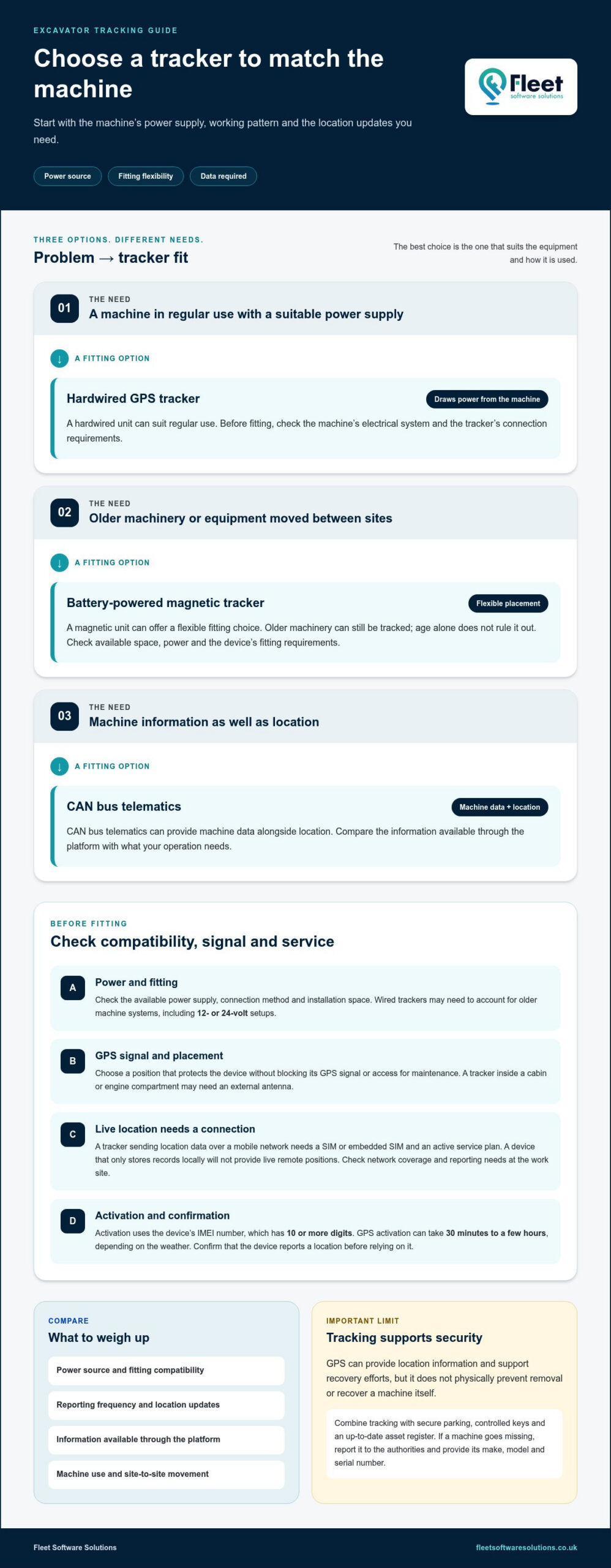
Hardwired GPS trackers and battery-powered magnetic trackers
Hardwired trackers draw power from the excavator, while magnetic trackers use their own battery and attach without permanent wiring. The right option depends on how regularly the machine operates, whether installation is practical and how often the tracker needs to report.
A hardwired installation typically uses 3 wires for power, ground and ignition sensing. The machine’s battery can keep the tracker operational while that battery is working, making this option suited to equipment used routinely. A battery-powered magnetic unit avoids connecting to the excavator’s electrical system, which can be useful for older machinery or assets moved between sites. Its battery life depends on the device and GPS ping rate.
Wiring needs to match the machine, not just the tracker. Older excavators may use 12- or 24-volt systems, so identify the correct power, ground and ignition connections before installation. A fuse box can provide a power source where the device and machine setup allow it. One installation example protects the tracker’s power wire with a 5-amp fuse; that is an example, not a universal specification.
Starter-wire connections and immobiliser relays require particular care. An example excavator installation cuts the starter wire about 4 to 6 inches back from the fuse box, while the relay must match the machine’s 12- or 24-volt system. This is not a general wiring instruction: incorrect connections can affect starting or damage machinery. Use a qualified installer familiar with the excavator’s electrical system.
A separate battery-powered tracker can provide another option if a hardwired unit loses its power source. It still relies on its own battery, and reporting frequency affects battery life. Compare how each device sends data to its platform, then weigh installation needs against operating patterns, site boundaries and the need for continuity during breakdowns or when the machine is switched off.
For tracking options suited to working machinery, explore plant and machinery tracking and consider which setup supports your operational efficiency.
Fleet Software Solutions: Vehicle Tracking
Fleet Software Solutions provides Vehicle Tracking to help businesses oversee vehicle movements and manage fleet information. For excavators and other working machinery, Plant & Machinery Tracking is the relevant option for clearer visibility of asset locations across sites.
Consider tracking when equipment moves between jobs, is difficult to monitor manually or needs to be managed alongside road vehicles. Adding location oversight to fleet operations can help managers make informed decisions about asset locations and deployment, without treating GPS tracking as a substitute for practical site security.
Contact Fleet Software Solutions to discuss tracking for your vehicles or machinery.
Make tracking part of your next fleet decision
Choosing excavator and digger tracking devices is an operational decision, not just a hardware choice. Consider how machinery is assigned, moved between sites and accounted for alongside the rest of your fleet. A consistent approach to asset oversight can support clearer deployment decisions as projects and equipment needs change.
Fleet Software Solutions offers Plant & Machinery Tracking alongside Vehicle Tracking, Vehicle Cameras and Grey Fleet Management. These solutions can help businesses review how they oversee machinery and vehicles across their operations. The right focus depends on the assets and management needs involved.
For a practical next step, outline which machines you need to track and what information would support your day-to-day decisions. Then contact Fleet Software Solutions to discuss tracking for your operation. A considered setup can help you move forward with greater clarity.
Frequently Asked Questions
Are GPS trackers durable enough for harsh construction environments?
A GPS tracker can suit construction use when its design and installation match the machine’s working conditions. Check the manufacturer’s stated environmental limits, casing and mounting requirements before selecting a unit. Dust, vibration, water exposure, heat and impact can affect different parts of a machine in different ways. Include the tracker and its wiring in routine equipment inspections, checking for loose fittings, damaged casing or cable wear.
How can GPS tracking systems integrate with other software used in construction businesses?
Tracking data can connect with construction software through supported integrations, data exports or shared dashboards. Consistent asset identifiers, for example, can help teams match tracker records with equipment registers or job schedules. Useful connections depend on what the tracking platform and existing systems can exchange. Agree a clear process for updating records so location information and project assignments stay aligned.
How do I stop excavators going walkabout?
Combine location monitoring with clear site routines: an alert identifies unexpected movement but doesn’t physically prevent it. Set digital boundaries around the site and storage yard, and make the approval process for transfers between work areas clear to operators. Record a machine’s new assignment when it moves to another project. Secure keys and include parked excavators in shift handovers so unexplained movements are easier to spot.
How do GPS trackers for excavators and diggers work?
A GPS tracker receives satellite signals to establish the machine’s position, then sends location data to a platform through its communication connection. Managers can view reported positions and movement history; update frequency affects how current the displayed location is. A tracker powered by the excavator draws on its electrical system, while a self-powered unit uses its own battery. Remote locations can affect how quickly data reaches the platform.
Can excavator tracking devices provide geofencing, movement alerts and immobilisation?
Geofencing and movement alerts may be available, but immobilisation is a separate capability and isn’t automatic with every tracker. A geofence can flag when a machine crosses a defined boundary, while movement alerts identify activity that needs attention. Immobilisation requires compatible connections to the machine’s electrical or starting system. Treat alerts as information for a response, and ensure any intervention is appropriate for the machine and its authorised operators.
What are the best trackers for preventing excavator and digger theft in the UK?
The best choice suits the machine’s power access, site use and response plan. A hardwired tracker can suit regularly used machinery with accessible power; a battery-powered unit can suit equipment that needs flexible fitting. Compare reporting frequency, location visibility, alert options and installation requirements. Pair tracking with secure parking, controlled keys and an accurate equipment register: a tracker supports theft response but doesn’t physically prevent removal.