
A trailer can be carrying a high-value load, waiting at a customer site or sitting in an unsecured yard without the transport office knowing its precise location. That gap creates avoidable cost and risk. Tracking trailers on telematics gives fleet operators a live, reliable view of each asset, so decisions are based on evidence rather than driver calls, paper records and assumptions.
For businesses operating articulated vehicles, plant trailers, specialist equipment carriers or large numbers of unpowered assets, trailer tracking is not simply an extra map pin. Used properly, it supports better asset utilisation, more accurate customer updates, stronger security and faster action when something goes wrong.
Why trailer visibility is harder than vehicle tracking
A powered vehicle is usually straightforward to track. It has an electrical supply, predictable daily use and a driver attached to it. Trailers are different. They may be dropped for days, exchanged between depots, subcontracted, parked at customer premises or disconnected from their usual tractor unit.
This is where manual asset registers tend to break down. A fleet may know how many trailers it owns, but not which are available, where they are, whether they have been stationary too long or whether they have left an approved location. The result can be unnecessary trailer hire, missed collections, delayed maintenance and difficult conversations with customers.
Telematics provides a current position and a history of movement. More importantly, it can turn that information into an operational prompt. A trailer that leaves a depot outside working hours, remains at a delivery site beyond an agreed period or moves without authorisation can trigger an alert to the right person.
Tracking trailers on telematics: what the system should deliver
The right solution starts with the operational question, not the device. A distribution fleet focused on reducing detention time needs different reporting from a contractor protecting plant trailers on remote sites.
At a practical level, a trailer telematics platform should show live and historic location, journey activity, dwell time and geofence events. It should also make it easy to identify the trailer, rather than leaving a controller to match an unclear device name against a separate spreadsheet.
Battery-powered GPS units are often suitable for unpowered trailers because they can report location without relying on a permanent vehicle supply. Reporting frequency can be configured around the asset’s risk and usage profile. A high-risk trailer carrying valuable equipment may justify frequent position updates, while a low-use site trailer may be better served by scheduled reporting that protects battery life.
The trade-off matters. More frequent reporting gives greater visibility, but may increase data use and reduce the interval between battery replacements or recharging. A consultative deployment should balance security, budget and maintenance requirements rather than applying the same setting to every asset.
Geofences turn location data into action
A geofence is a virtual boundary around a depot, customer location, construction site or authorised parking area. When a tracked trailer enters or leaves that boundary, the system can record the event and notify the relevant team.
For example, a transport manager can receive an alert when a trailer has remained at a customer site for more than 48 hours. The customer service team can then chase the return before the asset becomes unavailable for the next job. Equally, an out-of-hours exit from a secure yard can be escalated immediately, giving the business useful information to support recovery and insurance procedures.
The value comes from sensible configuration. Too many alerts quickly become background noise. Alerts should be assigned to genuine exceptions, with named recipients and a clear response process.
Better utilisation without more administration
Many fleets purchase or hire additional trailers because availability is unclear. A trailer may be assumed to be in use when it is actually empty at a customer site, or believed to be missing when it is parked at another depot. Live asset visibility exposes these blind spots.
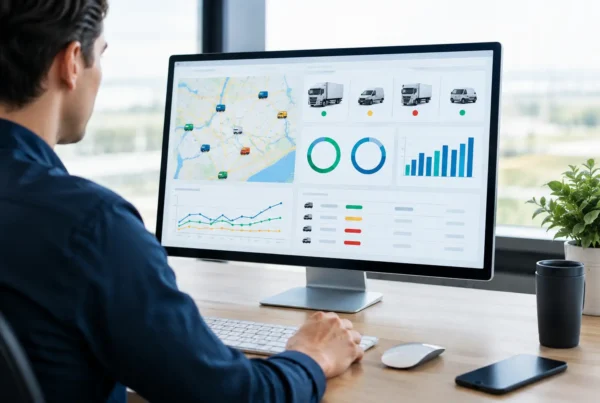
A dashboard can show which trailers are moving, which are idle and which have been at a location beyond a set threshold. This helps transport planners allocate available assets with confidence and challenge long dwell times before they affect service delivery.
It also improves handovers between shifts and sites. Instead of relying on a chain of calls, planners can confirm an asset’s location on a shared platform. For multi-site operations, that saves time and reduces the likelihood of sending a driver to collect a trailer that is no longer there.
There is a commercial benefit too. Better utilisation can reduce short-notice hire, prevent duplicate asset purchases and support more accurate capacity planning. The return is often found in small daily decisions that become significant across a fleet over a year.
Protecting trailers, loads and insurance positions
Trailer theft is disruptive even when the asset is recovered. It can delay customer deliveries, create replacement costs and put pressure on insurance renewals. A tracking device will not prevent theft on its own, but it can shorten the time between an incident and a meaningful response.
When a trailer is reported missing, the operations team can provide a last known location, movement history and current position where available. This gives police, recovery partners and insurers a clearer starting point than a manual description of where the asset was thought to be parked.
Tracking data can also help establish whether a trailer entered a restricted area, left a site at an unexpected time or was moved after a driver had completed a handover. That evidence may be valuable when investigating disputes, damage or unauthorised use.
Security should not rely on telematics alone. Physical measures such as couplings locks, wheel clamps, secure parking policies and controlled key access remain essential. The strongest approach combines physical security, clear procedures and visibility from the tracking platform.
Connecting trailer data to day-to-day transport planning
Trailer tracking works best when it is viewed alongside vehicle activity. If the platform can show tractor and trailer positions together, transport teams can make faster decisions about collections, swaps and vehicle allocation.
The connection method depends on the fleet. Some operations need a simple process for recording trailer-to-tractor pairings. Others may benefit from automated identification where the operating environment and equipment support it. Neither option is universally right. The priority is accurate data that fits the way drivers and planners already work.
This is also where tailored dashboards and reporting make a difference. A transport manager may need a daily exception report for trailers left at customer sites. A finance director may want utilisation figures to support a hire-versus-buy decision. A security lead may need a report of all out-of-hours movements. One set of data can answer all three questions when it is configured around the business.
Choosing a trailer tracking solution
Before selecting hardware, define what success looks like. Is the immediate issue theft exposure, poor visibility of trailer location, customer-site dwell time, maintenance control or a combination of these? The answer affects device type, reporting frequency, alert rules and installation approach.
Consider the trailer environment as well. Equipment exposed to harsh weather, vibration or remote operating conditions needs suitable hardware and a realistic plan for maintaining the device. Coverage should be considered across the actual areas where assets operate, not just around the main depot.
It is also worth checking how easily the system can sit alongside existing vehicle tracking, cameras and reporting tools. Separate platforms can create more administration and leave teams comparing conflicting records. A device-agnostic platform gives operators more choice in hardware while keeping their asset data in one operational view.
Fleet Software Solutions approaches trailer tracking as part of a wider fleet control strategy. The aim is to match the device, reporting and alert configuration to the risk and commercial priorities of the operation, then help the team turn the resulting information into action.
Make the data part of the process
The most successful deployments do not stop once devices are fitted. They establish simple routines: review exceptions each morning, investigate long dwell times, validate trailer movements against the plan and use monthly reports to identify persistent issues.
Drivers and planners should understand why the system is in place. When trailer tracking is positioned as a way to reduce wasted journeys, protect assets and improve customer communication, it is far more likely to be used constructively.
A trailer is only earning when it is available, safe and where the operation needs it. Telematics gives fleet teams the evidence to keep it that way.