
What can a vehicle tracker contribute to safer fleet driving without turning every journey into a test of trust? For fleet managers, knowing where vehicles are can improve visibility, but a location record alone can’t show whether a driver was distracted, fatigued or driving safely. It’s useful context, not the whole picture.
That distinction matters when balancing oversight with employee privacy. Explain what information is collected, why it’s used and who can access it. Clear expectations help keep monitoring proportionate and reduce the risk of undermining trust.
This article covers seven practical ways vehicle tracking can contribute to fleet safety, from improving journey visibility to helping teams respond to operational concerns. It also explains what tracking data can’t establish, how to use it responsibly and when vehicle cameras or lone-worker protection may complement it. The aim is to turn location data into informed action, not treat it as a verdict on a driver.
Key Takeaways
- Use a vehicle tracker to improve visibility of fleet journeys, while recognising that location data alone can’t confirm how safely someone is driving.
- Set clear, proportionate expectations for what tracking data is used for, who can access it and how it informs decisions.
- Review routes in context when a concern is raised, and consider training or procedure changes if a genuine pattern emerges.
- Include location information in dispatch decisions and wider processes for supporting mobile workers where it is relevant.
- Consider how vehicle tracking, fleet software, cameras and lone-worker protection can complement one another in a wider safety approach.
What a vehicle tracker can, and cannot, do for fleet safety
Fleet managers can’t directly observe every vehicle or journey, particularly when employees work across different locations. A business vehicle tracker provides information about a vehicle’s location, giving managers an additional view of fleet activity while drivers are on the road.
This differs from a consumer anti-theft tracker, which is generally used to help locate an individual vehicle, and from a public tracking app, which may show a shared location for personal or navigational purposes. Business fleet tracking supports operational needs: it can help a team understand where vehicles are and consider that information alongside work requirements and safety procedures. A vehicle tracking system can include different components and applications, so its purpose depends on how an organisation uses it.
How does a vehicle tracker support a fleet manager?
Location visibility can help a manager understand where fleet vehicles are during the working day. If a driver reports an unexpected delay or a concern arises about a journey, current or recent location information may help establish context and inform the next step. Its value is in supporting a timely, considered decision, not guaranteeing that an incident will be prevented.
Tracking information is most useful when its purpose and limits are clear. Managers should understand what location data is collected, who can access it and how it supports operational needs. Explain these points to employees so they know tracking is a tool for fleet oversight, not a complete account of their performance or conduct.
What a location tracker does not measure by itself
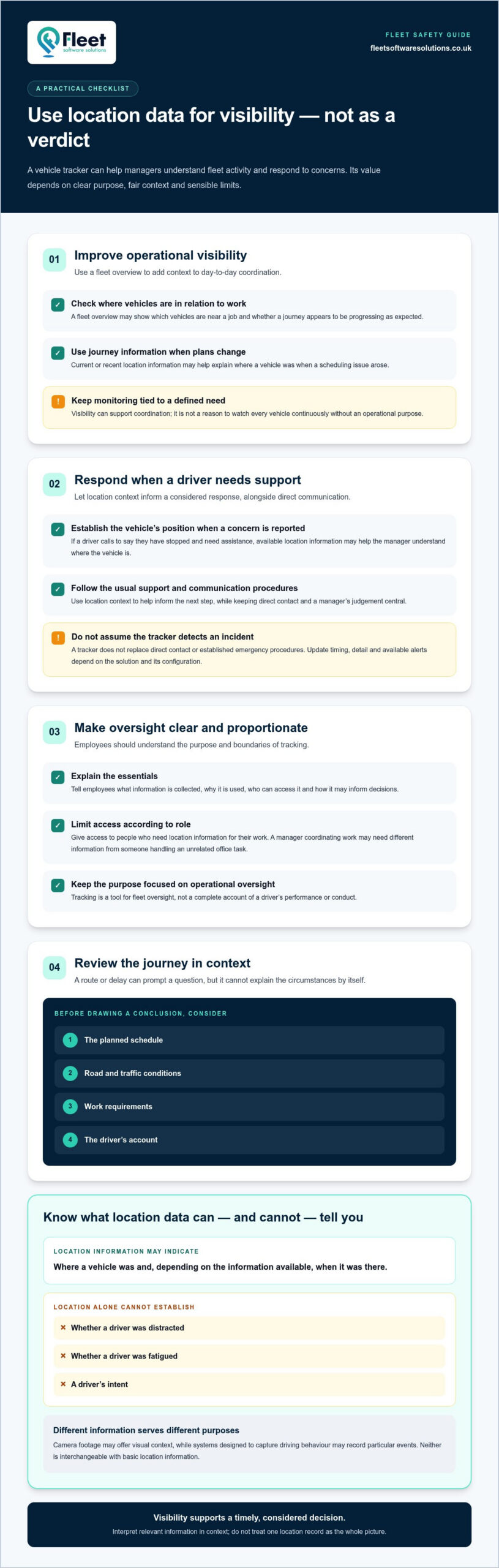
A location record can indicate where a vehicle was and, depending on the information available, when it was there. On its own, it can’t establish whether a driver was distracted, fatigued or acting with a particular intent. A vehicle’s position or route may prompt a question, but it doesn’t explain the circumstances behind the journey.
Camera footage and driving-behaviour data provide different kinds of information. Footage may offer visual context, while systems designed to capture driving behaviour may record particular events. Neither is interchangeable with basic location information. Interpret any data in context rather than treating one point as a complete account.
For a broader explanation of business use and how tracking fits into fleet operations, read the business vehicle tracking guide. The key distinction is simple: tracking can improve visibility, but safer fleet driving depends on how relevant information is interpreted and acted on.
1-2. Use a vehicle tracker for visibility and timely safety responses
Location visibility can help fleet managers coordinate vehicles without needing to monitor every journey continuously. With a clear operational purpose, it gives managers another source of context when plans change or a driver raises a concern. The useful question is not only where each vehicle is, but whether that information helps the team make an appropriate decision.
1. Improve operational visibility without assuming constant surveillance
A fleet overview may help managers see which vehicles are near a job, whether a journey appears to be progressing as expected, or where a vehicle was when a scheduling issue arose. This can support coordination, but it isn’t a reason to watch every vehicle in real time without a defined need.
Set out the business purpose for using location information and restrict access to people who need it for their role. A manager coordinating work may need different information from someone handling an unrelated office task. Clear access boundaries keep tracking focused on operational oversight rather than intrusive monitoring.
2. Respond more effectively when a driver needs support
If a driver reports a problem, location context may help a manager understand where the vehicle is and coordinate an appropriate response. For example, if a driver calls to say they’ve had to stop and need assistance, the manager could use available location information to establish the vehicle’s position while following the organisation’s usual communication and support procedures.
A tracker doesn’t replace direct contact, established emergency procedures or a manager’s judgement. Fleets shouldn’t assume every solution detects an incident or sends a particular alert. The timing and detail of updates, and any alerts available, depend on the tracking solution and its configuration. Make sure the team knows what information is available and what action to take when a driver reports a concern.
For UK fleets, tracking should form part of a clear, well-communicated approach to operational oversight. Explain why location information is used, who can access it and how it may inform a response, so employees understand the purpose and boundaries of monitoring.
For a practical overview of how business tracking can fit into fleet operations, explore business vehicle tracking solutions. With clear processes, a vehicle tracker can support a timely response while keeping communication and sound judgement central to driver support.
3-4. Turn vehicle tracker information into safer journeys and fairer oversight
Location information is most useful as context for a review, not as a verdict. Journey records may help explain a reported delay or flag a route for discussion, but a fair review also considers the planned schedule, road and traffic conditions, work requirements and the driver’s account.
3. Review journey context before drawing conclusions
Suppose a journey took longer than expected. A location record may show where the vehicle stopped or which route it followed, but not whether roadworks, a diversion, a customer request or another circumstance affected the trip. Discussing the record with the driver before reaching a conclusion helps keep the review fair and relevant.
A recorded location shows where a vehicle was, not proof that its driver acted unsafely.
Location-only tracking is also different from other forms of monitoring. Depending on the solution and its configuration, driving-behaviour data may record particular events, while vehicle camera footage may provide visual context. These sources can offer different evidence, but no single data point should automatically be treated as a complete account of a journey.
4. Make monitoring transparent and proportionate
Employees are more likely to understand tracking when the organisation explains what information it collects, why it uses it and which roles can access it. Keep access relevant to a stated business purpose, and don’t review information simply because it is available. If a genuine pattern emerges, consider relevant evidence alongside the driver’s explanation to decide whether training, clearer procedures or another practical response is appropriate.
Monitoring can feel intrusive when its purpose and boundaries are unclear. A transparent process helps distinguish fleet oversight from unnecessary scrutiny, while consistent decisions support trust. Before introducing or changing monitoring practices, arrange a current legal review of how they relate to applicable UK GDPR and Data Protection Act requirements. This section isn’t legal advice, and requirements should be considered in the context of the organisation’s specific use.
Where location data alone can’t resolve a concern, camera footage may offer a different kind of context. The fleet camera systems guide explains how cameras can complement tracking within a wider fleet safety approach. Choose information that helps answer a defined question, then use it carefully and consistently.
5-6. Put vehicle tracker insights into a practical fleet safety process
Location information can help managers make considered decisions when work plans change. If a job is delayed, a vehicle needs to be reassigned or a driver reports a concern, relevant location context may help the team weigh practical options, such as whether another vehicle is better placed to take on a task. Consider it alongside the driver’s circumstances, work demands and established safety procedures, rather than letting it dictate the decision.
5. Use vehicle visibility to support safer operational decisions
Build tracking into a simple, consistent process so employees and managers know how information is handled:
- Define the purpose: identify the operational or safety need the information will support.
- Explain the monitoring: tell employees what information is used and why.
- Assign access: limit access to people who need it for their role.
- Review relevant information: consider it in context, rather than drawing conclusions from an isolated record.
- Document action: record the reason for a decision and any follow-up, such as a procedure review or training discussion.
A defined safety purpose helps keep location-data use relevant and proportionate. The appropriate level of detail and access depends on the organisation’s needs and the tracking solution in use. Location visibility doesn’t replace driver communication, training or suitable risk assessments. Nor should fleets assume it will automatically change driving behaviour or prevent incidents.
6. Include mobile-worker support in the wider safety plan
For employees working away from a fixed base, vehicle location may offer useful context if they report a problem or need support. It can help a manager understand where the vehicle is, but it doesn’t establish the person’s condition or replace direct communication and agreed response procedures.
Vehicle tracking and dedicated lone-worker protection serve different purposes. Tracking provides information about a vehicle; a lone-worker process should address how an employee raises a concern and how the organisation responds. Consider the work being carried out, the risks involved and the support arrangements needed, then use location information as one relevant part of that wider plan. The fleet lone-worker protection guide explores this complementary approach.
Fleet Software Solutions provides business vehicle tracking, fleet management software and lone-worker protection to support organisations shaping their fleet processes. Explore fleet management solutions to consider how these tools could fit your approach to operational oversight and worker support.
7. Choose a business vehicle tracker as part of joined-up fleet safety
Tracking can contribute to fleet safety in several practical ways: helping managers see where vehicles are, providing context when a driver reports a concern, supporting journey reviews, highlighting patterns for discussion, informing training or procedure changes, assisting dispatch decisions and adding vehicle-location context when supporting mobile workers. These are potential uses, not guaranteed outcomes. A vehicle tracker is one part of safety management, alongside communication, training and appropriate risk assessments.
How to assess whether vehicle tracking fits your safety needs
Start with how your vehicles are used, which safety processes are already in place and what information managers need to make decisions. Separate the need for vehicle-location visibility from any need for camera footage or driving-behaviour information. These are different types of data, and capabilities vary. Then decide how you’ll explain the purpose of tracking, who needs access and how information will be used, so expectations are clear before monitoring begins.
Focus your assessment on the questions your organisation needs to answer, rather than collecting information without a defined purpose. Location data may help with operational oversight, while a separate tool or process may be needed to investigate a specific driving concern. Keeping these roles distinct helps make decisions more relevant and monitoring more proportionate.
How Fleet Software Solutions can support business fleet oversight
Fleet Software Solutions provides business vehicle tracking and fleet management software to support fleet oversight. Vehicle cameras and lone-worker protection can complement these tools, with each addressing different organisational needs. Consider them alongside existing safety procedures, without treating technology as a replacement for sound management or direct communication with drivers.
There isn’t one approach that suits every fleet. The right combination depends on how vehicles are used, what managers need to understand and how the organisation will act on relevant information. Clear purposes and proportionate access help make tracking a considered part of day-to-day fleet management, rather than simply a record of journeys.
If you’re reviewing how tracking could fit your organisation’s needs, make a vehicle tracking enquiry to explore business fleet tracking solutions from Fleet Software Solutions.
Make fleet safety oversight purposeful
A vehicle tracker can give managers useful visibility of fleet journeys and help inform timely, proportionate decisions. But location data alone can’t establish whether driving was safe, explain every delay or replace direct communication, training and established safety processes.
A joined-up approach starts with clear communication: explain why information is collected, limit access to those who need it and review journey context fairly. If location data doesn’t answer a safety question, consider whether another tool or process is more appropriate.
Fleet Software Solutions provides vehicle tracking for business fleets, alongside fleet management software, vehicle cameras and lone-worker protection. These can complement one another in fleet oversight, guided by your organisation’s needs and existing procedures.
Ready to explore a practical approach for your fleet? Explore business vehicle tracking solutions from Fleet Software Solutions and take the next step towards clearer, more considered oversight.
Frequently Asked Questions
What does a vehicle tracker do in a business fleet?
A vehicle tracker provides information about a vehicle’s location, helping a business understand where fleet vehicles are during work journeys. Managers may use this context to coordinate vehicles, review a reported delay or consider how to respond when a driver raises a concern. It doesn’t explain everything about a journey, so consider it alongside operational needs, communication with the driver and the organisation’s safety procedures.
Can a vehicle tracker improve driver safety?
A vehicle tracker can support fleet safety by giving managers location context that may inform decisions and responses. If a driver reports a problem, knowing where the vehicle is may help the manager consider what support is appropriate. Tracking doesn’t prevent incidents or prove that someone is driving safely. Its contribution depends on responsible use, clear procedures and how relevant information is interpreted and acted on.
Does a vehicle tracker record how someone is driving?
Basic location tracking shows where a vehicle is, not whether the driver is distracted, fatigued or acting unsafely. Some fleet systems may provide other information, such as driving-behaviour data, but capabilities vary by solution and configuration. Camera footage is different again, as it can provide visual context where cameras are used. Check what information a system collects, and don’t treat one record as a complete account of a journey.
Is it legal for a UK employer to track a company vehicle?
Tracking a company vehicle may be lawful, but the answer depends on how and why monitoring is carried out and how personal data is handled. Employers should establish a clear business purpose, explain the monitoring to employees, restrict access appropriately and consider applicable UK data protection requirements. The details matter, so organisations should arrange a current legal review for their circumstances rather than assume that company ownership alone settles the question.
Can employees use a vehicle tracker without feeling constantly monitored?
Clear boundaries can help make tracking more proportionate and understandable. Explain what location information is collected, why it’s needed, who can access it and how it may inform decisions. Avoid unnecessary access or treating every journey as a performance review. Communicating about the process with employees can also help address concerns and reinforce that tracking supports defined operational needs, rather than constant scrutiny for its own sake.
What is the difference between a vehicle tracker and a dash camera?
A vehicle tracker provides location information, while a dash camera records video from the vehicle, subject to the camera system’s capabilities and configuration. Location data can help establish where a vehicle was; footage may provide visual context about an event. Neither automatically explains every circumstance or determines fault. Businesses may use tracking and cameras for different needs, and should be clear about what each collects and how that information will be used.