
What if the data generated by your fleet could actively pay for the vehicles themselves? Whilst many managers view telematics as a simple cost centre, modern vehicle tracking software serves as a powerful engine for commercial growth and long-term stability. You’re likely facing the dual pressure of rising operational overheads and increasingly stringent safety standards that govern the UK transport sector. It is a complex environment where manual administration often leads to costly errors and compliance gaps, leaving little room for strategic planning. We understand that maintaining oversight of a mobile workforce whilst managing fuel spend and regulatory permits is a significant undertaking for any transport team.
In this 2026 guide, we demonstrate how to transform raw telematics into actionable business intelligence that secures operational oversight and peace of mind. We will explore the transition from passive tracking to proactive oversight, covering essential strategies for fuel management, automated HMRC reporting, and meeting the latest urban safety requirements. By leveraging precise data, your organisation can move beyond basic location monitoring to achieve full asset visibility, reduced insurance premiums, and a streamlined path to total compliance across your entire national operation.
Key Takeaways
- Understand how modern vehicle tracking software serves as a centralised hub, transforming raw telematics data into the actionable intelligence required to maintain a competitive edge.
- Learn how to identify and rectify inefficient habits like excessive idling, which directly results in reduced fuel spend and lower maintenance costs across your entire fleet.
- Discover the most effective methods for automating HMRC mileage capture and ensuring DVS compliance, which significantly reduces the administrative burden on your back-office team.
- Recognise the value of integrating vehicle cameras with tracking data to create a holistic safety overview that protects your workforce and mitigates operational risk.
- Gain insights into selecting a bespoke solution that aligns with your specific asset types, whether you’re managing HGVs, light commercial vehicles, or plant machinery.
Defining Modern Vehicle Tracking Software: Beyond Dots on a Map
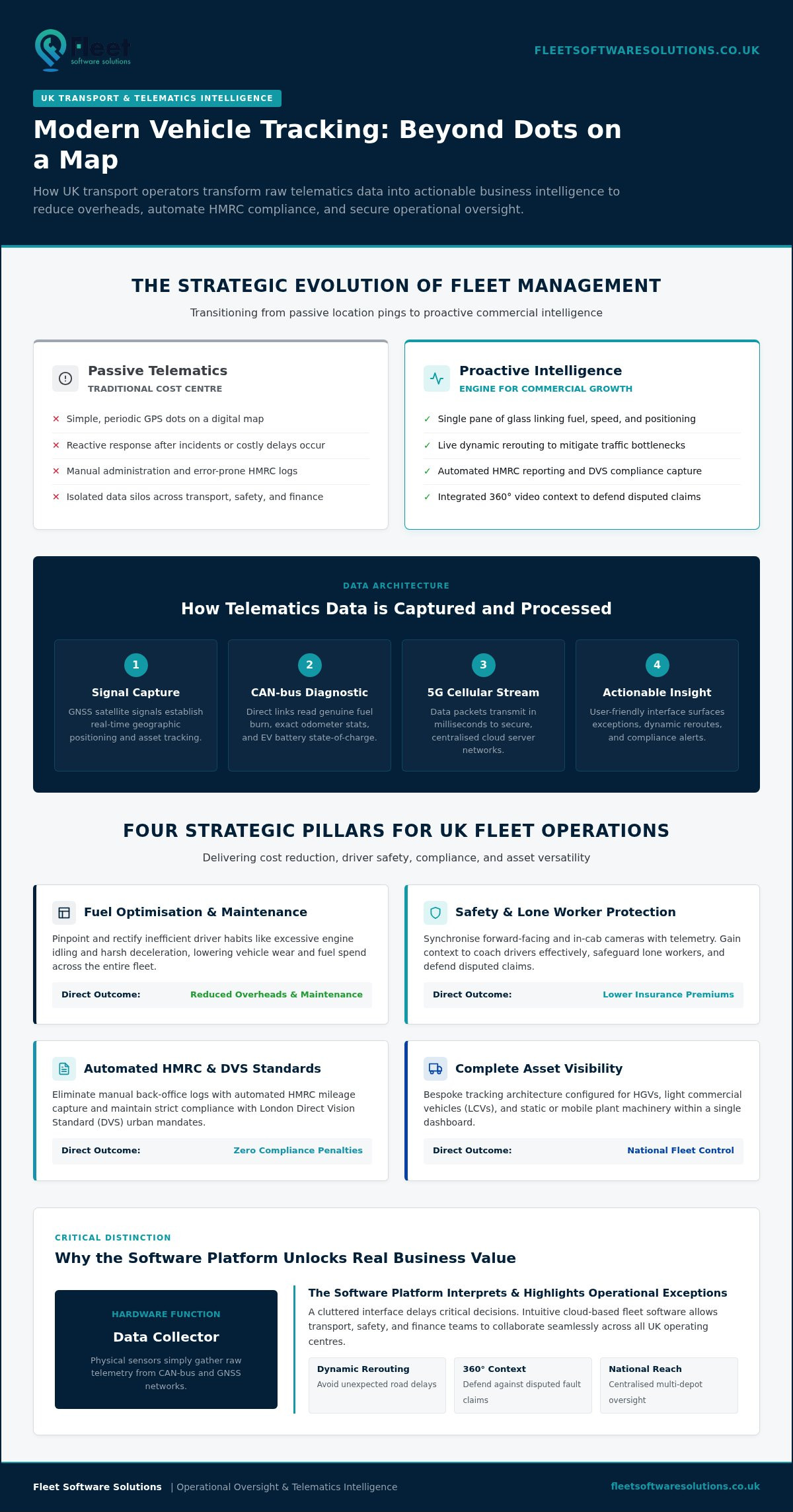
Many transport operators mistake basic telematics for comprehensive oversight, yet the distinction between simple location tracking and true fleet management remains vast. Modern vehicle tracking software functions as a highly sophisticated, centralised hub that actively translates raw telematics data into actionable business intelligence. Rather than merely observing a passive dot on a digital map, organisations utilise these platforms to consolidate disparate data streams, seamlessly linking fuel consumption metrics, speed variables, and precise geographical positioning into a single pane of glass. This structural shift from reactive tracking to proactive operational oversight empowers managers to identify systemic inefficiencies, refine route planning, and mitigate risks before they manifest as severe financial liabilities.
The Evolution of Fleet Telematics
The underlying technology supporting vehicle tracking systems has progressed rapidly from rudimentary GPS pings to 5G-enabled, real-time data streaming. As a result, contemporary software no longer limits its scope to vehicle position; it actively interprets nuanced driver behaviour such as harsh cornering, sudden deceleration, and unnecessary engine idling. The strategic integration of forward-facing and in-cab vehicle cameras alongside this telemetry provides a holistic, 360-degree view of every journey. This synthesis of video and data ensures that fleet managers possess the precise context required to coach drivers effectively, defend against disputed fault claims, and protect vulnerable road users across the UK road network.
Software vs Hardware: Why the Platform Matters
It is a common misconception that the tracking hardware itself dictates the success of a telematics strategy. Whilst physical sensors are necessary to gather raw diagnostic data from the vehicle, the ultimate business value is unlocked exclusively by the software platform that interprets it. A cluttered or overly complex user interface frustrates busy managers and delays critical decisions, whereas an engineered, intuitive dashboard highlights operational exceptions instantly. By opting for cloud-based fleet management software, organisations ensure secure, national accessibility across all operating centres. This centralised visibility enables finance, compliance, and transport teams to collaborate seamlessly, leveraging automated reporting to drive down overheads, protect lone workers, and secure long-term operational stability.
How Vehicle Tracking Software Processes Fleet Data
Telematics represents the convergence of telecommunications and informatics, serving as the bridge that converts raw vehicle telemetry into the actionable business intelligence required for strategic fleet oversight. The process begins with the hardware unit capturing signals from the Global Navigation Satellite System (GNSS), which are then enriched by deep vehicle diagnostics through CAN-bus integration. Unlike basic OBD-II connections, a direct CAN-bus link allows the vehicle tracking software to extract precise data points including genuine fuel burn, odometer readings, and even the state-of-charge for electric vehicle batteries. This data is then transmitted via cellular networks to secure cloud servers, where it is instantly processed into the reports and alerts that inform your daily decision-making.
Real-Time Data Capture and Transmission
The journey of a data packet from the vehicle to the user interface occurs in milliseconds, ensuring that transport managers receive live updates crucial for dynamic route planning. When a driver encounters an unexpected road closure or traffic delay, the software identifies the deviation and allows for immediate rescheduling, thereby maintaining service levels whilst minimising fuel waste. For national fleets operating hundreds of assets, this high-frequency transmission ensures that the central dashboard remains an accurate reflection of the field. Reviewing yesterday’s vehicle logs will never prevent the fuel wastage or delivery disputes occurring across your routes right now; this is precisely why live fleet tracking systems have become essential for commercial operations seeking immediate, actionable intelligence. By implementing integrated fleet management software, businesses can ensure these data streams are not just collected, but effectively utilised to drive operational improvements.
Geofencing and Asset Security
Geofencing technology establishes virtual boundaries around specific geographical areas, providing a critical layer of security for high-value plant and machinery. When a vehicle enters or exits these predefined zones, the software triggers immediate notifications, allowing managers to verify whether the movement is authorised or indicative of theft. This functionality is equally vital for meeting HSE work-related road safety guidance, as it enables the monitoring of lone workers in remote or high-risk locations. If a technician enters a hazardous site, the vehicle tracking software can provide an automated check-in, ensuring that help is dispatched promptly should an incident occur, thus fulfilling the employer’s duty of care through technological precision.
Driving Operational Efficiency and Reducing Costs
Deploying modern vehicle tracking software allows transport operators to transition from speculative budgeting to precise cost control by addressing the core drivers of fleet expenditure. When driver behaviour is monitored transparently, instances of aggressive acceleration and harsh braking decrease, which directly results in reduced wear and tear on critical vehicle components. This steady improvement in driving style extends asset lifecycles and significantly lowers routine repair costs. Squeezing out these operational inefficiencies mitigates administrative burdens by replacing manual logbooks with automated mileage capture, saving back-office teams hours of labour whilst eliminating human error from expense reconciliation. This automated precision also ensures that customer service teams can provide clients with highly accurate, real-time ETAs, enhancing commercial relationships through dependable service delivery.
Fuel Management and Idling Reduction
Fuel represents one of the largest ongoing expenses for UK commercial operations, making fuel management a critical area for strategic optimisation. Advanced vehicle tracking software isolates instances where vehicles are burning fuel whilst stationary, flagging excessive idling directly on the manager’s dashboard so that corrective driver coaching can occur. The cumulative effect of eliminating these micro-inefficiencies across a national fleet is substantial; indeed, verified industry data indicates that active telematics monitoring cuts fuel spend by an average of 10% to 15%. By curbing unnecessary fuel burn, businesses don’t just protect their bottom line; they also reduce their overall carbon footprint, fulfilling environmental sustainability targets whilst navigating volatile fuel markets.
Optimising Maintenance Schedules
Relying on arbitrary calendar dates for vehicle servicing frequently leads to over-maintenance or, conversely, catastrophic mechanical failure. By utilising actual odometer data drawn directly from the vehicle, the platform triggers automated service alerts based on real-time usage metrics. This proactive approach allows fleet managers to execute preventative maintenance before minor wear escalates into an expensive emergency breakdown. For operators seeking the highest standards of compliance, this structured data logging aligns perfectly with the digital record-keeping standards required by the DVSA earned recognition scheme. Additionally, extending these tracking capabilities to plant and machinery ensures that heavy equipment is utilised effectively across multiple sites, preventing costly downtime and improving overall asset utilisation.
Regulatory Compliance and Safety in the UK Landscape
UK fleet operators navigate an increasingly dense regulatory environment where non-compliance leads to severe financial penalties and significant reputational damage. By implementing advanced vehicle tracking software, businesses establish a robust safety culture that satisfies both legal obligations and complex insurance requirements. Monitoring driver behaviour through telematics allows managers to identify high-risk habits, such as aggressive braking or distracted driving, which directly influences the risk profile of the fleet and reduces the likelihood of costly road incidents. This consultative approach to safety ensures that the employer’s Duty of Care is met through precise data rather than anecdotal evidence, providing a steady hand in risk mitigation.
HMRC Mileage Capture and Grey Fleet Management
Managing a Grey Fleet, where employees use their personal vehicles for business journeys, introduces significant risks regarding vehicle roadworthiness and insurance validity. Modern vehicle tracking software simplifies this by automating the capture of precise business mileage, ensuring that HMRC P11D and Benefit-in-Kind (BiK) reporting remains accurate and auditable. These platforms allow drivers to toggle between private and business modes, which respects privacy whilst ensuring every business mile is logged according to the latest 2026 HMRC Advisory Fuel Rates. This automation eliminates the administrative burden of manual spreadsheets and ensures that all vehicles, whether company-owned or private, meet the necessary safety standards through automated documentation checks before they are used for work.
DVS Compliance and Camera Integration
For HGV operators entering designated urban safety zones, the Direct Vision Standard (DVS) mandates a minimum three-star rating or the installation of a certified Progressive Safe System (PSS). Failure to comply results in a heavy daily penalty, making integrated camera and tracking solutions an operational necessity for long-term stability. By combining high-definition vehicle cameras with GPS telemetry, organisations can provide definitive evidence in the event of a claim whilst managing all safety permits within a single digital dashboard. This integration ensures that components like Blind Spot Information Systems (BSIS) and Moving Off Information Systems (MOIS) are functioning correctly, providing total peace of mind for the operator. To streamline your regulatory obligations, you can explore our DVS compliance solutions. This centralised oversight also reinforces lone worker protection by providing the auditable safety trail required for insurance purposes, ensuring that help is dispatched promptly to a precise location if an incident occurs on the road.
Selecting and Implementing the Right Tracking Solution
Choosing the correct vehicle tracking software is a strategic commitment that should be dictated by your specific asset mix and long-term business objectives. A firm managing high-value plant and machinery requires fundamentally different telemetry parameters than a sales-focused fleet operating grey fleet cars. Rather than opting for a generic, off-the-shelf platform that lacks technical nuance, organisations benefit from a bespoke, consultative approach that aligns technology with operational reality. This professional partnership ensures that the software acts as a bridge between complex data and actionable intelligence, providing the necessary updates to meet shifting UK regulations whilst offering the technical support required to maintain constant oversight. For a comprehensive overview of how modern systems address the latest regulatory mandates, including the Smart Tachograph 2 requirements and 3G network sunsets, our 2026 guide to fleet telematics solutions for UK businesses provides detailed, actionable guidance. By selecting a solution tailored to your unique requirements, you secure a platform that simplifies data management and saves time for your entire team.
Steps for a Successful Software Rollout
A successful implementation begins with identifying key stakeholders across your transport, finance, and compliance departments to define clear operational goals from the outset. Transparency is vital for long-term success; organising comprehensive driver training sessions helps to secure buy-in by explaining how the technology protects their safety and simplifies their administrative tasks. It’s often best to start with a structured pilot phase, which allows your team to refine reporting thresholds and alert settings in a controlled environment before a full rollout. This methodical transition ensures that when the system is fully deployed across your national operations, it provides immediate value without overwhelming your staff with irrelevant data points.
Why Fleet Software Solutions is the Pragmatic Choice
We present ourselves as a knowledgeable and supportive partner for businesses navigating the technical complexities of UK fleet management. Our expertise in addressing specific local challenges, from DVS compliance to HMRC mileage capture, ensures that your investment provides a tangible return through reduced overheads and enhanced safety. By integrating a comprehensive range of hardware, including vehicle cameras and lone worker protection devices, we offer a holistic view of your operations that off-the-shelf alternatives simply cannot match. This consultative framework allows us to future-proof your fleet, ensuring you remain compliant as regulations evolve. If you’re ready to transform your telematics into meaningful business intelligence, we invite you to explore a solution that balances rigorous safety with peak operational efficiency.
Securing Operational Stability in an Evolving Market
Adopting advanced vehicle tracking software represents a transition from basic oversight to strategic business intelligence, providing the clarity needed to manage rising fuel costs and complex UK regulations. By automating HMRC mileage capture and ensuring full DVS compliance, you eliminate the administrative friction that often hinders commercial growth. This integrated approach doesn’t just reduce overheads; it fosters a robust safety culture that protects your drivers and your reputation. Whether you’re managing heavy plant machinery or a diverse grey fleet, the ability to transform raw telemetry into actionable insights is the key to future-proofing your operations.
As specialists in DVS compliance and lone worker protection, we provide the UK-based expert support required to navigate these technical challenges with confidence. We’re committed to acting as a knowledgeable partner, offering the precise tools and integrated features necessary for long-term stability. Discover how Fleet Software Solutions can optimise your fleet today and experience the peace of mind that comes from professional, consultative oversight. Your path to a more efficient, compliant future starts with data you can trust.
Frequently Asked Questions
How does vehicle tracking software improve driver safety?
This technology enhances safety by providing real-time visibility into driving behaviours such as harsh acceleration, sudden braking, and excessive speeding. This data allows fleet managers to implement targeted coaching programmes that reduce the frequency of road incidents. Additionally, integrated features like lone worker protection provide a vital safety net for staff in remote areas, ensuring that assistance can be dispatched to a precise location immediately if an emergency occurs.
Can vehicle tracking software help with HMRC mileage compliance?
This technology simplifies HMRC compliance by automating the capture of every business journey with high precision. The software enables drivers to toggle between private and business modes, which ensures that personal privacy is respected whilst maintaining a robust audit trail for P11D and Benefit-in-Kind reporting. By replacing manual logbooks with digital mileage capture, businesses eliminate human error and ensure they are reimbursing staff according to current advisory fuel rates.
What is the difference between active and passive vehicle tracking?
Active tracking provides live, real-time updates on vehicle position and status, whereas passive systems store data locally for download at the end of a shift. Most modern commercial operations utilise active vehicle tracking software to enable dynamic route planning and immediate response to delays. This real-time transmission is essential for maintaining high service levels and ensuring that transport managers possess an accurate, up-to-the-minute overview of their entire national fleet.
Is vehicle tracking software legal for UK businesses to use?
It is entirely legal for UK businesses to utilise these systems, provided they comply with UK GDPR and ICO guidelines regarding worker monitoring. Employers must conduct a Data Protection Impact Assessment and clearly communicate the purpose of the tracking to their staff. Using software that includes privacy toggles for out-of-hours use ensures that business interests are balanced with the driver’s right to privacy, fulfilling all legal and ethical obligations.
How much can a business save by using vehicle tracking software?
Businesses typically achieve significant savings by identifying and rectifying operational inefficiencies such as excessive engine idling and unauthorised vehicle use. Industry data indicates that active telematics monitoring can reduce fuel expenditure by an average of 10% to 15% within the first six months. Beyond fuel, companies save through reduced vehicle wear and tear, lower administrative costs via automated reporting, and the mitigation of expensive fines like those associated with DVS non-compliance.
What is grey fleet management software and do I need it?
Grey fleet management software is designed to oversee employees who use their personal vehicles for business purposes. You likely need this solution if your staff claim mileage for work journeys in their own cars, as it ensures these vehicles are properly insured and roadworthy. The software centralises safety checks and automates mileage capture, protecting the business from the significant legal risks associated with an unmanaged grey fleet whilst ensuring HMRC compliance.
How does geofencing work within fleet management software?
Geofencing establishes virtual boundaries around specific geographical locations, such as customer sites, depots, or hazardous areas. When a vehicle or piece of plant machinery enters or exits these predefined zones, the software triggers an immediate alert for the fleet manager. This functionality is crucial for asset security, providing a proactive way to identify unauthorised movement or theft and ensuring that high-value equipment remains exactly where it is required.
Does vehicle tracking software integrate with vehicle cameras?
Modern vehicle tracking software is designed to integrate seamlessly with vehicle cameras to provide a holistic overview of fleet safety. This synthesis of video evidence and telematics data allows managers to view the context behind a specific event, such as a harsh braking alert. Such integration is particularly valuable for DVS compliance and protecting against disputed insurance claims, as it provides a definitive, multi-sensor record of every journey undertaken by your drivers.