
GPS shows where a machine is, but not how it has been used. Heavy equipment telematics and tracking combines location data with operational information, such as engine hours, fuel use and machine status, so fleet managers can monitor equipment through a central platform. For heavy equipment, engine hours are often more useful than odometer miles for measuring use.
That distinction matters when you need a clearer record of equipment use for rental billing, maintenance planning or site oversight. Telematics can bring GPS tracking, fault information and operator identification together, helping you understand where a machine is and what its data may indicate. This article explains how the technology works, how engine-hour records can support billing, and how diagnostics and maintenance data can inform day-to-day decisions.
Key Takeaways
- Use fuel, idle-time and availability trends to spot where machinery may be underused and where deployment could be improved.
- Combine diagnostic information with operator identification to investigate machine faults and understand equipment use.
- Use engine-hour records to support rental billing and plan servicing around actual machine operation.
- For older machinery, basic GPS and hour-meter devices can provide useful oversight, although diagnostic insight may be more limited.
What is heavy equipment telematics?
Telematics connects GPS, machine systems and sensors to a fleet management platform. It gives construction teams remote information about equipment position, use and condition.
Fleet monitoring in mining
Mining fleet monitoring uses connected equipment data to track machine location, fuel use, engine hours and idle time. This helps managers see whether a haul truck is working, waiting or using fuel without productive output.
Fuel and operating trends can inform maintenance planning. For example, increasing fuel use alongside longer idle periods may prompt a review of deployment, while engine-hour data can help managers schedule planned work as equipment use accumulates.
Equipment operating and fuel data
Operating data records how equipment is used, including engine hours, idle time and fuel consumption. A generator’s engine-hour total, for instance, distinguishes time running from time available but unused.
These measures give fleet managers a more useful view than location alone. Comparing fuel use with operating hours can highlight unusual consumption, while idle-time patterns can show where schedules or equipment allocation may need attention.
Telematics across mixed fleets
Systems for mixed fleets differ in the equipment data they can collect and how they present it. The AEMP data standard, ISO/TS 15143-3, supports the exchange of telematics information for heavy earthwork equipment, helping managers bring machine data together across brands.
Before comparing systems, consider whether each machine can provide the location, engine-hour, fuel or diagnostic information you need, and whether the platform presents it clearly. Data security matters too: encrypted transmission and role-based access can help protect records by limiting who can view them. Cellular or satellite connections carry data to a platform, but coverage can affect when updates arrive.
Available features and UK costs
Construction equipment systems may provide GPS location, fuel-use and engine-hour monitoring, onboard diagnostics and sensor data. Older machines can use basic GPS and hour-meter devices, but the diagnostic information available depends on the machine’s systems.
In the UK, telematics costs depend on the equipment, installation requirements, data features and platform arrangements. Choose features based on the information you need for fleet decisions: location tracking alone does not show fuel use or machine health. A mobile platform can also make equipment information accessible away from the office.
Diagnostic faults and operator identification
Telematics can combine equipment location, onboard diagnostics and sensor readings to show what a machine is doing and how it is performing. For example, remote diagnostics can flag engine overheating, low fluid levels or a hydraulic-system problem, giving managers information to investigate before a fault causes equipment failure. A fault alert is an indication to assess the machine, not a substitute for a qualified inspection.
Operator identification connects activity with the person using a machine, while behaviour monitoring can show operating patterns over time. This helps managers understand whether authorised, trained personnel are accessing equipment and investigate unusual use. Utilisation figures add context: an illustrative construction report showed two excavators working over 85% of available hours, while one wheel loader worked 18%. That contrast can inform decisions about equipment allocation.
In UK workplaces, treat identifiable operator and location records as personal data. Explain to affected staff why monitoring is used and what is recorded, limit collection to relevant information, and restrict access to people who need it. These safeguards help keep monitoring proportionate, especially when a vehicle or machine’s records can be linked to an individual’s working day.
Location and movement information can support site oversight as well as utilisation planning. A geofence alert can notify a manager when a vehicle leaves a predefined zone outside scheduled use. Reviewing alerts alongside relevant operator and equipment records can provide a clearer basis for investigating unexpected movement or a safety concern.
Across construction equipment and other assets, combining location, fault and operator data helps managers identify underused machinery, investigate operating issues and make more informed deployment decisions. If you need visibility of plant location and use, plant and machinery tracking can bring relevant equipment into view alongside other operational assets.
Engine hours, maintenance and rental billing
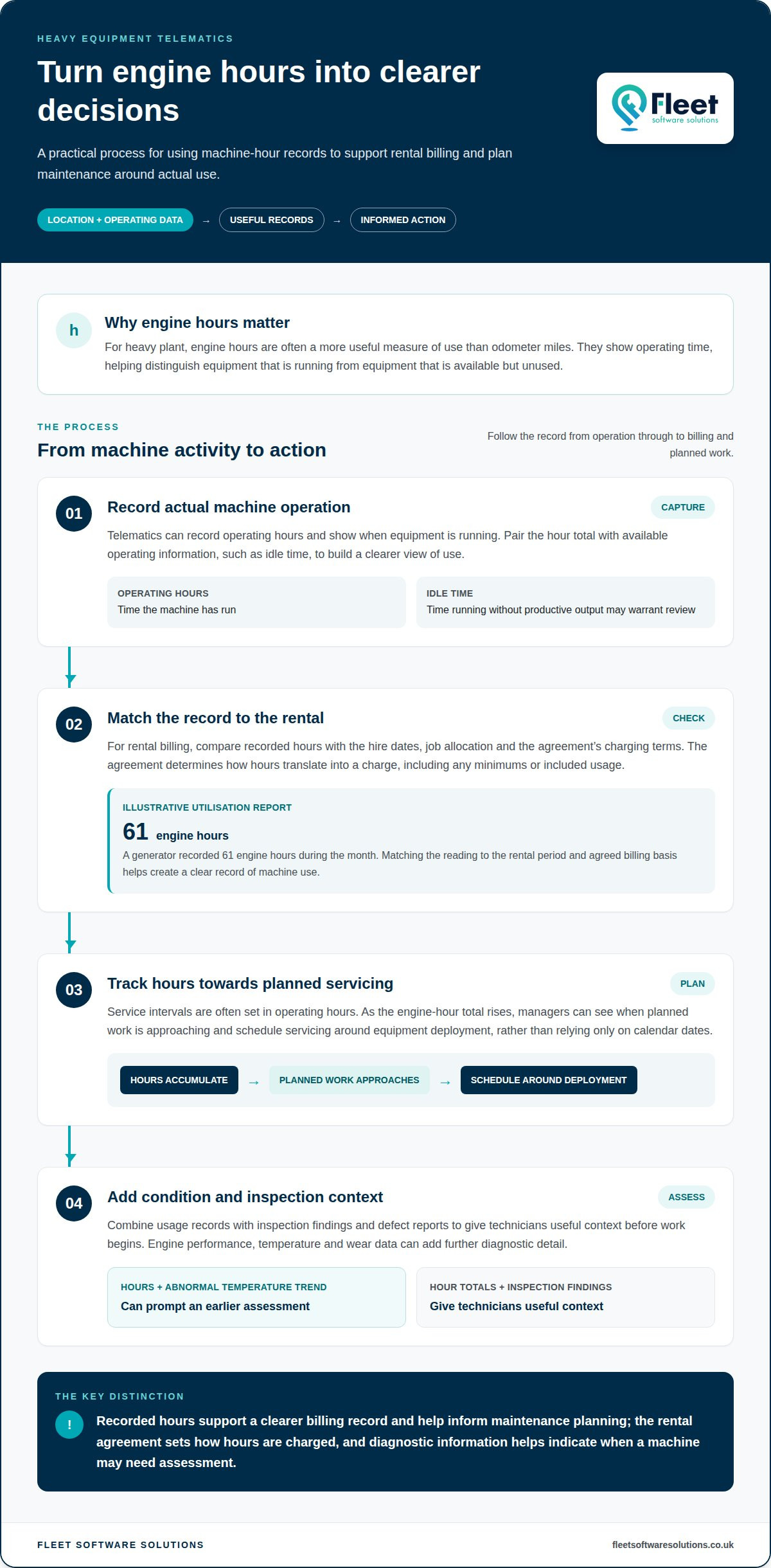
For heavy plant, engine hours rather than odometer miles are the standard measure of use. That makes an hour-meter record more relevant than distance travelled when reviewing equipment activity. A generator billed to a job, for example, recorded 61 engine hours during the month in an illustrative utilisation report. Matching that reading to the rental period and agreed billing basis helps create a clear record of machine use.
Telematics can record operating hours and show when equipment is running, helping distinguish active work from idle time. For rental billing, these records can support comparisons between expected and actual use, alongside hire dates, job allocation and the agreement’s charging terms. The agreement determines how recorded hours translate into a charge, including any minimums or included usage.
Maintenance planning depends on actual machine use. Equipment service intervals are often set in operating hours, so a rising engine-hour total can show when planned work is approaching. Managers can use that information to schedule servicing around deployment, rather than relying only on calendar dates. Combining usage records with inspection findings and defect reports gives technicians useful context before work begins.
Engine performance, temperature and wear data can add diagnostic detail to that schedule. For example, an abnormal temperature trend alongside increasing hours can prompt an earlier assessment, while ordinary hour totals support routine preventive maintenance. Fuel use and idle-time patterns provide further context: high consumption during limited productive operation may indicate inefficient deployment, while sustained use helps forecast servicing needs. This data-driven approach enables maintenance decisions to reflect both machine condition and workload, supporting productivity and clearer rental records.
Equipment telematics definition and GPS tracking
GPS identifies machinery’s position, while telematics connects location with machine information. Together, they help fleet managers interpret where equipment is and how it is being used.
Telematics and GPS tracking definitions
GPS tracking uses satellite signals to locate equipment; telematics can collect and communicate location and operational data to a fleet platform. Heavy equipment telematics and tracking can give managers a shared view of machines working across separate sites.
If an excavator is recorded at a different site from its planned assignment, for example, the location record can help clarify its deployment. Managers can use that context to coordinate machinery and trucks, investigate unexpected movements and make better-informed decisions about equipment availability. The value comes from relating a machine’s position to its work, not simply viewing a map marker.
Installing and setting up GPS tracking
Set-up begins by matching the tracking device and data requirements to the machine. A basic GPS and hour-meter device can monitor older equipment without modern onboard computers, while diagnostic detail depends on the systems available on the machine. Heavy equipment telematics and tracking therefore needs an equipment record that reflects what each unit can report.
For a hardwired unit, installation can take a couple of hours per machine. Once connected, the device sends information over cellular or satellite networks to a fleet platform. Managers can then view position from a computer or mobile device and associate records with the correct machine, such as distinguishing two similar excavators assigned to separate jobs.
Connectivity affects when updates reach the platform, particularly in remote work areas. Clear equipment records and useful reporting turn location data into practical insights for investigating downtime, coordinating machinery and improving efficiency. To discuss visibility for your plant, discuss tracking your machinery.
Fleet Software Solutions
Fleet Software Solutions helps businesses organise fleet oversight with Vehicle Tracking, Vehicle Cameras, Grey Fleet Management and Mileage Capture. These services can support a broader view of vehicles, journeys and business mileage, alongside decisions about plant and machinery.
Consider these tools when you need to include vehicle activity and mileage records in operational planning alongside decisions about plant and machinery. The right mix depends on the information your business needs to manage and the vehicles or journeys involved.
For a practical discussion about your fleet requirements, contact Fleet Software Solutions.
Turn equipment data into a practical plan
Start by deciding which operational decisions better information should support. You might prioritise clearer records for hired machinery, visibility of equipment across sites, or a more consistent view of asset activity. These priorities help shape a telematics approach around how your teams work, rather than collecting data without a clear purpose.
Heavy equipment telematics and tracking can support that plan when the information collected is relevant, accessible and used consistently. Consider how equipment records fit existing fleet processes, who needs access and how managers will use the information in everyday decisions. A focused approach makes it easier to act on new data as operational requirements change.
Fleet Software Solutions can help you consider the fleet-management tools that fit your business needs. Contact Fleet Software Solutions to discuss your requirements and identify a sensible next step for your operation.
Frequently Asked Questions
Can I use a truck telematics device on an excavator?
Sometimes, but a truck telematics device only works on an excavator if its power supply and installation suit that machine. A location-only unit may show where the excavator is without providing engine or hydraulic diagnostics. For example, make sure the equipment record identifies the correct asset, and distinguish location information from operating data when planning maintenance or reviewing hire records.
How Does Telematics Track Sites and Prevent Theft?
Telematics can track equipment against a site boundary and alert managers when a vehicle leaves a predefined zone outside scheduled use. An unexpected movement alert can prompt a review of the machine’s recorded location and site activity. This provides useful oversight, but tracking does not physically prevent access, so it should form part of a broader site-security approach.
What Does a Construction Equipment Utilisation Report Show?
A construction equipment utilisation report shows how machinery is being used over a selected period or job. It can help managers compare working time, idle periods and availability between assets, then identify equipment that may be underused or stretched. For instance, a site-based report can show that one machine is regularly waiting while similar equipment elsewhere remains in demand.
What is heavy equipment telematics and how does it work?
Heavy equipment telematics combines equipment information with communications technology, allowing managers to review machine activity remotely. A tracking unit can record a machine’s position and, where supported, operational information, then send data to a platform. A manager can use the equipment record, for example, to distinguish a machine moved to another job from one that remains at its previous site.
Which UK heavy equipment telematics providers and systems are best?
The most suitable system depends on your equipment mix, the information you need and how you want to review it. Check that it supports the asset records, reporting and alerts you need, and presents relevant information in a practical way. Fleet Software Solutions provides Plant & Machinery Tracking and device-agnostic software with configurable reports and alerts for fleet oversight.
How does heavy equipment telematics help prevent theft and recover stolen machinery?
Telematics can help reduce theft risk by making equipment location and unexpected movement more visible. If machinery is reported stolen, its recorded position can provide a useful lead for those coordinating a response. A movement alert outside scheduled use, for example, may help managers investigate when equipment left a site. Tracking supports oversight and response, but cannot physically secure or guarantee recovery of machinery.