
Construction plant security tracking devices can help deter theft and support recovery by recording machinery’s GPS location and making it available through a web platform or mobile app. Battery-powered, self-installed options can also suit plant that needs a tracking solution without a conventional vehicle installation.
For construction businesses, knowing where equipment is can help teams respond when an asset goes missing and improve oversight across sites. Tracking can support theft prevention and recovery, but it cannot guarantee either outcome. This guide explains how GPS monitoring works, what to consider when choosing a device, and how tracking fits into a broader plant security plan. Fleet Software Solutions’ plant and machinery tracking helps businesses monitor assets as part of day-to-day fleet management.
Key Takeaways
- Learn how tracking can support theft deterrence and help businesses locate missing plant.
- Understand how hard-wired trackers can suit machinery with a conventional ignition circuit.
- Explore when battery-powered, self-installed devices may be a practical option for plant.
- See how GPS location data helps you monitor machinery through a web platform or mobile app.
Plant theft deterrence and stolen asset recovery
Tracking can highlight unauthorised movement and provide machinery location data to support recovery. Its value depends on how alerts are handled, who monitors them and whether there is a clear response plan.
Movement alerts and theft detection
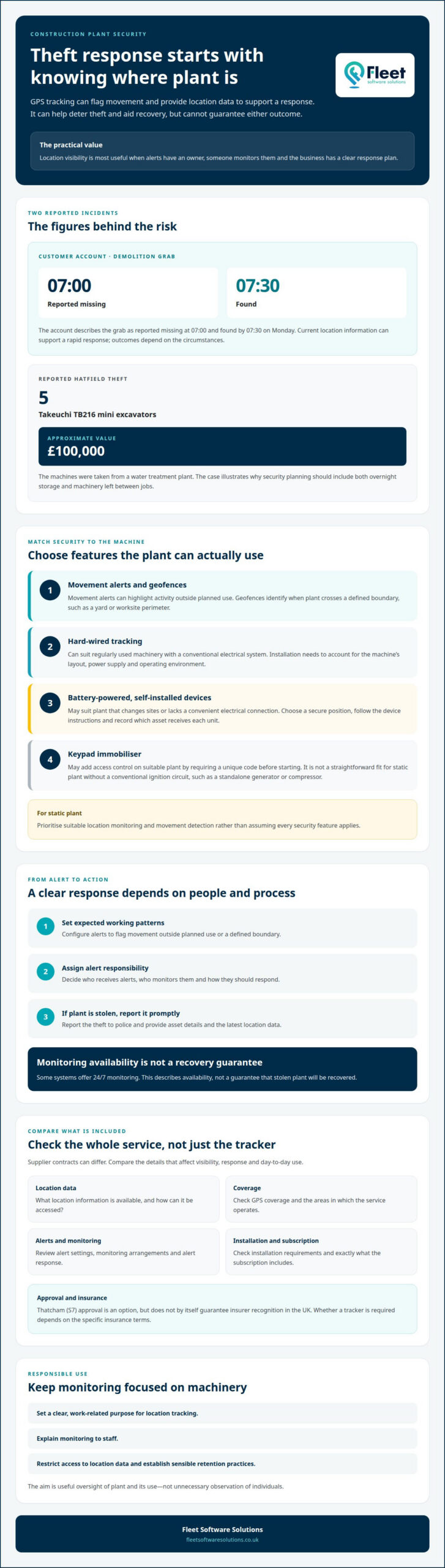
Choose a tracker that can flag movement outside expected working patterns, then assign someone to receive and act on alerts. Geofences identify when plant crosses a defined boundary, while movement alerts can highlight activity outside planned use. A keypad immobiliser may add another layer for suitable plant, requiring the driver to enter a unique code before starting the vehicle.
Installation and machinery type matter. Immobilisation is not a straightforward fit for static plant without a conventional ignition circuit, such as a standalone generator or compressor. For those assets, prioritise suitable location monitoring and movement detection rather than assuming every security feature applies.
Recovery monitoring and theft response
UK suppliers include GPS tracking providers and specialist plant-security system suppliers. Contracts can differ in location-data access, monitoring, alert response, recovery support and coverage, so compare what the subscription actually includes. Some systems offer 24/7 monitoring; this describes availability, not a guarantee of recovery.
If tracked plant is stolen, report the theft to police promptly and provide the asset details and latest location data. A customer account describes a demolition grab reported missing at 0700 and found by 0730 on Monday. That example shows how current location information can support a rapid response, though outcomes depend on circumstances.
Yard and worksite theft risks
Plant can be vulnerable while stored in a yard or left at a worksite, particularly when equipment is unattended. A reported Hatfield theft involved five Takeuchi TB216 mini excavators, worth approximately £100,000, taken from a water treatment plant. The case illustrates why security planning should cover both overnight storage and machinery between jobs.
Match protection to each asset’s location and use. A construction plant security tracking devices installation can provide location data, while boundary alerts can draw attention to movement from a yard or site. Some systems also offer Thatcham (S7) approval as an option; approval alone does not guarantee insurer recognition in the UK.
What benefits does plant tracking offer for construction businesses?
For UK construction businesses, a suitable GPS tracker combines location visibility with features matched to the machinery. Hard-wired units can connect to plant machinery’s electrical system, supporting ongoing tracking without relying on a removable device. Their value depends on installation, power supply and the security functions the asset can use.
Choose a tracker according to the asset and its working pattern. A mobile excavator moving between sites may need location history and movement alerts, while a generator needs a tracker designed for static equipment. Hard-wired tracking can suit regularly used machinery, with installation planned around the machine’s layout and operating environment. For plant with a conventional ignition circuit, immobilisation may add access control if it suits the machine and work process.
The right tracker provides useful location data and security features suited to each asset, not simply the longest feature list. Compare GPS coverage, alert settings, monitoring arrangements, installation requirements and subscription terms. The system should make it easy to identify a machine and act on its last recorded position if it is stolen.
Thatcham (S7) approval is an option for GPS plant trackers, but approval alone does not guarantee insurer recognition in the UK. Whether a tracker is required depends on the specific insurance terms. The Plant & Machinery Security System is listed with BS EN ISO/IEC 17025:2017 and PAS 820:2012; these identifiers describe standards associated with that system, not a universal insurance condition.
Employee-linked location data also raises privacy considerations. Set a clear work-related purpose, explain monitoring to staff, restrict access to the data and establish sensible retention practices. This keeps tracking focused on machinery use rather than unnecessary observation of individuals. A well-matched system can support recovery and improve visibility of plant across changing sites, while helping teams spend less time locating equipment during routine operations.
The best choice is a tracker suited to each machine’s type and working pattern, with useful location data and security features the asset can support. Compare coverage, alerts, monitoring, installation needs and subscription terms rather than choosing by feature count alone.
Battery-powered, self-installed tracking devices
Battery-powered trackers can suit construction plant when hard-wired installation is impractical. Choose based on the asset, its power supply and the installation method required.
Self-fitting or professional installation
Battery-powered devices can be self-installed, which may suit machinery that changes sites or lacks a convenient electrical connection. Before fitting one, identify a secure position that allows the tracker to operate and remains accessible for servicing. Follow the device instructions and record which asset receives each unit. For a hard-wired tracker, professional installation can connect it to the machine’s electrical system and assess suitable placement.
Battery-powered trackers avoid a direct connection to the machine’s power supply, while hard-wired units draw power from the machinery. Concealed installation describes placement, not power type, and can be used with a suitable tracker. Match the approach to the plant’s design and day-to-day use.
Installation time and expertise
Installation time depends on the machine, access to a suitable mounting point and whether wiring is needed. A self-fit battery device avoids electrical work, but correct positioning and asset identification still matter. Hard-wired installation requires familiarity with the plant’s electrical layout. Poor placement can obstruct access or leave the unit exposed to damage.
For fleet management, plan installation around when each machine is available, then link its tracker to the correct asset record. This helps staff interpret location data accurately when equipment moves between a yard and a worksite.
Concealed placement may make a tracker less obvious, but it must not obstruct maintenance or compromise the machine. Install it only in an authorised location and document its position for responsible staff. If plant is stolen, share its latest location data with the police and follow the relevant reporting process.
Choose a battery-powered, self-installed device for suitable plant when avoiding hard wiring is the priority. Use a hard-wired or professionally fitted option when the machine and tracking requirements call for a fixed installation. Assess each asset individually.
GPS location monitoring for construction plant
GPS tracking systems turn machinery location into information teams can use remotely. Their value lies in making location and movement visible alongside each asset’s work pattern.
Real-time GPS location monitoring
A tracker determines plant equipment’s position using GPS satellites, then sends location data to a central server or database. Staff can view that information through a web platform or mobile app, helping them locate diggers across multiple sites. Some systems provide real-time monitoring around the clock, with alerts for movement that needs attention.
Check how often the system updates location and how easily users can identify each asset. Clear asset names and an easy-to-read map help teams distinguish machines operating near the same worksite.
Location and usage monitoring
Location records can help managers see where plant has travelled and whether it reached its intended site. For example, a team can review a machine’s recorded movements after a shift and investigate unexpected travel or time away from its planned work area.
Geofences and restricted-area monitoring add context to location records. Set boundaries around a yard, project site or exclusion area, then use movement alerts to highlight when tracked machinery crosses them. The alert prompts remote teams to check what happened and respond through their normal procedures.
Separate location monitoring from usage data when comparing tracking systems. GPS indicates position; additional usage information depends on the functions available in the selected system. Consider who needs access, which assets require monitoring and how teams will use alerts during daily operations. Thatcham (S7) approval is a security consideration, while location update frequency is a separate feature to assess.
For construction businesses managing plant across changing locations, explore plant tracking options to support practical asset oversight.
Fleet Software Solutions: Plant & Machinery Tracking
Fleet Software Solutions provides Plant & Machinery Tracking for construction businesses seeking better oversight of their equipment. It can be useful when plant moves between sites, tracking needs differ by asset, or teams want machinery location information alongside wider fleet operations.
Consider which assets need monitoring, how they are used and what information would help your team manage them. Businesses tracking both machinery and road vehicles can also consider Vehicle Tracking as part of their wider operations. The right setup depends on the equipment and the visibility your team needs.
Contact Fleet Software Solutions to discuss Plant & Machinery Tracking for your construction business.
Make your next tracking decision practical
Before choosing a system, decide what your team needs to do differently once plant location information is available. Assign responsibility for reviewing movement alerts, recording asset details and escalating unexpected activity. Clear ownership makes tracking data a usable part of site operations, rather than another screen staff rarely consult.
Consider which machines raise the greatest operational concerns and how their working patterns affect installation and monitoring choices. The best construction plant security tracking devices suit the equipment and support a response your business can follow. Starting with clear priorities can help you build an approach for changing sites and different asset types.
Fleet Software Solutions can discuss Plant & Machinery Tracking in relation to your business’s equipment and operational priorities. Contact Fleet Software Solutions to discuss the next step and shape a practical approach for your plant.
Frequently Asked Questions
How does asset tracking work?
Asset tracking links a device and its data to a named item, allowing a business to identify and manage equipment through a tracking system. For example, separate records for two telehandlers help staff distinguish them in operational reports. Clear asset names and accurate records make it easier to assign equipment to projects, understand its movements and coordinate its use across depots and worksites.
What are construction plant security tracking devices and how do they work?
Construction plant security tracking devices monitor machinery and help businesses respond to unexpected movement. A device gathers location information and sends it to a platform, where authorised users can view the asset’s position. Depending on the system, teams can also use movement alerts or defined zones to identify activity that needs attention and choose an appropriate response.
How do you install and set up a tracker on excavators, telehandlers and other plant?
Start by identifying the machine and choosing a tracker suited to its power supply and design. A battery-powered unit avoids wiring, while a hard-wired device needs a suitable connection and installation. Fit the tracker according to its instructions, link it to the correct asset record, then confirm the platform identifies the machine accurately. For example, create a separate record for each excavator before monitoring a shared site.
How effective are construction plant trackers at preventing theft and recovering stolen equipment?
A tracker can support theft deterrence and recovery by making machinery movement and location information available to a response team. It cannot physically prevent theft, and location data is useful only if someone can act on it. For example, a yard manager can use an unexpected movement alert to check the asset’s recorded position, notify the appropriate team and provide relevant information to police if equipment is stolen.
Which GPS trackers are best for construction plant and machinery in the UK?
The right tracker suits each machine’s type and working pattern, with useful location data and security features the asset can support. Compare coverage, alerts, monitoring, installation requirements and subscription terms.
What UK laws and privacy rules apply to tracking construction plant and employees?
The material gives no specific UK laws. For employee-linked location data, set a clear work-related purpose, explain monitoring to staff, restrict data access and establish sensible retention practices.