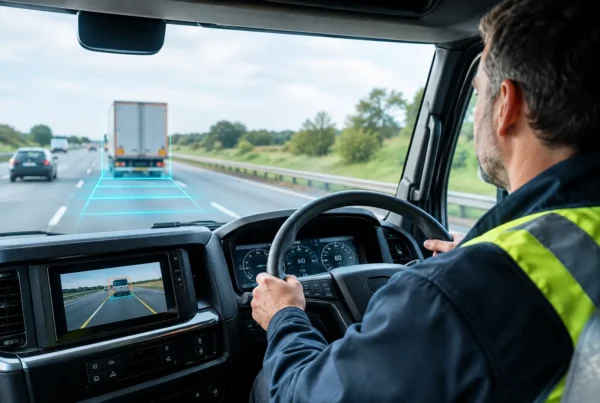

A collision rarely begins at the point of impact. It often starts weeks earlier with repeated harsh braking, speeding on familiar roads, long shifts, an overdue licence check or a driver who has stopped reporting vehicle defects. A driver risk audit brings those warning signs into one practical review, so fleet managers can intervene before an incident becomes a claim, an absence, a damaged reputation or a serious injury.
For UK fleet operators, the purpose is not to create a league table of drivers or add another reporting task. It is to understand where risk sits across people, vehicles, journeys and processes, then take proportionate action that improves safety and protects the business.
What a driver risk audit should assess
A useful audit combines evidence from several sources. Telematics data provides the operational picture: speeding events, harsh acceleration and braking, idling, journey times, mileage, route patterns and driving hours. Vehicle cameras add essential context where an incident, complaint or repeated behaviour needs closer review. Licence checking, driver declarations, collision records, maintenance history and training records complete the picture.
Looking at one measure in isolation can be misleading. A high number of harsh braking events may indicate poor anticipation, but it may also reflect dense urban routes, frequent emergency call-outs or a poorly calibrated device. Equally, a low-mileage driver with one serious incident may need more attention than a high-mileage driver with several minor alerts. The audit should identify patterns, not simply rank people by a single score.
The review should also examine the working conditions around the driver. Are schedules realistic? Are routes planned around low bridges, restricted roads and delivery windows? Are drivers expected to answer customer calls while travelling? Is there a clear process for reporting fatigue, defects or near misses? Driver behaviour matters, but businesses must not ignore the operational decisions that influence it.
Start with the risks that matter to your fleet
An effective audit is tailored to the work being carried out. A maintenance fleet travelling between customer sites faces different exposures from a courier operation, a construction business running vans and plant, or a company managing grey fleet drivers in their own vehicles.
Start by reviewing the events with the greatest potential consequence. These commonly include excess speed, seatbelt non-use, distraction, fatigue, reversing incidents, aggressive driving, unauthorised use, poor vehicle checks and journeys made without a valid licence or suitable insurance. Then consider risks particular to your operation, such as lone working, towing, access to high-value sites, winter travel or carrying specialist equipment.
This prioritisation matters because an audit can quickly become too broad. If every telematics alert is treated as equally urgent, managers spend their time chasing minor exceptions while serious risks remain unresolved. A sensible approach separates immediate safety concerns from coaching opportunities and general efficiency issues.
Build an evidence base, not a blame process
Drivers are more likely to engage when they understand what is being measured, why it is relevant and how the information will be used. A driver risk audit should sit within a clear policy covering telematics, camera footage, data access, retention and the circumstances in which managers will contact a driver.
Use an agreed review period, normally long enough to show a pattern rather than one difficult day. For many fleets, 30 to 90 days provides a useful starting point. Compare similar work fairly where possible. A technician completing short city-centre journeys should not be judged against a sales driver covering long motorway distances.
Combine quantitative and qualitative evidence. The figures may show a repeated speeding trend, while camera footage may reveal whether the driver was reacting to traffic conditions or routinely following too closely. A supervisor may add context about a temporary diversion, a vehicle fault or a change in workload. This is how data becomes a defensible management decision rather than a dashboard assumption.
Score risk in a way managers can act on
A practical scoring model gives greater weight to severity, frequency and exposure. For example, a single high-speed event near a school could carry more weight than several marginal breaches on a motorway. A driver travelling 35,000 business miles a year also has greater exposure than someone completing occasional local journeys.
Keep the categories simple enough to explain: low, medium and high risk, with clear triggers for action. The aim is not mathematical perfection. It is consistency, so managers know when to monitor, coach, investigate or remove a driver from a particular task while further checks take place.
Turn findings into proportionate action
The value of an audit is decided by what happens next. Low-risk drivers may only require positive feedback and routine monitoring. Those showing a developing pattern may benefit from a short conversation, route guidance, refresher training or agreed targets for the following month. High-risk cases may require an immediate investigation, camera review, a licence or medical check, and a documented improvement plan.
A good debrief is factual and specific. Instead of telling someone they are a poor driver, show the relevant journey, event type and context. Ask what happened, listen for operational factors and agree the next action. If a driver is repeatedly braking hard because appointments are booked too tightly, coaching alone will not solve the underlying problem.
Recognition is just as useful as correction. Highlighting sustained safe driving, prompt defect reporting and improved scores helps show that the system is fair. It also gives supervisors evidence to use in team briefings without publicly singling out an individual.
Use cameras where context changes the decision
Telematics identifies the event; video can explain it. This is particularly valuable for alleged collisions, vulnerable road user incidents, disputed third-party claims, mobile phone allegations and reversing damage. Footage can support a driver who was not at fault just as readily as it can identify behaviour requiring intervention.
Cameras should not be positioned as surveillance for its own sake. Their role is to establish facts quickly, improve coaching and strengthen the business’s insurance position. Clear driver communication and a consistent review process are critical, particularly where inward-facing cameras are used.
There is a trade-off. Reviewing every clip is neither practical nor necessary, while relying on event data alone can lead to poor conclusions. Configure camera triggers around the risks that matter most, then use footage for exception-based review.
Do not overlook grey fleet and compliance gaps
Employees using their own cars for business journeys can create a sizeable blind spot. A driver risk audit should include grey fleet mileage, business-use insurance, MOT status, vehicle condition, licence validity and any declared health factors relevant to driving. Without a reliable process, an organisation may have far less visibility over its duty of care than it assumes.
The same applies to driver hours, walkaround checks and vehicle allocation. A risk review may reveal that the issue is not one driver’s behaviour but a weak handover process, incomplete vehicle records or no way to confirm who was driving at the time of an incident. These gaps make claims harder to defend and improvement harder to measure.
Make the audit part of normal fleet management
A one-off review can identify immediate concerns, but risk changes with new drivers, seasonal pressures, contract changes and vehicle utilisation. Monthly exception reporting, quarterly management reviews and post-incident audits create a more reliable cycle. The detail required will vary: a small service fleet may need a focused monthly review, while a multi-site operation may require dashboards by depot, vehicle type and driver group.
Automation reduces admin, but it should not remove judgement. Configurable alerts can flag serious speeding, prolonged driving or repeat harsh events, while tailored dashboards show whether risk is reducing after intervention. Managers still need to interpret the trend, speak to drivers and check whether the action has worked.
Fleet Software Solutions can help operators bring telematics, camera and compliance information into a clearer management process, with reporting designed around the risks and outcomes that matter to their operation.
A well-run audit should leave managers with fewer assumptions and drivers with clearer support. When the next difficult journey, customer complaint or claim arrives, the business is better placed to respond with evidence, fairness and a plan that prevents the same risk from recurring.