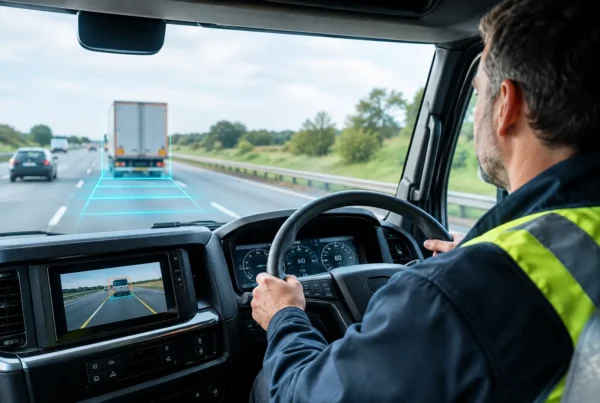

A driver submits 312 business miles at month-end. Finance has no practical way to check whether those miles were driven, whether the route was reasonable, or whether part of the journey was commuting. Mileage claim automation replaces that guesswork with verified journey data, clear rules and a claim process that does not depend on spreadsheets, memory or retrospective estimates.
For fleet, finance and operations teams, the value is not simply faster reimbursement. It is the ability to pay legitimate claims accurately, identify avoidable mileage and create an audit trail that stands up to internal review. That matters particularly where employees use their own vehicles, where teams work across multiple sites, or where mileage costs have steadily become harder to explain.
Why manual mileage claims create avoidable cost
A manual mileage process often looks harmless at first. An employee records a date, destination, purpose and distance, then a manager approves the total. The weakness is that neither person is usually working from a complete record of the actual journey.
Distances may be estimated from a postcode tool, rounded up or copied from a previous claim. A driver may submit several weeks later, when the reason for a trip is no longer clear. Managers under pressure to keep work moving may approve claims without challenging them. None of this necessarily suggests dishonesty. It does mean the business is relying on inconsistent information.
The resulting cost is wider than overpaid mileage. Finance spends time correcting entries and chasing missing details. Managers deal with disputes over routes and eligibility. Fleet teams lose visibility of how much business travel is taking place in private vehicles. Where a grey fleet policy applies, incomplete records can also make it harder to evidence appropriate oversight of drivers and vehicles used for work.
Manual systems make it difficult to distinguish a necessary customer visit from a poorly planned journey, a duplicated claim or routine travel to a normal place of work. Once claims are paid, recovering errors is rarely straightforward.
What mileage claim automation should capture
Effective automation starts with journey evidence, normally collected through a vehicle tracking device, an approved mobile solution or connected vehicle data. The system records where a journey began and ended, the route taken, time and distance travelled. It should then turn that information into a claimable record without forcing employees to recreate the journey by hand.
The best process does not treat every mile as automatically reimbursable. It gives the driver or administrator a simple way to classify travel as business, private or commute, add a journey purpose and, where necessary, allocate the trip to a customer, project or cost centre. Configurable rules can apply the organisation’s mileage rates and approval workflow consistently.
A useful automated record will usually include the journey date, start and finish locations, verified mileage, business purpose, vehicle or driver, reimbursement rate and approval history. This creates a stronger foundation for payment than an unverified total entered at the end of the month.
There is an important distinction here. Technology can evidence distance and route, but it cannot always determine the commercial purpose of a journey on its own. A visit to a customer may be clear from location data; a stop at a supplier, an office or a home address may require context. The right solution makes that classification quick, rather than expecting the system to make assumptions that create payroll or tax issues.
From raw journey data to a credible claim
The process should be straightforward for the driver and controlled for the business. Journey data is collected as travel takes place. The driver reviews relevant trips, confirms the purpose and submits them within an agreed timescale. The manager receives exceptions or a concise approval queue, rather than a spreadsheet full of figures with no supporting evidence.
Finance can then receive approved data in a consistent format, with the information needed for reimbursement and reporting. This reduces rekeying between systems and gives the organisation a clear record of how each claim was calculated.
For a field service business, this can be especially valuable. An engineer who visits five sites in one day should not have to reconstruct the route from diary entries and memory. Equally, the operations manager should be able to see if journeys are being unnecessarily duplicated because work has been allocated without considering location, skills or available capacity.
The same data can support better customer communication. If a customer queries an attendance time or a missed appointment, the business has a factual journey record to review. Mileage capture therefore becomes part of operational visibility, not just an expense administration task.
Set the policy before automating the process
Automation exposes weak policy quickly. If drivers, managers and payroll teams all use different definitions of business travel, no platform will produce consistently reliable claims. Before rollout, agree how the business will handle commuting, temporary workplaces, home-based staff, detours, parking, tolls, passenger journeys and mileage rate changes.
The policy should also state when claims must be submitted, who can approve them and what happens when a journey is incomplete or disputed. This is not about creating unnecessary barriers to payment. It is about making the correct route easier than the informal one.
Organisations should take appropriate payroll and tax advice on their circumstances, including current HMRC requirements and any applicable approved mileage arrangements. Mileage rules can be nuanced, particularly for employees with changing work locations or mixed personal and business use. An automated platform should reflect the organisation’s agreed policy, not replace professional judgement.
Where the savings actually come from
The most immediate saving is reduced administration. Drivers spend less time compiling claims, managers spend less time checking vague entries and finance receives cleaner information. But the larger commercial benefit often comes from accuracy and visibility.
Verified distances can reduce overclaiming caused by estimates, rounding and duplicate entries. Exception reporting helps managers focus on unusual mileage, out-of-hours trips, long detours or journeys that have not been classified. Trend reporting can reveal whether a territory is being covered inefficiently, whether certain jobs generate disproportionate travel, or whether staff are making journeys that could be combined.
For grey fleet operators, the value can be broader still. A clearer view of who is driving for work, how far they travel and how often they use their own vehicle can inform risk management, vehicle checks and driver engagement. It also gives leadership a more credible picture of the true cost of mobile operations.
Savings will vary. A small team with infrequent travel may mainly benefit from simpler administration. A multi-site organisation with dozens of mobile employees may find that improved claim accuracy, reduced mileage and faster reporting produce a much stronger return. The key is to measure a baseline before implementation: current claim volumes, processing time, rejected claims, average mileage per role and total reimbursement spend.
Choosing a solution that drivers will use
The most sophisticated reporting is of little value if drivers see the process as another task imposed on them. Adoption depends on making review and classification quick, keeping the policy clear and explaining why verified claims protect both the employee and the business.
When assessing mileage claim automation, consider whether it can work with your existing telematics devices and whether it supports the mix of company vehicles and privately owned vehicles in your operation. Look for configurable journey categories, driver identification, approval controls, exports that suit payroll processes and dashboards that show both claim status and travel trends.
Data quality also deserves attention. GPS records can be affected by poor signal, vehicle changes, shared vehicles or drivers forgetting to identify themselves. A practical system needs sensible exception handling, not a rigid process that creates more work whenever the real world is untidy. It should allow authorised users to correct genuine issues while retaining a record of what changed and why.
Turn mileage data into operational action
The strongest mileage programmes do not stop once a claim is approved. They use the information to ask better questions. Are jobs being assigned to the nearest qualified person? Are recurring visits clustered sensibly? Are excessive journeys linked to missed first-time fixes, poor scheduling or a lack of local stock? Could some meetings be handled remotely?
This is where a consultative fleet technology approach has real value. Fleet Software Solutions can help organisations align mileage capture with broader telematics, grey fleet and reporting requirements, so journey data supports decisions beyond reimbursement.
Start with a clear policy, a realistic baseline and a pilot group that represents everyday travel. When the process is simple for drivers and meaningful for managers, verified mileage becomes more than an expense record: it becomes evidence for running a more efficient mobile operation.