
Transport organisations must assess and manage risks to employees who drive or ride for work. The Health and Safety at Work etc. Act 1974 is the cornerstone of employers’ duty to protect workers’ health, safety and welfare, and the Management of Health and Safety at Work Regulations 1999 require risk assessments and measures to address identified risks, according to the UK legislation register. Effective driver risk reduction and lone worker solutions start with treating journeys as part of the working day, not as a gap in oversight.
Managing driver risk can be harder when employees work alone, travel between sites or face changing road and workplace conditions. A clear process for assessing risks, keeping in touch and responding to incidents turns the duty of care into practical arrangements that drivers and managers can follow.
This article explains the risks of work-related driving, what lone working means in transport and the responsibilities organisations need to address. It also explores how lone worker technology can work alongside fleet systems, helping connect driver safety procedures with the operational information managers already use.
Key Takeaways
- Assess work-driving risks by considering the journey, the driver and the vehicle, then put practical controls in place.
- Identify lone-working tasks across transport, including travel between sites, and establish clear check-in and incident-response procedures.
- Keep risk assessments, safety policies and worker guidance relevant as routes, vehicles and working arrangements change.
- Consider how lone-worker technology and fleet systems can work together to give managers useful operational context when responding to an alert.
1. What Are The Risks of Driving For Work?
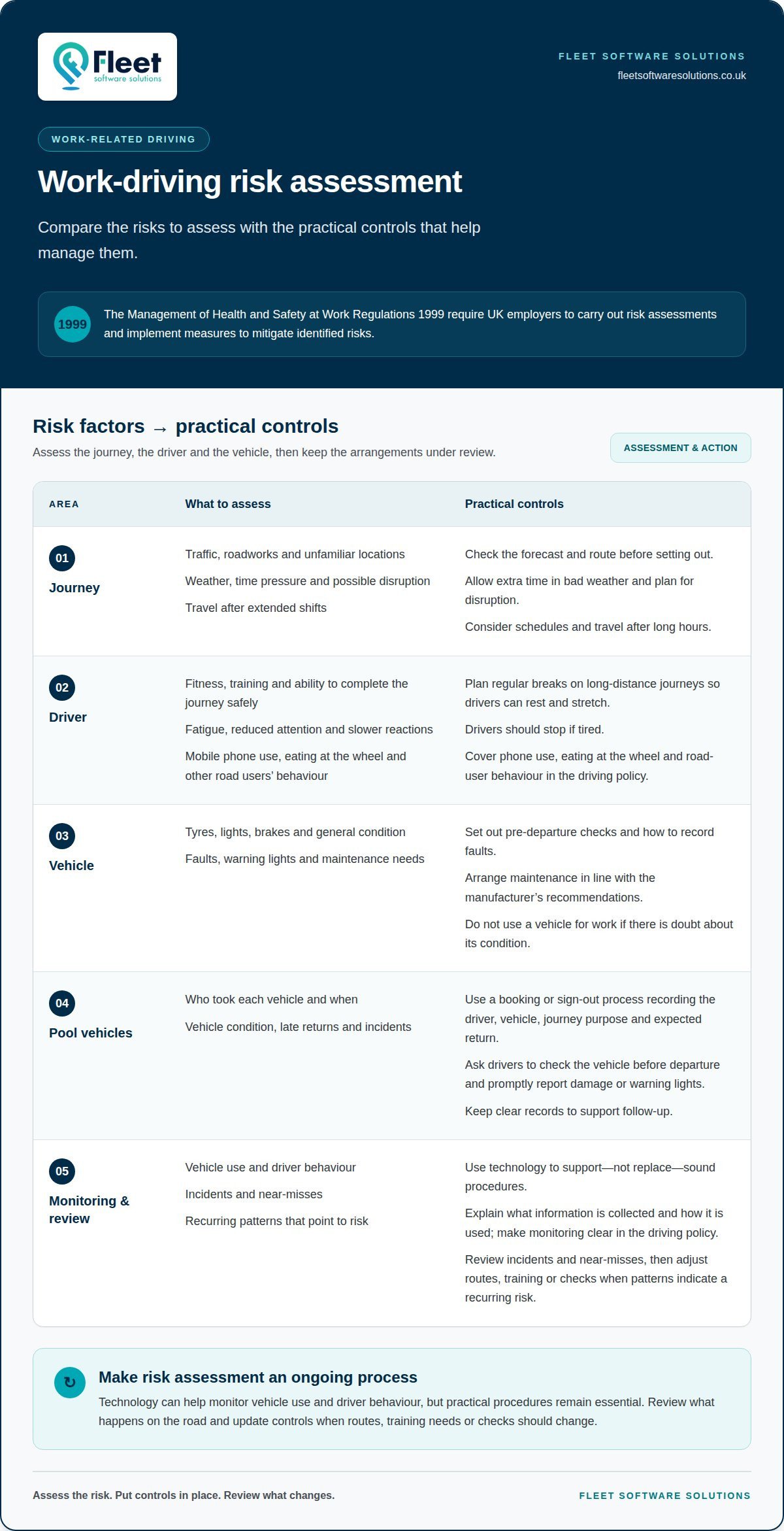
A work-driving risk assessment should examine the journey, the driver and the vehicle. According to the UK legislation register, the Management of Health and Safety at Work Regulations 1999 require UK employers to carry out risk assessments and implement measures to mitigate identified risks. For a delivery route, consider traffic, roadworks, weather, time pressure and unfamiliar locations. Assess whether the driver is fit, trained and able to complete the journey safely.
Working conditions matter as much as the route. Long hours can reduce attention and slow reactions, so consider schedules and travel after extended shifts. Drivers covering long distances should plan regular breaks to rest and stretch, and stop if tired. Cover mobile phone use, eating at the wheel and the behaviour of other road users in your driving policy.
Vehicle checks can identify defects before departure. Set out how to check tyres, lights, brakes and general condition, record faults and arrange maintenance in line with the manufacturer’s recommendations. Do not use a vehicle for work if there is doubt about its condition. Before setting out, drivers should check the forecast and route for hazards. In bad weather, allow extra time and plan for disruption.
Pool vehicles need clear oversight: managers should know who took each vehicle and when. Use a booking or sign-out process that records the driver, vehicle, journey purpose and expected return. Ask drivers to check the vehicle before departure and promptly report damage or warning lights. Clear records help with follow-up if a vehicle is returned late or an incident occurs.
Technology can help monitor vehicle use and driver behaviour, but it should support sound procedures, not replace them. Explain what information you collect and how you use it, and make monitoring arrangements clear in the driving policy. Review incidents and near-misses regularly. If patterns point to recurring risks, adjust routes, training or checks. This makes risk assessment an ongoing, practical process.
2. What is lone working and how does it affect the transport industry?
Lone workers carry out duties without close or direct supervision. They include delivery drivers, couriers and employees travelling between sites. Driving for work can involve lone working even when driving is not the employee’s main task. The Health and Safety Executive estimates that around a third of UK traffic collisions involve someone driving as part of their work.
The potential consequences are serious. Great Britain recorded around 27,450 serious road injuries in 2021, according to the Department for Transport. A collision may leave a driver injured, stranded or unable to call for emergency help, particularly on a quiet route or away from a staffed depot. A vehicle breakdown can create similar exposure if the driver must wait beside traffic or seek assistance alone.
Several risks can combine. Human factors include fatigue, stress, distraction and time pressure; vehicle factors include defects or an unsuitable load. Environmental hazards range from roadworks and congestion to poor weather and the actions of other road users. Reviewing these factors together helps organisations identify when a route, shift or task needs additional controls.
Transport work can also expose employees to violence, harassment and isolation. A driver making a delivery may face an aggressive customer, while a passenger-facing worker could encounter abuse without colleagues nearby. Repeated exposure to threatening situations can affect wellbeing. Provide a clear way to report concerns and follow them up rather than treating them as routine.
Practical steps include sharing the route and expected arrival time, agreeing check-in points, and setting out what happens after a missed check-in. Suitable devices can help a worker raise an alert, while tracking information may help managers understand where an incident occurred. These arrangements work best when workers know how to use them and managers respond consistently. Organisations can review lone-worker response arrangements alongside their driving procedures.
3. What are the responsibilities of transport organisations that hire lone workers?
The Health and Safety at Work etc. Act 1974 is the cornerstone of UK employers’ duty to protect employees’ health, safety and welfare at work, according to the UK legislation register. The Management of Health and Safety at Work Regulations 1999 also require risk assessments and measures to address identified risks. Under the Reporting of Injuries, Diseases and Dangerous Occurrences Regulations 2013, employers must report certain incidents, injuries and dangerous occurrences involving lone workers, according to the UK legislation register.
Turn these responsibilities into clear procedures. Set check-in times for arrivals and departures, name who monitors missed check-ins, and explain what happens if an employee cannot be reached. Include traffic collisions, breakdowns, violence and adverse weather in emergency instructions. Regularly confirm that workers know how to report incidents and where to seek support for mental wellbeing concerns.
Technology can provide another way to raise an alert, but procedures must explain how each alert is handled. A mobile panic button lets a worker signal distress; a GPS-enabled device can provide their location to support a response. Geofencing can flag when a device enters or leaves a defined area, helping managers notice unexpected movement. Agree which events prompt contact, escalation or an emergency response.
Some devices and apps offer an amber alert setting, so an impact triggers a man-down alert to an alarm receiving centre. Automatic fall or unresponsive-worker alerts may help when an employee cannot press a button, but they need a tested response process. Specify how managers review alerts, contact the worker and escalate if there is no reply. Keep checks and contact details up to date.
GPS tracking and employee monitoring can reveal location and movement, creating privacy risks if data is collected or used opaquely. Handle tracking information transparently and in compliance with UK GDPR. Explain its purpose and who can access it. Limit monitoring to defined work-related needs and clarify how personal time is treated, so safety oversight remains proportionate and trusted.
4. Integrating lone worker technology with fleet systems
For a transport organisation, integration should connect a worker’s alert with useful journey context. A lone-worker alarm may identify the employee, vehicle, location and time of an incident. Fleet records can help managers understand the route, assignment and hazards involved. The goal is a clear response, not simply collecting more data.
Map the steps from alert to action. Decide who receives an alert, checks the worker’s status and escalates if contact fails. Specify how managers identify the vehicle and journey, then record the incident and follow-up. A consistent process helps prevent delays caused by separate systems or unclear responsibilities.
Location information can provide context when a worker cannot explain where help is needed. A device alert and vehicle location may help responders distinguish a planned stop from an unexpected halt. Consider how location is shared, who can access it and how personal information is handled. Explain these arrangements to employees before using monitoring data.
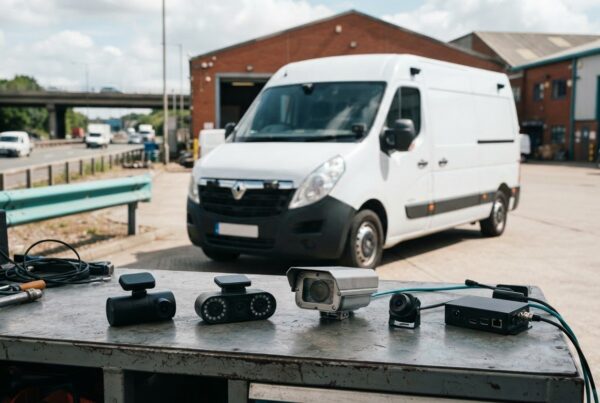
Vehicle footage may also support an alarm response. Footage from one or more vehicle cameras can provide additional detail about a dangerous event, while alarm and location information indicate where it happened. Define who reviews the footage and how it informs incident records.
Test the complete process using realistic scenarios, such as a collision, breakdown or missed check-in. Confirm that alerts reach the right person, location details are understandable and escalation steps work. Review incidents and near-misses to identify gaps, then update procedures and employee training. To connect operational oversight with fleet processes, explore fleet management software as a next step.
Fleet Software Solutions: Vehicle Tracking
Fleet Software Solutions provides Vehicle Tracking to help transport organisations oversee vehicles as part of day-to-day fleet management. It can be a useful addition when managers need a clearer view of business vehicle use alongside lone-worker procedures.
Vehicle Cameras can add visual context to fleet operations, while Grey Fleet Management and Mileage Capture support oversight of business journeys in privately owned vehicles. Alongside clear reporting and response procedures, these tools can help connect fleet information with a wider approach to driver safety. Choose the solutions that address your operational priorities, whether tracking vehicles, managing grey fleet activity or recording business mileage.
For a practical discussion about Vehicle Tracking and related fleet solutions, contact Fleet Software Solutions or visit fleetsoftwaresolutions.co.uk.
Turn your safety approach into an operational plan
Start by identifying where your procedures and fleet information need to work more closely together. Map how an alert will be handled, what journey context managers need and which records support follow-up. This gives your organisation a practical basis for prioritising driver risk reduction and lone worker solutions, rather than adding technology without a clear purpose.
Fleet Software Solutions provides Vehicle Tracking, Vehicle Cameras and Grey Fleet Management for different aspects of business vehicle oversight. Consider which solutions fit your priorities, from understanding vehicle use to managing work journeys in privately owned vehicles. The aim is a joined-up approach that fits your operations and supports informed decisions.
To discuss options for your fleet, contact Fleet Software Solutions. A clear next step can help you build a more consistent approach to safety and oversight.
Frequently Asked Questions
What are the responsibilities of transport organisations that hire lone workers?
Organisations must plan how safety risks are assessed, controlled and followed up, including when employees work away from direct supervision. According to the UK legislation register, the Health and Safety at Work etc. Act 1974 is the cornerstone of employers’ duty to protect employees’ health, safety and welfare; the Reporting of Injuries, Diseases and Dangerous Occurrences Regulations 2013 require reporting certain incidents. In practice, assign responsibility for missed check-ins and incident reviews.
What is lone working and how does it affect the transport industry?
Lone working includes transport duties carried out without close or direct supervision, such as completing a delivery alone or travelling between sites. The practical question is whether a worker can raise an alarm and receive a response if something goes wrong. Make arrangements clear by identifying who works alone, when they should report progress and who follows up concerns.
How can companies reduce risks?
Match controls to the task instead of relying on one general rule. For example, a route involving remote delivery points may need agreed contact points, while repeated near-misses at a depot entrance could prompt a review of vehicle movements. Ask workers about practical difficulties, record incidents and use the findings to adjust procedures, training or work planning.
What are the risks of driving for work?
Driving for work can expose employees to collisions, fatigue, vehicle defects and changing road conditions. The task itself can add hazards: an insecure load may shift, while coupling or uncoupling a trailer involves work outside the cab. Risks also differ between a familiar urban delivery route and a longer journey in poor weather, so assessments should reflect the work being done.
What driver risk reduction solutions are available for UK fleets?
An approach to driver risk reduction and lone worker solutions can combine practical procedures with tools suited to the vehicles and workforce. Vehicle Tracking supports vehicle oversight, while Vehicle Cameras provide visual context for fleet operations. Grey Fleet Management addresses business use of privately owned vehicles, and Lone Worker Protection supports arrangements for employees working alone. Choose tools according to identified risks and how managers will use the information.
How do telematics and driver monitoring systems reduce road risk?
Telematics can support driver risk reduction and lone worker solutions by helping managers spot patterns that may need attention, such as speeding, harsh braking or repeated idling. Use these insights to discuss behaviour with drivers, focus training and review procedures. Configurable alerts and reports can highlight relevant events, while clear communication about monitoring helps keep employees informed.