
Knowing what equipment you have is only the starting point. You also need to know where it is and how it is being used. Plant asset management means keeping organised machinery records and monitoring each asset’s identity, location, condition and use. A plant machinery asset management system brings this information together to help teams understand their assets and plan how to use them.
Records quickly lose value when machinery moves between sites or details go out of date. Linking every asset to a clear identity and reliable information helps managers see what is available and where attention may be needed.
This article explains what counts as a plant asset, how machinery can be identified and tracked, and what location and utilisation data can tell you. It also shows how asset records support decisions about equipment use, maintenance and future investment, and where tracking fits into day-to-day operations.
Key Takeaways
- Interpret location and utilisation information together to understand where machinery is and how effectively it is being used.
- Recognise which property and equipment qualify as plant assets, and why accurate records support better decisions over their working life.
- Connect each machine’s identifier to consistent asset records so its location, condition and details can be tracked.
- See how maintenance planning can use equipment usage and inspection records to help anticipate servicing needs and reduce disruption.
Equipment location tracking and utilisation
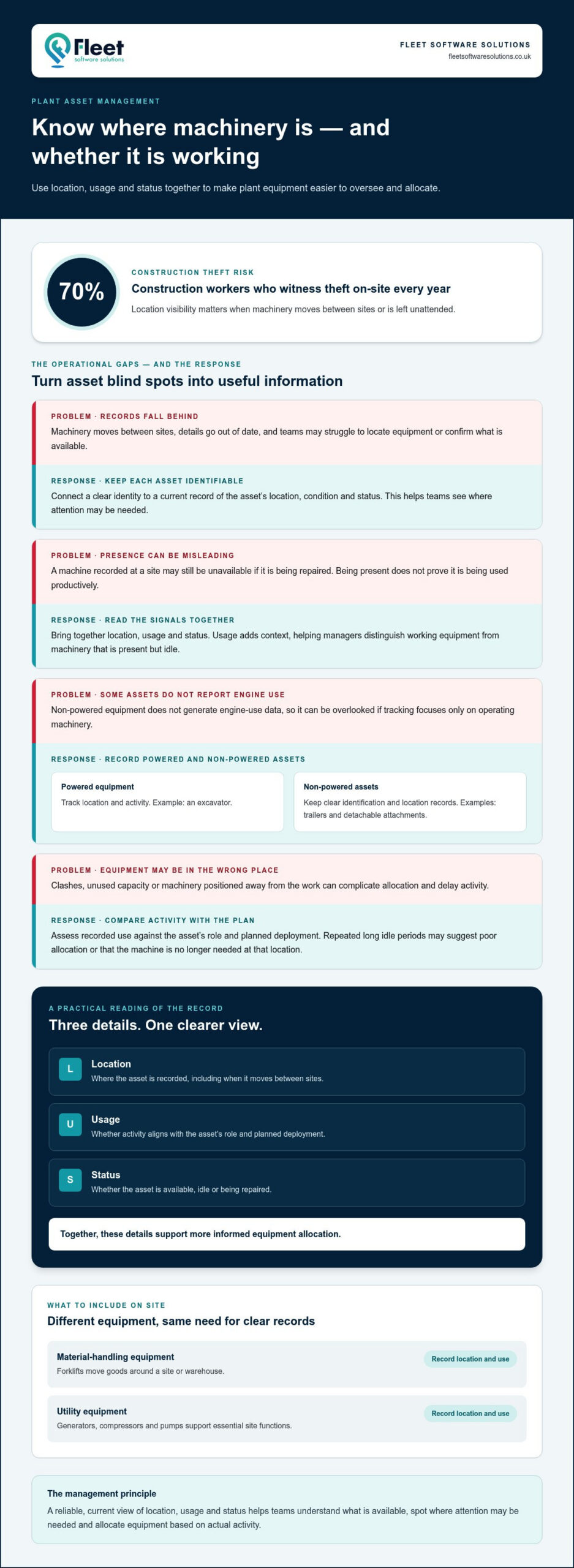
Poor plant machinery management can leave teams unable to locate equipment, identify idle capacity or spot missing assets. These gaps may delay work, complicate allocation and weaken oversight of equipment condition, especially when records do not reflect movements between sites.
Construction theft adds a measurable operational risk: 70% of construction workers witness theft on-site every year. Location visibility matters when machinery moves between sites or remains unattended, but tracking also helps teams understand how equipment is being used.
Plant asset management software can bring together information about location, usage and status. Interpret those details together: a machine recorded at a site may still be unavailable if it is being repaired. Usage records provide context, helping managers distinguish working equipment from machinery that is present but idle. This supports allocation based on actual activity.
Powered equipment, such as an excavator, can be monitored for location and activity. Non-powered assets, such as trailers or detachable attachments, also need clear identification and location records, even though they do not generate engine-use data. Include both types to avoid overlooking assets that do not report operational activity.
Material-handling equipment, including forklifts, moves goods around a site or warehouse. Utility equipment, such as generators, compressors or pumps, supports essential site functions. Recording each item’s assigned location and use helps managers identify clashes, unused capacity and equipment positioned away from the work that needs it.
Assess utilisation by comparing recorded activity with an asset’s role and planned deployment. Presence alone does not prove productive use. Repeated long idle periods, for example, may suggest that a machine is poorly allocated or no longer needed at that location. A reliable record of its current location, usage and status gives managers a clearer basis for decisions.
Plant asset examples and definitions
A plant asset is generally a fixed asset, such as property or equipment, expected to be used long term. On a manufacturing site, examples include a production line, a compressor, a forklift or a fixed building. A mobile excavator can also be a plant asset when the business owns it for ongoing work. Manufacturing machinery and equipment have an average useful lifespan of around 10-20 years.
Classifying assets clearly helps distinguish long-term operational equipment from items consumed during production. A factory conveyor, for example, may support production over many years, while packaging materials are used up as products are made. This keeps asset records focused on property and equipment with continuing operational value.
Accurate records can support depreciation calculations and decisions about replacement, upgrades and refurbishment. A maintenance team, for example, might compare a press’s recorded age and condition before recommending refurbishment or replacement. A plant machinery asset management system can organise this information, but it is useful only while asset details remain current.
In the UK, software costs depend on the system’s scope, required features, asset numbers and integrations; a price is given after a quote request. These factors shape the configuration and the work needed to connect records with existing business processes.
To implement a system, first define which assets you need to manage and what decisions the records should support. Reconcile existing information, assign consistent identifiers, then record useful fields such as make, model, serial number, location and condition. A manufacturer, for example, could start with production-critical machinery, resolve incomplete records and then add supporting equipment.
Useful integrations depend on how the business manages equipment. Accounting records can support depreciation information, while links to maintenance systems can connect asset details with service histories. Procurement data can link purchases to asset records. Agreeing which system owns each field helps prevent conflicting versions and supports consistent interpretation.
For a related view of tracked plant and machinery, explore plant machinery tracking as part of the wider asset picture.
Plant machinery identification and tracking
Identification connects each machine to a distinct record; tracking keeps its details and status current. For UK workplaces, assess maintenance and inspection records in light of the machinery’s use, condition and site risks.
Identifying plant machinery
Plant machinery identification gives each asset a unique reference that connects its physical label to a digital or paper record. This helps staff distinguish similar machines, such as two forklifts, and trace information when equipment changes location.
Choose an asset tag suited to the machine’s environment, including exposure to heat, dust, oil and industrial conditions. Each tag number should match a specific entry in the Fixed Asset Register. For example, scanning a compressor’s tag should open its corresponding record, not a general equipment list.
RFID tags can suit large-scale industrial tracking when automatic scanning and real-time tracking are needed. Barcodes provide another way to identify assets. Choose a method that fits the equipment and the site’s tracking requirements.
Regulations and asset records
UK maintenance and inspection requirements depend on the equipment, how it is used and the risks in its working environment. Keep records that connect each machine to its identity, condition, location and relevant inspection or maintenance history, so teams can follow its status.
Consistent records support management oversight by making asset details and verification findings easier to compare. A record for a production machine, for example, can include its make, model, serial number, location, condition and a photograph.
Verification checks whether recorded assets exist, where they are and what condition they are in. Compare findings line by line with the Fixed Asset Register, and document missing assets, unrecorded additions and location mismatches. Regular checks help keep the register current and provide a documented programme for auditors to review.
Incomplete or inaccurate records can undermine reporting, even when machinery has a readable tag. Record each discrepancy against the relevant asset, then update its details so the register reflects the equipment on site. This gives managers a clearer basis for reviewing records and planning oversight.
How does plant machinery asset management software track maintenance and inspections?
Software can connect maintenance and inspection records to individual machines, giving teams a structured view of equipment needs. A record can show an asset’s identity, service history, inspection findings and outstanding work. A technician reviewing a pump, for example, can see earlier repairs alongside the latest inspection notes.
Maintenance alerts can be based on equipment usage rather than calendar dates. This matters when one excavator works intensively while another remains idle, as operating hours can indicate different servicing needs. Usage-based alerts help managers plan attention around activity instead of relying only on fixed dates.
Preventive maintenance can be scheduled to minimise unexpected plant downtime. A planned task might involve inspecting a conveyor before wear affects production or servicing a generator before its next deployment. Recording the work against the correct machine preserves a useful history for future decisions.
Inspection records make findings easier to follow up. Staff can document an observation, link it to the relevant asset and record the action taken. If an inspection identifies damage to a forklift component, for instance, the record can keep the finding connected to the machine’s history and subsequent work.
Useful records distinguish completed work from outstanding tasks. Managers can review service dates, usage information and inspection outcomes together, then prioritise equipment that needs attention. When several machines support the same production process, their records help teams plan work without assuming that every asset is in the same condition.
Reliable tracking depends on linking each maintenance entry to the correct machine and keeping records current. Incomplete histories make recurring faults harder to understand and scheduled work harder to verify. Consistently recording usage, findings and actions turns maintenance data into practical oversight.
To connect equipment oversight with location visibility, discuss plant machinery tracking for your operation.
Fleet Software Solutions: Vehicle Tracking
Fleet Software Solutions provides Vehicle Tracking for businesses that need oversight of vehicles supporting plant operations. Machinery records help explain equipment location and use, while vehicle tracking addresses the related task of managing vehicles travelling between sites or carrying teams and materials.
Vehicle tracking is relevant when operational planning involves both plant assets and road vehicles, and managers need a clearer view of each. Vehicle Cameras, Grey Fleet and Mileage Capture can also support specific fleet needs, such as managing business journeys in employees’ own vehicles.
These tools complement plant asset records; they don’t replace machinery identification, maintenance histories or inspections. Choose the information that fits the decision at hand, whether that’s machinery allocation or vehicle oversight. To discuss your fleet requirements, contact Fleet Software Solutions.
Make asset data part of everyday decisions
Start by deciding which operational decisions your records should support. A plant machinery asset management system is most useful when teams apply its information consistently, rather than treating asset data as an administrative task separate from daily work.
Agree who updates records when equipment changes hands, moves between locations or receives maintenance. Build a regular review into existing operational routines so managers can identify outdated details and staff know where to record changes. Clear ownership keeps information useful as machinery, workloads and site requirements evolve.
As your approach develops, consider how equipment information can support planning across the wider operation. The aim is not simply to collect more data, but to make relevant information accessible to the people making allocation and oversight decisions. This provides a practical foundation for managing assets over time.
For support with tracking across your operation, contact Fleet Software Solutions to discuss your requirements. A considered next step can help you turn asset information into a more consistent part of operational planning.
Frequently Asked Questions
What is plant asset management?
Plant asset management is the organised oversight of long-term equipment and property used in business operations. It helps a business understand what it owns, how assets support work and what decisions may be needed over their working lives. A manufacturer, for example, could review production machinery to plan refurbishment, replacement or changes to equipment allocation.
What is a plant machinery asset management system?
A plant machinery asset management system organises information and processes around machinery throughout its working life. It can bring records, location information, operating activity and maintenance history into a shared view. A site manager, for example, can use an asset record to see whether a machine is available for a new project or committed elsewhere.
What features should plant machinery asset management software include?
Useful software should help teams maintain consistent asset records, review location and utilisation, and connect maintenance activity to the right machine. Reporting and alerts can draw attention to changes or outstanding work. A manager might filter equipment by site and status before allocating machinery, then review its usage to check whether that allocation remains appropriate.
How do plant machinery asset systems compare with fleet management software?
Plant asset systems focus on machinery and equipment, while fleet management software centres on vehicles and related fleet processes. Their functions may overlap when a business manages both mobile plant and road vehicles. Machinery records support equipment oversight, while vehicle tools such as mileage capture help businesses manage business journeys and vehicle activity.
How can asset management software track plant machinery utilisation and costs?
A system can bring recorded usage and availability together, allowing managers to compare how equipment is deployed with its assigned purpose. To assess costs, businesses need to record or connect relevant expenses, such as servicing or hire, to the appropriate asset. Comparing those figures with operating activity can help identify equipment that may be underused or costly to keep in service.