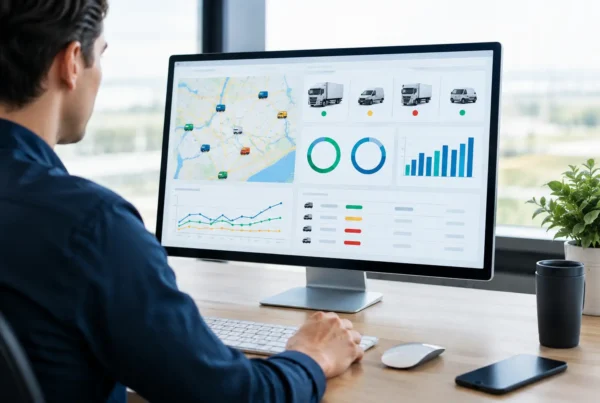

A camera fitted to a vehicle only earns its place when the footage can be found, understood and acted upon quickly. A useful vehicle camera software review therefore goes beyond lens quality or the number of channels. For fleet managers, the real test is whether the platform reduces the time and cost of dealing with incidents, improves driving standards and provides evidence that stands up to scrutiny.
The right software turns video into an operational tool. The wrong system leaves managers scrolling through lengthy recordings, chasing files from installers or drivers, and paying for features that nobody uses. This review framework sets out what UK fleets should assess before committing to a camera platform.
What vehicle camera software should deliver
Vehicle camera software sits between the footage captured on the road and the decisions made in the office. It should bring live or recorded video together with vehicle location, speed, journey history and event data. That combination gives context to a clip. A harsh braking alert means something very different when the footage shows a pedestrian stepping into the road rather than a driver following too closely.
For a busy operation, speed matters. If a third-party allegation arrives on Monday morning, the transport team needs to identify the relevant vehicle, journey and time window in minutes. They should then be able to review a clear clip, preserve it correctly and share it with an authorised insurer, broker or claims handler without exporting unnecessary personal data.
The commercial benefit is not limited to disputed claims. Camera evidence can support driver debriefs, reveal recurring loading-bay risks, confirm attendance at customer sites and help managers distinguish a genuine service delay from poor route planning. The platform should make these tasks easier, not create another inbox full of alerts.
Vehicle camera software review: the criteria that matter
1. Incident retrieval and evidence quality
Start with the workflow for finding footage. Ask how an event is created, whether it is automatically uploaded, and how quickly it becomes available. A system that records excellent video but requires the vehicle to return to depot before a file can be recovered may not suit a field-based fleet operating across the UK.
Good software allows users to search by vehicle, driver, date, location, journey or event type. It should show the clip alongside a map, speed trace and timestamp, with enough detail to explain the sequence of events. Video quality also needs to be dependable in poor light, rain and at night. Front-facing footage may be sufficient for some fleets, while others need side, rear, cargo-area or driver-facing views.
Check how evidence is protected. Useful questions include whether clips can be marked for retention, whether downloads carry audit information, and who can view or share sensitive footage. In a claim, a neatly packaged event with time, location and telematics data is far more valuable than an isolated video file with little context.
2. Live viewing without unnecessary cost
Live streaming can be valuable when there is a serious incident, a vehicle security concern or a lone-worker welfare issue. It can let an authorised manager see what is happening before deciding whether to contact the driver, customer or emergency services.
It is not always the right default. Continuous live viewing consumes mobile data, can increase costs and may encourage poor management habits if it is used as routine surveillance. Most fleets are better served by configurable, event-led access: live video when a genuine operational reason exists, supported by recorded clips for normal incident review.
A vehicle camera software review should clarify whether streaming is included, what data allowance applies, how footage quality changes with network coverage and whether the software shows an honest picture when connectivity is weak. Rural work, construction activity and long-distance haulage all require realistic expectations about mobile coverage.
3. Event intelligence that managers can trust
Camera systems can trigger recordings from harsh acceleration, braking, cornering, speeding, collision detection or manual driver activation. Some use AI to identify behaviours such as mobile phone use, distraction, smoking, seatbelt non-compliance or close following.
These features can reduce manual review, but their value depends on accuracy and configuration. Too many low-value alerts create alert fatigue. Managers stop reviewing the queue, drivers lose confidence in the programme and the system becomes an expensive archive rather than a risk-management tool.
Look for the ability to adjust thresholds by vehicle type, route or operating risk. A van working in urban stop-start traffic should not necessarily be measured in the same way as a lorry travelling primarily on motorways. The best approach is to start with a limited set of meaningful events, review their quality and refine the rules with drivers and supervisors.
4. Driver coaching and fair accountability
Video is most effective when it supports a clear, fair driver-management process. Footage can show whether a harsh event resulted from avoidable behaviour, defensive driving or an external hazard. That prevents managers from treating every alert as evidence of poor performance.
The software should make it practical to record outcomes: reviewed, no action required, coaching completed, repeat issue identified or further investigation needed. Where driver scorecards are used, they should combine camera events with wider telematics data rather than reducing performance to a single score.
This is also where policy matters. Drivers should understand what cameras record, when live viewing may be used, how long footage is retained and how they can raise concerns. A transparent rollout is more likely to improve behaviour than a system introduced solely as a disciplinary measure.
5. Reporting that answers operational questions
A fleet platform does not need dozens of dashboards. It needs reports that help someone make a decision. Useful examples include incident volumes by depot, recurring event locations, drivers requiring coaching, camera health status, unreviewed high-severity events and the time taken to close investigations.
Consider the audience for each view. An operations director may want a monthly trend showing claims exposure and improvement. A transport manager needs an exception list for this week. A health and safety lead may need evidence that incidents were reviewed and actions recorded. Configurable dashboards are valuable because those requirements differ between teams and change as the fleet grows.
Integration is equally important. If vehicle tracking, driver identification and camera footage sit in separate systems, staff spend time matching records manually. A device-agnostic platform that brings compatible camera and telematics data into one view can give managers a more complete account of each journey.
Data protection, retention and access control
Vehicle camera deployments involve personal data. Driver-facing footage, audio recording and identifiable members of the public all require careful governance. The question is not whether cameras are permitted, but whether the organisation has a proportionate purpose, suitable policies and appropriate controls.
Before selecting software, establish who may access footage, what approval is required for live viewing, where data is stored, how long it is retained and how requests are handled. Short retention periods may reduce data exposure, but they must still give the business enough time to identify and preserve relevant evidence after an incident or allegation.
Role-based access is particularly useful in multi-site fleets. A local manager may need to review events for their team, while only a small central group can download clips or change retention settings. An audit trail helps demonstrate that footage has been handled responsibly.
The total cost is more than the monthly licence
Comparing camera software on price alone can produce a false saving. The cost model may include hardware, installation, SIM data, cloud storage, streaming, support, replacement equipment and time spent by internal staff reviewing events.
Assess the cost against measurable outcomes. If evidence helps defend even a small number of disputed claims, reduces excess costs, shortens investigations or prevents repeat collisions, the investment may be justified. Equally, a feature-heavy platform is poor value if its alert settings and reporting are too complex for the team to maintain.
A practical supplier should help build the business case around your actual operating profile: fleet size, vehicle types, claim history, routes, driver risk and service commitments. Fleet Software Solutions takes this consultative approach because camera choice and software configuration should follow the operational problem, not the other way round.
How to make the final selection
Use a short pilot with representative vehicles, routes and drivers. Test the issues that matter to your business: night footage, event upload times, mobile coverage, clip retrieval, reporting, user permissions and the quality of supplier support. Ask the people who will use the system daily to complete realistic tasks rather than simply watching a demonstration.
Set success measures before the pilot begins. That might mean retrieving a requested clip within ten minutes, reducing unreviewed high-risk events, improving the completion rate of driver coaching or cutting the time spent on incident investigations. A camera system becomes easier to justify when it is measured against a defined operational outcome.
Choose software that gives your team the evidence they need at the moment they need it, while respecting drivers and keeping administration under control. The most valuable camera platform is not the one with the longest feature list. It is the one that helps your fleet make faster, fairer and better-informed decisions after every meaningful event.