
What if the most significant threat to your fleet’s profitability isn’t the rising cost of fuel, but the invisible data gaps in your daily operations? With the full enforcement of London’s DVS Phase 2 and the July 2026 Smart Tachograph 2 mandate for international vans, the margin for error has effectively vanished. Implementing sophisticated fleet telematics solutions is now a fundamental requirement for any UK business seeking to balance these complex regulatory burdens against the need to reduce fuel wastage. You likely recognise that traditional oversight no longer provides the precision required to maintain a competitive and compliant edge in today’s market.
This 2026 guide demonstrates how modern systems convert raw vehicle data into actionable intelligence, ensuring your business remains compliant, safe, and cost-effective. We will detail how to navigate the final 3G network sunsets, leverage AI-powered video for driver safety, and utilise precise mileage capture to satisfy HMRC reporting. By the end of this article, you’ll understand how to integrate these tools to lower insurance premiums, improve asset security, and protect your bottom line whilst maintaining a high standard of duty of care for your mobile workforce.
Key Takeaways
- Understand how to navigate the 2026 UK regulatory landscape, including DVS Progressive Safe System requirements and HMRC mileage reporting, to avoid significant financial penalties.
- Discover how modern fleet telematics solutions transform raw vehicle data into actionable intelligence that proactively addresses fuel wastage and driver safety risks.
- Learn to identify the essential hardware features, such as high-frequency polling and AI integration, that distinguish high-performance tracking from basic legacy systems.
- Realise the benefits of extending oversight to non-powered assets and lone workers to ensure the security of high-value plant machinery and the safety of your entire workforce.
- Gain a clear framework for evaluating telematics providers based on their ability to offer scalable software, reliable hardware, and consultative UK-based support.
Fleet Telematics: Why They Matter in 2026
At its core, telematics technology represents the sophisticated convergence of telecommunications and informatics, enabling the seamless transmission of vehicle data over long distances. In 2026, this discipline has matured far beyond simple location tracking. Modern fleet telematics solutions now utilise real-time cloud computing and artificial intelligence to interpret complex datasets, providing managers with a granular view of their operations. This integration allows for the immediate conversion of raw telemetry into strategic insights that drive business growth.
Operational priorities have fundamentally shifted from reactive monitoring to proactive management. Instead of reviewing historical logs to understand why a vehicle’s fuel consumption spiked, managers now receive real-time alerts that allow them to address idling or aggressive driving as it happens. This transition is essential for maintaining a competitive edge, as it links specific driver behaviours directly to broader business outcomes like reduced wear and tear and improved asset longevity.
The Evolution from Simple GPS to Integrated Intelligence
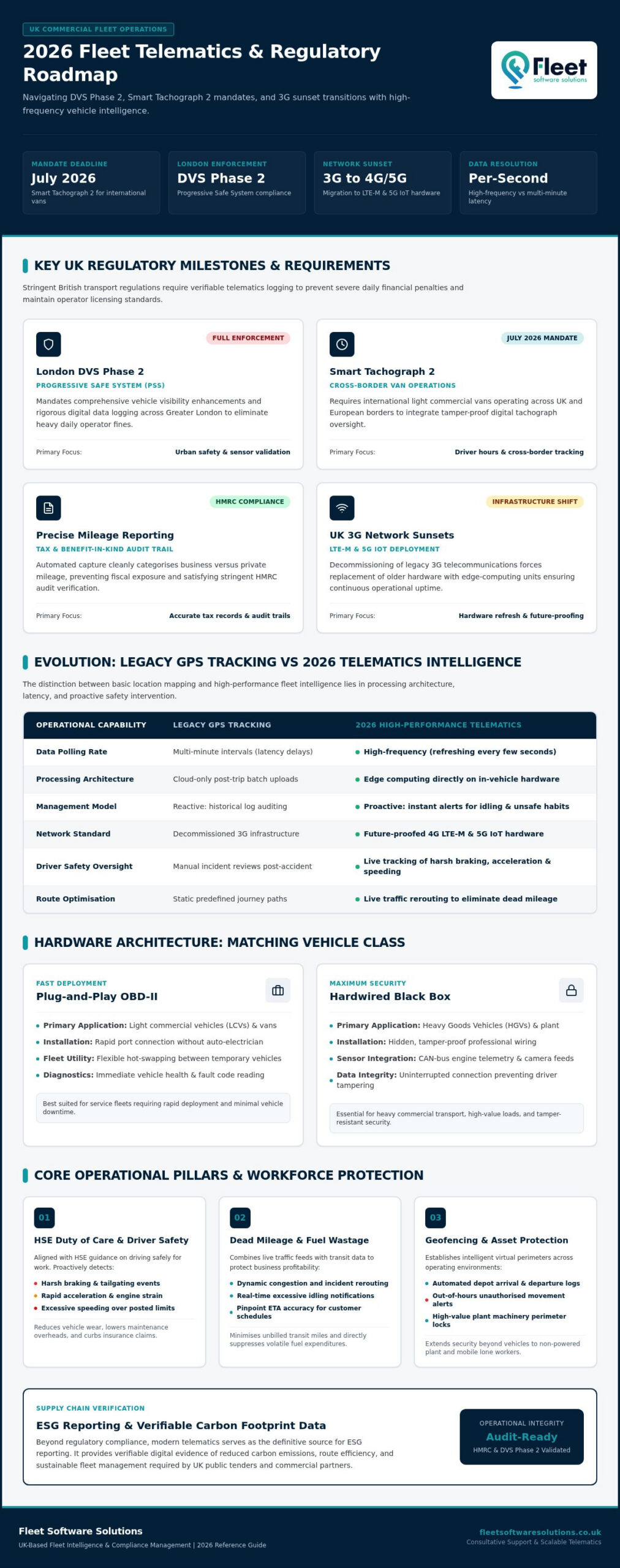
Technological progress in the UK has been accelerated by the decommissioning of legacy 3G networks, forcing a rapid transition toward 4G LTE-M and 5G IoT hardware. This new generation of equipment relies on edge computing, where processing occurs on the device itself to ensure safety-critical data is handled with minimal latency. It’s no longer enough to have a dashboard that shows a map; today’s software centralises disparate data points, including engine health, camera feeds, and load sensors, into a single pane of glass for total operational oversight.
Why British Businesses are Prioritising Telematics Now
UK-specific economic pressures, particularly the volatile cost of fuel and rising insurance premiums, have made efficiency a matter of survival for many operators. Businesses are also facing more complex road safety regulations, such as the Direct Vision Standard (DVS) in London, which demand rigorous data logging to avoid heavy daily fines. Beyond legal compliance, data from fleet telematics solutions is now the primary source for ESG reporting, providing the verifiable evidence of carbon reduction and sustainable practices that modern clients and government bodies expect from their supply chain partners.
Core Features of a High-Performance Telematics Suite
High-performance fleet telematics solutions rely on a robust hardware foundation tailored to your specific operational needs. You can choose between plug-and-play OBD-II devices, which offer rapid installation for light commercial vehicles, and hardwired black boxes that provide a more secure, tamper-proof connection for heavy HGVs. The critical differentiator is high-frequency data polling. Systems that refresh data every few seconds, rather than at multi-minute intervals, provide the precise real-time visibility required to make split-second dispatch decisions and monitor vehicle health accurately.
Monitoring driver behaviour is a fundamental pillar of operational stability. By tracking metrics such as harsh braking, rapid acceleration, and excessive speeding, you can identify high-risk habits before they lead to costly accidents. This proactive approach aligns with HSE guidance on driving safely for work, helping you meet your legal duty of care whilst reducing vehicle wear and tear. Improving these behaviours directly extends fleet longevity and lowers your long-term maintenance overheads.
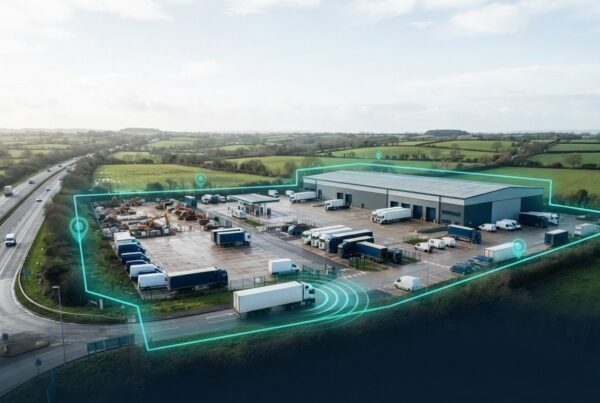
Geofencing adds a layer of automated security and logistical efficiency to your daily workflow. You can establish virtual boundaries around depots, customer sites, or high-risk areas to receive instant alerts upon arrival or departure. This technology automates site arrival logging and protects your assets by alerting you if a vehicle leaves a designated zone outside of scheduled working hours, providing essential peace of mind for your high-value equipment.
Real-Time Vehicle Tracking and Route Optimisation
Effective tracking reduces “dead mileage” by combining live traffic feeds with historical transit data to identify the most efficient paths. This allows for dynamic rerouting to avoid congestion, ensuring your drivers stay on schedule despite roadworks or accidents. Accurate ETAs significantly enhance your professional reputation and customer satisfaction levels. By minimising unnecessary miles, you simultaneously lower fuel costs and reduce your fleet’s total carbon emissions. For a deeper understanding of how real-time telemetry achieves this, our guide to live fleet tracking systems explains how high-frequency cellular data replaces static vehicle logs with immediate, actionable intelligence.
Integrated Vehicle Cameras and AI Safety
Video telematics provides the visual context that GPS coordinates alone cannot offer. During a road traffic incident, integrated cameras capture high-definition footage of the surrounding environment, serving as a vital tool to exonerate drivers in “crash for cash” scams or disputed liability claims. Modern AI-enhanced cameras also monitor the cabin to detect signs of driver fatigue, smoking, or mobile phone usage, providing immediate voice coaching to correct dangerous habits before they result in a collision. Implementing these integrated camera and tracking systems ensures your safety protocols are backed by undeniable evidence whilst fostering a culture of professional accountability.
Navigating UK Regulatory Compliance via Telematics
Managing regulatory obligations in the UK is a complex, high-stakes responsibility where manual oversight often falls short. Modern fleet telematics solutions serve as a strategic engine for compliance, transforming how operators handle DVSA and HMRC requirements. By automating the data collection process, these systems eliminate the risk of human error whilst providing a robust “single source of truth” during audits. This level of oversight is vital because the financial and legal penalties for non-compliance are severe; failing to adhere to UK rules on drivers’ hours or safety standards can result in hefty fines, vehicle seizures, or even the loss of an operator’s licence.
The administrative efficiency gained through automated reporting cannot be overstated. Instead of spending hundreds of hours each year manually reconciling logbooks and fuel receipts, managers can generate audit-proof reports with a few clicks. This allows your team to focus on core operations, secure in the knowledge that every journey, rest period, and vehicle safety check is documented and stored securely for the required 56-day roadside inspection period. This proactive approach ensures you’re always prepared for a DVSA inspection without the last-minute scramble for paperwork.
DVS Compliance and the Progressive Safe System
For businesses operating HGVs over 12 tonnes in Greater London, the Direct Vision Standard (DVS) is a non-negotiable legal requirement. As of 2026, all such vehicles must hold a safety permit, which requires a minimum three-star rating or the installation of a Progressive Safe System (PSS). This technical suite includes blind-spot sensors, moving-off alerts, and integrated camera systems designed to protect vulnerable road users. Operating without a valid permit results in a Penalty Charge Notice (PCN) of £550 per day, making fleet telematics solutions that incorporate PSS hardware a pragmatic investment to avoid these escalating costs.
Automating HMRC-Compliant Mileage Capture and Grey Fleet
Managing a grey fleet, where employees use their personal vehicles for business purposes, presents a unique set of challenges regarding duty of care and tax accuracy. Telematics software simplifies this by precisely organising business versus private mileage, ensuring that HMRC reporting is accurate and transparent. This digital capture prevents the common issue of fraudulent or exaggerated mileage claims, which can lead to significant tax liabilities for the company. By providing a clear distinction between professional and personal use, you protect both the business and your drivers whilst maintaining full compliance with current UK tax legislation.
Protecting Your Assets and Workforce: Beyond the Vehicle
Modern fleet telematics solutions aren’t limited to the vans and trucks on the road. They encompass a wider ecosystem of high-value equipment and the people who operate them. By centralising the oversight of powered vehicles, non-powered assets, and isolated personnel into a unified platform, you gain a comprehensive view of your entire operational risk. This holistic approach ensures that no part of your mobile workforce or inventory remains invisible, providing the strategic stability required to manage complex UK site operations effectively.
Managing these disparate elements through a single interface simplifies your administrative burden and ensures that your safety protocols are consistently applied across the board. It’s about more than just tracking; it’s about building a resilient operation where every asset and employee is accounted for. The peace of mind provided by a single source of intelligence allows you to make informed decisions about resource allocation without the need to toggle between multiple, disconnected systems.
Plant and Machinery Tracking for High-Value Equipment
High-value plant equipment often operates on remote or unmonitored sites, making it a prime target for theft. Utilising battery-powered or solar-powered trackers allows you to maintain visibility even when machinery is disconnected from a primary power source. You can establish geofences around specific project boundaries; if a generator or excavator moves outside these designated coordinates, the system triggers an immediate alert to your management team. Beyond security, monitoring engine hours enables you to transition from reactive repairs to scheduled preventative maintenance, ensuring your machinery remains reliable whilst reducing long-term replacement costs.
Lone Worker Protection for the Mobile Workforce
Employers have a strict legal duty of care for staff who work in isolation or high-risk environments, such as remote maintenance engineers or delivery drivers operating in unsociable hours. Integrated lone worker protection features, including wearable panic buttons and automated “man-down” sensors, provide a critical safety net. If a worker suffers a fall or encounters a threatening situation, the device sends an instant distress signal to your central dashboard. Because the system provides real-time location data, you can coordinate an emergency response with surgical precision, potentially saving vital minutes during a crisis.
To secure your high-value equipment and support your team, you can view our range of asset and lone worker tracking tools to find a bespoke fit for your business requirements.
Selecting the Right Fleet Telematics Partner for Your Business
Selecting a provider for your fleet telematics solutions is a strategic decision that extends far beyond a simple transaction. You need a partner who understands the specific pressures of the UK market, from the 2026 Smart Tachograph 2 mandates to the evolving requirements of the Direct Vision Standard. High-quality hardware is a prerequisite; it must be future-proofed against the 3G sunset and capable of high-frequency polling. However, the software’s ease of use and the availability of responsive, local support are equally critical. A UK-based provider offers a distinct advantage here, providing the nuanced regulatory knowledge that offshore competitors often lack.
Scalability is another essential factor. Your telematics system should be capable of growing alongside your business, whether you’re adding five vans or fifty HGVs. The transition process should be methodical and deliberate. It begins with a consultative assessment of your fleet’s specific pain points, followed by professional, non-disruptive installation by qualified technicians who ensure every sensor and camera is calibrated for peak performance. This structured approach minimises downtime and ensures your team is trained to utilise the system from day one.
Evaluating Software Integration and Data Usability
Raw data is only valuable if it’s accessible and actionable. You should look for platforms that offer robust APIs, allowing you to link vehicle data directly with your existing CRM, payroll, or maintenance scheduling systems. This integration prevents the siloing of information and ensures a seamless flow of intelligence across your business. Rather than generic data dumps, your provider should offer customisable reporting that highlights the specific metrics that matter to your bottom line. A user-friendly mobile application is also vital, enabling managers to monitor driver safety and asset security whilst they’re away from their desks.
The Fleet Software Solutions Advantage
Fleet Software Solutions stands as a pragmatic and reliable partner for UK-wide business fleets. We offer a comprehensive suite of services that addresses the entire mobile workforce, ranging from grey fleet management and mileage capture to specialised DVS compliance and lone worker protection. Our goal is to act as a bridge between complex vehicular data and the strategic business intelligence you need to reduce costs and mitigate risk. We invite you to enquire about our bespoke fleet telematics solutions today to discover how a tailored approach can transform your operational oversight.
Strategic Oversight for a Future-Proof Fleet
The landscape of UK transport is undergoing a fundamental shift, moving away from simple location tracking toward a model of integrated, data-driven intelligence. By adopting modern fleet telematics solutions, you ensure that your business isn’t just reacting to rising costs and regulatory changes, but actively anticipating them. We’ve explored how high-performance hardware and AI-enhanced cameras provide the transparency needed to satisfy DVS requirements and HMRC mileage audits whilst simultaneously protecting your most valuable assets and isolated workers.
Achieving this level of operational stability requires a partner who understands the specific nuances of the British market. Fleet Software Solutions provides the UK-based expertise and specialist DVS tools necessary to maintain full compliance and safety across your entire mobile workforce. Whether you’re securing high-value plant machinery or ensuring the safety of a lone engineer, our consultative approach ensures your technology scales with your ambitions. Request a tailored quote for your fleet telematics needs to begin transforming your raw data into a strategic advantage. It’s time to gain the peace of mind that comes from total oversight.
Frequently Asked Questions
What is the difference between vehicle tracking and fleet telematics?
Vehicle tracking focuses purely on location and movement through GPS coordinates. In contrast, fleet telematics solutions encompass a broader spectrum, integrating telecommunications with informatics to monitor engine diagnostics, driver behaviour, and fuel efficiency. Whilst tracking tells you where a vehicle is, telematics explains how it’s being operated. This distinction is vital for businesses seeking to reduce operational costs and improve safety through detailed data analysis rather than simple location monitoring.
How much does a fleet telematics solution typically cost for a UK business?
The investment required for a fleet telematics solution depends on your specific hardware needs and the depth of data reporting required. Entry-level tracking generally involves lower monthly fees compared to advanced enterprise suites that include AI-powered cameras or DVS compliance tools. Most UK providers offer scalable subscription models, allowing you to pay per vehicle. It’s advisable to consider the total cost of ownership, including installation and hardware, against the potential fuel and insurance savings.
Will telematics help my business reduce its insurance premiums?
Utilising telematics often leads to lower commercial insurance premiums because it provides insurers with verifiable evidence of risk mitigation. By monitoring driver behaviour and implementing safety coaching, businesses can reduce the frequency of accidents. Some UK insurers offer significant discounts, potentially ranging from 5% to 30%, for fleets that maintain high safety scores. Additionally, integrated vehicle cameras accelerate the claims process by providing visual evidence, which helps to avoid costly, fraudulent “crash for cash” disputes.
Is it legal to track employees using telematics in the UK?
It is entirely legal to track employees for business purposes in the UK, provided you adhere to the Data Protection Act 2018 and UK GDPR. You must have a clear “legitimate interest,” such as ensuring driver safety or protecting company assets. Transparency is essential; you should inform drivers about what data is collected and why. Implementing a clear privacy policy and using hardware with privacy switches for personal mileage helps maintain trust and legal compliance.
How does telematics software help with HMRC mileage compliance?
Telematics software simplifies HMRC compliance by automatically logging every journey and distinguishing between business and private mileage. This digital record eliminates the inaccuracies associated with manual logbooks, which are often prone to human error or exaggeration. By providing an audit-proof trail of business miles, the system ensures that reimbursement claims are precise and transparent. This is particularly beneficial for managing grey fleet vehicles, where employees use personal cars for professional tasks.
What is a DVS permit and do I need telematics to get one?
A DVS (Direct Vision Standard) permit is a legal requirement for HGVs over 12 tonnes operating in Greater London. To obtain a permit, vehicles must meet specific safety ratings or be fitted with a Progressive Safe System (PSS). Whilst the permit itself is a document, you will likely need telematics-integrated hardware, such as blind-spot sensors and cameras, to meet the PSS technical requirements. These systems ensure your fleet avoids the £550 daily fines associated with non-compliance.
Can telematics systems be integrated with my existing business software?
Most modern fleet telematics solutions are designed to integrate seamlessly with your existing business software via APIs. This allows you to link vehicle data directly with your CRM, payroll systems, or maintenance scheduling tools. By synchronising these datasets, you can automate administrative tasks, such as calculating driver pay based on hours worked or triggering service alerts based on actual engine mileage. This connectivity ensures that fleet data becomes a central component of your broader business intelligence.
What happens to my data if the vehicle tracking hardware is stolen?
If a tracking device is stolen or tampered with, your historical data remains completely secure because it’s transmitted to and stored in a secure cloud-based server. The hardware itself acts only as a transmitter; it doesn’t store sensitive business information locally. In the event of theft, the system can often provide the last known location of the asset, aiding in recovery. Most professional systems also trigger an immediate tamper alert to notify managers if a device is disconnected.