
A Progressive Safe System plan is more than a list of equipment to fit. It is a fleet-wide process for identifying affected vehicles, checking requirements and keeping clear evidence of compliance. The first challenge is often working out which vehicles and journeys are in scope, particularly when a fleet includes HGVs with different Direct Vision Standard ratings.
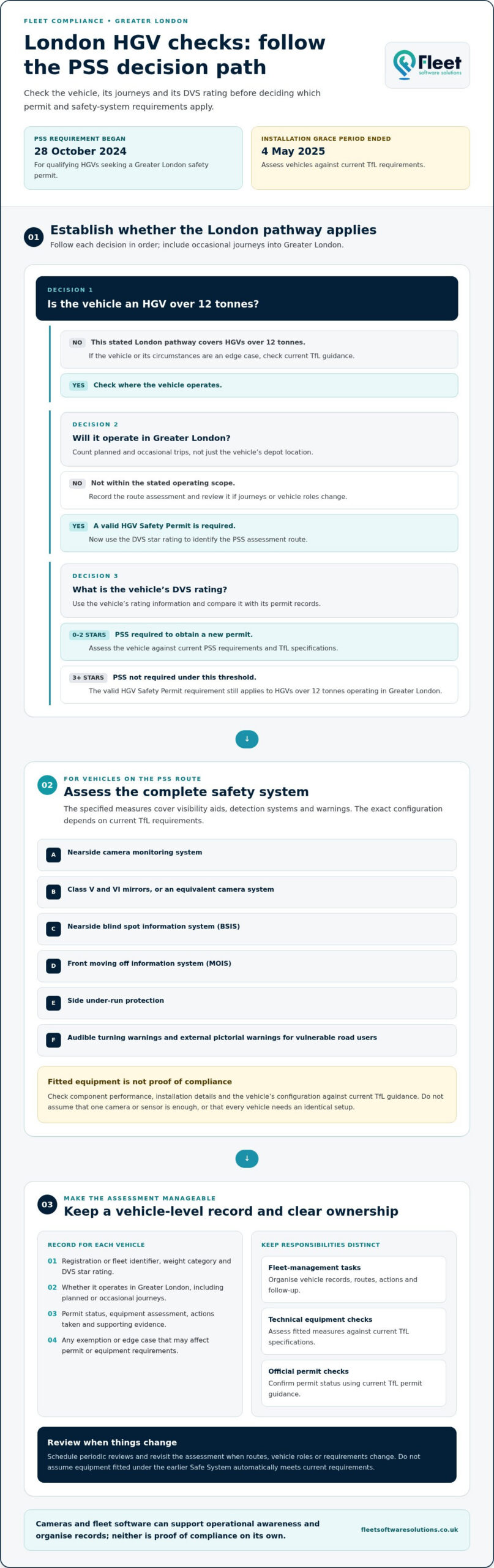
Since 28 October 2024, HGVs over 12 tonnes operating in Greater London with a DVS rating of zero, one or two stars have needed to meet the PSS requirements to obtain a safety permit. The installation grace period ended on 4 May 2025. HGVs over 12 tonnes operating in Greater London also need a valid HGV Safety Permit, although vehicles rated three stars or higher don’t need a PSS.
This guide explains how the progressive safe system relates to DVS ratings, which vehicles and safety measures need attention, and how to create a practical, documented fleet process. It also covers how vehicle records, fleet management software and camera systems can support oversight, without treating technology alone as proof of compliance.
Key Takeaways
- Use each vehicle’s DVS rating to establish which safety measures and permit checks belong in your compliance plan.
- Don’t assume equipment fitted under the earlier Safe System automatically meets current requirements. Assess each vehicle against current TfL guidance.
- Record vehicle details, actions taken and supporting evidence, then schedule periodic reviews.
- Separate fleet-management tasks, technical equipment checks and official permit checks so responsibilities and follow-up are clear.
- Use cameras and fleet management software to support operational awareness and organise vehicle records, not as proof of compliance on their own.
Progressive Safe System explained: who needs to understand it?
The Progressive Safe System (PSS) is a set of safety measures required for certain heavy goods vehicles (HGVs) operating in Greater London. It is designed to improve what drivers can detect around their vehicles and help protect vulnerable road users. Transport for London (TfL) administers the scheme through the Direct Vision Standard (DVS) and HGV Safety Permit system. Fleet operators therefore need to consider both each vehicle’s rating and where it operates.
The DVS rates an HGV from zero to five stars according to the driver’s direct view from the cab. The PSS addresses the visibility gap for lower-rated vehicles through additional measures. For background on how the rating works, see the Direct Vision Standard on Wikipedia. A star rating describes direct vision; equipment and permits relate to scheme requirements. Neither, on its own, guarantees that a vehicle is safe in every situation.
What does Progressive Safe System mean for an HGV operator?
In practice, operators need to identify vehicles covered by TfL’s requirements and establish whether the measures specified for each rating are in place. The aim is to improve awareness of people near the vehicle, particularly where the driver’s direct view may be limited.
No single camera, sensor or other device proves compliance by itself. Assess each vehicle against current TfL requirements and keep relevant information at vehicle level. This helps teams manage the complete applicable system instead of assuming one piece of equipment is enough.
Which vehicles and journeys should operators assess?
TfL’s scheme applies to HGVs over 12 tonnes operating in Greater London. Those vehicles need a valid HGV Safety Permit. For a new permit, vehicles rated zero, one or two stars must have a PSS; vehicles rated three stars or higher don’t need one under this threshold. The precise requirement depends on current official guidance.
Match each vehicle’s category and DVS rating to its intended journeys, including occasional trips into Greater London. A fleet based elsewhere may still have vehicles that enter the area, so route planning and dispatch arrangements matter as much as depot location. Record:
- the vehicle’s weight category and DVS star rating;
- whether it will operate in Greater London, including on planned or occasional journeys; and
- any exemption or edge case that may affect its permit or equipment requirements.
Check these details against current TfL permit guidance rather than relying on a general description of the scheme. This is particularly important for mixed fleets, vehicles that change roles and journeys with variable routes or destinations. A documented assessment gives fleet teams a clear basis for deciding which vehicles need further review and avoids assumptions about scope or exemptions.
How the Progressive Safe System relates to HGV ratings and safety measures
A DVS star rating and a PSS assessment answer different questions. The rating reflects the driver’s direct view from the cab; the applicable measures and permit requirements depend on that rating and TfL’s current rules. A vehicle’s stars help identify its compliance pathway, but don’t show that it meets every scheme requirement.
A safety rating describes a vehicle’s direct-vision performance. It isn’t, by itself, proof of Progressive Safe System compliance. In Greater London, HGVs rated zero, one or two stars need a PSS to obtain a new HGV Safety Permit, while vehicles rated three stars or higher don’t need a PSS. All HGVs over 12 tonnes operating in Greater London must have a valid permit.
What role does a vehicle safety rating play?
The rating determines which route an operator needs to assess; it doesn’t replace the permit process or technical requirements. Start with the vehicle’s authoritative DVS rating information and compare it with the details held for its HGV Safety Permit. If the documents conflict, resolve the discrepancy using TfL’s current guidance before relying on either record for planning.
Keep the rating alongside the vehicle’s registration or fleet identifier. This makes it easier to identify which vehicles need a PSS assessment when routes or fleet assignments change. Verify the threshold and its implications against current TfL permit guidance before making operational decisions.
Which safety measures may form part of the system?
TfL’s PSS requirements cover visibility aids, detection systems and warnings, rather than one universal device. The specified components include a nearside camera monitoring system, Class V and VI mirrors or an equivalent camera system, a nearside blind spot information system (BSIS), and a front moving off information system (MOIS). Requirements also include side under-run protection, audible turning warnings and external pictorial warnings for vulnerable road users.
The exact configuration and technical standards matter. TfL publishes specifications for BSIS and MOIS, and its current guidance should be used to check component performance and installation details. Don’t assume that a camera or sensor meets the standard simply because it is fitted, or that every vehicle needs an identical configuration.
| DVS rating | Assessment to make | Useful records to organise |
|---|---|---|
| Zero, one or two stars | For a new permit, assess the vehicle against current PSS requirements and TfL specifications. | Rating information, equipment assessment and permit status. |
| Three stars or higher | Confirm the rating and applicable permit requirements; a PSS isn’t required under the current threshold. | Rating information and permit status. |
This comparison is a planning aid, not a substitute for TfL’s rules. Link rating records, technical checks and permit information at vehicle level so gaps are easy to identify and follow up. Fleet management software can help organise those records, while vehicle cameras can support operational awareness. If you’re organising a wider compliance process, fleet management software can help centralise vehicle information, but it cannot certify PSS compliance on its own.
Progressive Safe System versus an existing Safe System: what should fleets check?
Equipment fitted under the earlier Safe System isn’t automatically evidence that a vehicle meets Progressive Safe System requirements. TfL’s current technical specifications define what the relevant systems must achieve. Assess each vehicle against those requirements instead of assuming an earlier installation remains acceptable.
The transition also affects permits. TfL states that HGV Safety Permits issued under the previous Safe System for vehicles rated zero, one or two stars expired at midnight on 27 October 2024. From 28 October 2024, those vehicles needed to meet PSS requirements to obtain a new permit. The installation grace period for operators who had ordered a system or booked installation before that date ended on 4 May 2025.
Reassess existing vehicles. A past installation alone doesn’t show that their equipment, evidence and permit status meet current requirements.
Does an existing Safe System automatically meet current requirements?
No. A vehicle may have equipment that looks similar to a current PSS component, but its presence or appearance doesn’t establish that it meets TfL’s technical specification. It may have been installed under different requirements, and the records may not identify the exact equipment or configuration currently on the vehicle.
For each vehicle, gather available installation records and compare the documented equipment with current TfL PSS specifications, including the published requirements for Blind Spot Information Systems and Moving Off Information Systems. Record the assessment and any gaps for follow-up. Treat missing documentation as an evidence gap to resolve, not as confirmation of compliance. Include the current condition of the equipment in the review.
How should mixed fleets handle different vehicle requirements?
Fleet-wide assumptions can hide vehicle-level differences. Two HGVs of similar age may have different DVS ratings, equipment configurations or planned uses. One may regularly operate in Greater London, while another may not. The assessment depends on the vehicle and its use, so a single status for the whole fleet rarely gives managers enough detail for planning.
Maintain a vehicle-by-vehicle register with fields such as:
- vehicle identifier, category and DVS rating;
- intended operating areas and any planned Greater London journeys;
- equipment fitted and available installation or assessment records; and
- permit status, outstanding checks and the person responsible for follow-up.
Keep exceptions visible. For example, if a vehicle is temporarily reassigned to a route that enters Greater London, review its rating and permit status before the change becomes routine. Record the reason for any exemption or different treatment and its official basis, rather than relying on an informal fleet note. This gives dispatch and compliance teams a traceable view of what has been checked, what remains unresolved and which vehicles need attention.
Use current TfL guidance to verify permit requirements, exemptions and equipment standards whenever a vehicle’s rating, configuration or operating pattern changes. Documented reassessment helps teams distinguish legacy equipment that may meet the applicable specification from equipment that needs further investigation, without assuming automatic acceptance.
A practical Progressive Safe System compliance plan for fleet operators
A manageable progressive safe system process gives each vehicle a clear status, assigns responsibility for unresolved work and keeps evidence easy to retrieve. Fleet managers coordinate records and decisions. Technical assessments and installations need to follow TfL’s current specifications, while permit status must be checked through official channels. Keep these responsibilities distinct so a completed equipment job isn’t mistaken for a completed compliance review.
How to audit vehicles and record compliance evidence
Work through the fleet in a consistent order, recording findings as you go. For each vehicle, capture its identity, rating, planned use and equipment status. Link the evidence to that record rather than leaving documents in separate, hard-to-trace folders.
- Build the vehicle list. Identify HGVs that may operate in Greater London, including those used only for occasional journeys, and record their category and DVS rating.
- Assess requirements. The fleet manager checks the vehicle and intended use against current TfL guidance. Technical personnel assess equipment and installation against the applicable specifications.
- Record evidence. Store dated assessment and installation records, relevant equipment details, inspection records and permit information in a consistent location. Link or reference the files from the vehicle’s register entry.
- Assign follow-up. Give each outstanding action an owner, status and review date. Keep unresolved issues visible until the evidence is recorded and the relevant check is complete.
A simple register can use one row per vehicle, with these fields: vehicle identity | DVS rating | route or operating area | equipment status | evidence location | permit status | action owner and review date. This makes missing information easier to spot and gives colleagues a shared view of progress. For context on how camera systems can support fleet visibility, see this fleet camera systems guide. A camera can support operational awareness, but it doesn’t certify PSS compliance by itself.
How to manage changes, maintenance and operational checks
Keep compliance records current as vehicles and work patterns change. Add review triggers to routine fleet administration for new or replacement vehicles, equipment faults, changes in vehicle configuration and route changes that may bring a vehicle into Greater London. Each change should prompt a manager to revisit the relevant rating, evidence and permit checks, rather than simply copying the previous vehicle’s status.
- Log reported faults or equipment changes, assign follow-up and retain the resulting assessment or repair record.
- Review route and vehicle assignments when dispatch plans change, then check related permit implications against current TfL guidance.
- Set periodic review dates for records and open actions, escalating overdue items to the responsible manager.
Fleet software can centralise vehicle information and prompt follow-up, but it doesn’t replace technical assessment or official permit checks. For broader oversight of vehicle locations and use, consult this business vehicle tracking guidance. To organise vehicle-level records and actions in one place, explore fleet management software for fleet oversight.
Using fleet technology to support Progressive Safe System oversight
Technology can make a fleet safety process easier to manage, but it should support compliance work rather than stand in for it. Vehicle cameras can contribute to visibility and operational awareness, while fleet management software can help teams organise vehicle information, responsibilities and review actions. Neither a camera nor a software record proves by itself that a vehicle meets Progressive Safe System requirements.
Where vehicle cameras and fleet software fit
A camera system may help drivers and fleet teams understand activity around a vehicle, depending on its design and position. For scheme compliance, the relevant equipment must be assessed against current TfL technical specifications. A camera’s presence doesn’t confirm that it meets a particular requirement or works as part of a compliant system. Keep technical evidence and permit checks separate from general operational use.
Software can make the supporting process more consistent. A central record can link each vehicle to its DVS rating, equipment status, evidence location and outstanding actions. This lets a fleet manager see what needs review without searching through disconnected files. Assigning an owner and review date to each open action also clarifies responsibility when vehicles move between routes or teams.
Telematics and related fleet data can provide wider context for operational decisions. This vehicle telematics guide explores how information can support better fleet oversight. Use that information to organise follow-up and inform decisions, while checking scheme requirements against official TfL guidance.
How Fleet Software Solutions can support fleet oversight
Fleet Software Solutions provides DVS compliance solutions, vehicle cameras and fleet management software for business fleets. These tools can contribute to a coordinated approach: camera systems support operational visibility, while centralised software helps organise vehicle-level information and follow-up. Use each for its intended purpose within a documented process, rather than assuming a device or platform guarantees regulatory compliance.
For example, if a fleet manager identifies a gap in a vehicle’s records, centralised information can make the missing evidence or review action visible to the responsible person. A camera solution can then be considered in the context of the vehicle’s needs, with its specification assessed against TfL’s current guidance where relevant. This connects operational technology with compliance decisions without confusing one for the other.
If your team is reviewing how vehicle cameras fit into its wider safety approach, the fleet camera systems guide provides additional context. Start by identifying where vehicle records, camera oversight or DVS compliance support could strengthen your process, then review the relevant vehicle requirements and evidence together. Explore support for fleet oversight and consider how it could fit your operational needs.
Make fleet safety oversight part of everyday operations
Make compliance ownership part of normal fleet management, rather than a task revisited only when a vehicle or route changes. Set a clear review rhythm, keep responsibilities visible and base decisions on current official guidance. This helps teams respond deliberately as operational needs evolve, instead of relying on assumptions or fragmented records.
A well-managed progressive safe system process can strengthen wider safety oversight by connecting vehicle information with practical follow-up. Technology has a supporting role: it can help teams maintain visibility and organise information, while accountable people assess requirements and act on findings.
Fleet Software Solutions provides vehicle cameras and DVS compliance solutions, with fleet management software to support centralised oversight of business fleet operations. Explore fleet camera and DVS compliance solutions to see how these tools can support your fleet’s next steps.
Start with one clear review, then build a consistent process your team can maintain with confidence.
Frequently Asked Questions
What is the Progressive Safe System for HGVs?
The Progressive Safe System (PSS) is a set of safety measures used within Transport for London’s Direct Vision Standard and HGV Safety Permit scheme. It applies to certain HGVs operating in Greater London and is intended to improve visibility around the vehicle and help protect vulnerable road users. For operators, the progressive safe system is a vehicle-specific compliance consideration, not a general safety certificate or a substitute for assessing how a vehicle is used.
Which vehicles need to comply with the Progressive Safe System?
HGVs over 12 tonnes operating in Greater London need a valid HGV Safety Permit, and vehicles rated zero, one or two stars must meet PSS requirements to obtain a new permit. Vehicles rated three stars or higher don’t need a PSS under the current threshold. Before assigning a vehicle to a journey, check its category, rating, intended operating area and any claimed exemption against current TfL guidance.
Is the Progressive Safe System the same as the earlier Safe System?
No. The PSS is the updated set of requirements for relevant lower-rated HGVs in TfL’s scheme. Operators shouldn’t assume that an earlier Safe System assessment or permit covers current requirements. TfL’s published technical specifications are the reference point for assessing equipment. This distinction matters when a vehicle changes operator or role, because historic records may describe its previous arrangement rather than its current status.
Does an existing Safe System automatically meet Progressive Safe System requirements?
No. Previously fitted equipment must be assessed against current TfL requirements; its presence alone doesn’t establish compliance. For example, an old installation file may record a camera without identifying its specification, position or current condition. Gather the available evidence, compare it with current technical guidance and record any information gaps or further checks before relying on the vehicle’s status.
What equipment is required for the Progressive Safe System?
Depending on the applicable requirements, the PSS includes visibility and warning measures such as a nearside camera monitoring system, mirrors or an equivalent camera system, blind spot and moving-off information systems, side under-run protection, audible turning warnings and external pictorial warnings. The precise configuration and technical standards matter. Use TfL’s current specifications for Blind Spot Information Systems and Moving Off Information Systems rather than treating a general equipment list as an installation instruction.
How can a fleet operator check whether a vehicle meets the requirements?
Match the vehicle’s identity and DVS rating to its intended journeys, then check its permit status through TfL’s official process. For vehicles requiring a PSS, compare documented equipment and installation details with the latest TfL technical specifications. If the records don’t establish what is fitted or whether it meets the relevant standard, arrange an appropriate technical assessment and keep the outcome with the vehicle’s compliance record.
What records should operators keep for Progressive Safe System compliance?
Keep a vehicle-level record that links the DVS rating and permit status with equipment details, dated installation or assessment documents, and the location of supporting evidence. Include unresolved issues, the person responsible and their review date. If a vehicle changes route, configuration or fleet role, record the reassessment and outcome so colleagues can understand why its operational status was updated.