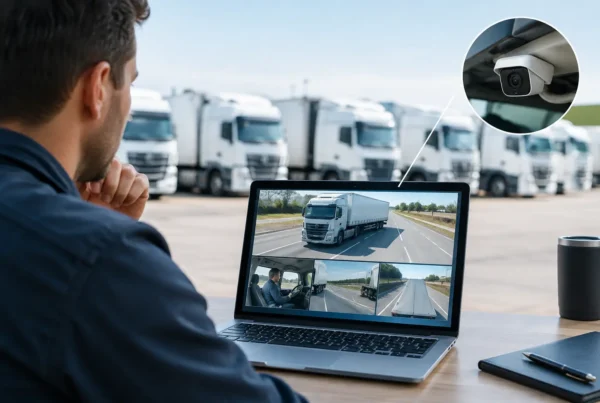

A collision claim can become expensive long before an insurer reaches a decision. Vehicles may be off the road, drivers can lose valuable working time, customers need updates and management teams are left reconstructing events from incomplete accounts. Using telematics to cut claims gives fleet operators something far more useful than a vehicle location: a reliable record of what happened, how the vehicle was being driven and what can be improved before the next incident.
For UK fleets, the opportunity is not simply to challenge every allegation. It is to reduce the frequency and severity of incidents, defend genuine cases with clear evidence and make risk management part of daily operations rather than an exercise carried out after an accident.
Using telematics to cut claims begins before a collision
The strongest claims strategy is preventative. Telematics identifies patterns that are often invisible in a monthly fuel report or a manager’s informal conversation with a driver. Repeated harsh braking, rapid acceleration, speeding, excess idling and late-night vehicle use can all point to elevated risk, particularly when they are considered alongside the road, time of day, journey type and mileage covered.
A single harsh-braking event does not prove poor driving. A driver may have avoided another road user, dealt with poor weather or encountered an unexpected hazard. The value comes from spotting repeated behaviour and applying context. If the same vehicle is regularly speeding on a particular route, for example, the issue may be unrealistic scheduling, a poorly planned route or a need for driver coaching rather than misconduct alone.
This is where configurable dashboards and exception reporting earn their place. A fleet manager should not have to search through thousands of journeys to find risk. Alerts can bring priority events to the surface, while weekly or monthly reporting shows whether behaviour is improving. The result is a more timely, evidence-based conversation with drivers.
Good driver engagement matters. Telematics should be positioned as a tool for safer work and fairer incident review, not a system designed to catch people out. Explain what data is collected, why it is needed and how managers will use it. When drivers understand that accurate journey information can protect them from an unfounded allegation, adoption is usually stronger.
Build a defensible record of every journey
When an incident does occur, speed matters. Memories fade quickly, vehicle damage is repaired and third-party accounts can change. Telematics can provide the essential facts: the vehicle’s location, route, speed, direction of travel, ignition status and the timing of significant driving events around the incident.
This data can help establish whether a company vehicle was present at the alleged location, whether it was moving or stationary, and whether the reported time is accurate. In some cases, that is enough to resolve a dispute early. In others, it gives insurers and claims handlers a clearer starting point, reducing the time spent gathering basic facts from multiple sources.
Vehicle cameras add another important layer. Forward-facing footage can clarify road position, traffic conditions and the actions of other road users. Dual-facing cameras may also provide context inside the cab, although fleets must set clear policies around privacy and access. Video should support a fair review of an event, not become a substitute for proper management judgement.
The most effective set-up commonly combines vehicle tracking, driver behaviour data and event-triggered camera footage. The telematics platform flags the relevant journey and time window, then managers can review the available information without relying on a long chain of phone calls, manual downloads or assumptions. For commercial vehicles operating across several depots, this consistency is especially valuable.
It is also worth considering the quality of the evidence process. Data is more useful when timestamps are accurate, devices are correctly installed and authorised people know how to retrieve information promptly. A system that produces excellent data but is difficult to use after an incident will not deliver its full insurance value.
Turn incident data into lower future exposure
Claims reduction does not come from collecting data and filing it away. It comes from translating findings into operational changes. Following an incident review, fleet teams should ask whether the cause was primarily driver behaviour, vehicle condition, route pressure, work scheduling, site access or another factor.
For example, repeated low-speed reversing damage may indicate that drivers need a clearer reversing policy, but it could also reveal poor delivery-site layouts or insufficient time for safe manoeuvring. Likewise, a pattern of speeding may be linked to jobs being booked too tightly. Telematics gives managers the evidence to challenge these assumptions constructively.
Targeted coaching is generally more productive than blanket interventions. A driver with a strong overall record who has one unusual event needs a different response from someone whose score shows persistent high-risk behaviour. Use individual data alongside team trends, and recognise improvement as well as addressing concerns. This helps create accountability without damaging trust.
Maintenance and vehicle checks also play a role. Location and mileage data can support more accurate service scheduling, while pre-use checks and defect reporting help demonstrate that the fleet is being managed responsibly. Telematics cannot prevent every mechanical issue, but it can help ensure vehicles are not missed because their true use is unclear.
Use claims evidence to strengthen insurer conversations
Insurers assess risk based on the information available to them. A fleet that can show active driver monitoring, formal incident processes, camera evidence where appropriate and measurable behaviour improvement is in a stronger position than one relying on policy statements alone.
That does not guarantee lower premiums. Claims history, vehicle type, operating area, driver profile and industry sector all affect pricing. However, reliable telematics data can support a more credible risk narrative at renewal and help demonstrate the steps taken after previous incidents.
It can also reduce the indirect cost of claims. Faster fact-finding means less time spent by managers chasing drivers for details. Vehicles can be located promptly after an accident, customers can receive more accurate arrival information and replacement arrangements can be made with a clearer understanding of the situation. For a service-led business, those operational gains may be as significant as the insurance outcome.
Avoid the common implementation mistakes
The technology needs to match the fleet. A courier operation, an engineering business with a grey fleet, a plant operator and a multi-site van fleet will not necessarily need the same devices, alerts or camera configuration. A one-size-fits-all deployment often creates too much data, too many alerts and too little action.
Start with the claims problems you need to solve. These may include disputed liability, frequent reversing damage, vulnerable lone workers, poor incident reporting or an inability to prove vehicle use. From there, decide what information managers need, who will review it and what action follows each type of alert.
Privacy and data protection require equal care. Drivers should receive clear information about monitoring, camera use, data retention and the circumstances in which footage may be viewed. Policies should be proportionate to the risk and applied consistently. Proper governance protects the business as well as its employees.
Finally, measure outcomes rather than installation numbers. Track incident rates, claims costs, behaviour trends, time to obtain evidence and vehicle downtime over an agreed period. Fleet Software Solutions can help tailor dashboards, devices and reporting around those operational measures, so the system supports a practical business case rather than becoming another source of administration.
The right telematics approach will not eliminate collisions or remove the need for insurance. It will give your business better visibility, faster facts and a firmer basis for improving the decisions that affect risk every day.