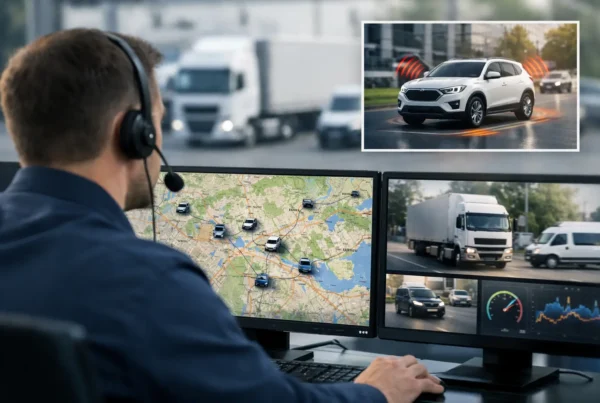

A fleet manager rarely needs more data. They need a clear answer before the morning briefing: which vehicle is delayed, which driver needs support, where fuel is being lost, and whether any risk requires action now. The best reports for fleet managers turn telematics, camera and mileage data into decisions that protect service, control cost and reduce avoidable exposure.
A long report that nobody reads is not a management tool. The reports worth automating are concise, relevant to the operation and linked to a named action. They should also be configurable. A business running engineers across several regions will need a different view from a delivery fleet, a construction business tracking plant, or an organisation managing grey fleet drivers.
What makes a fleet report worth using?
The most useful reports answer one of four operational questions: are we safe, are we compliant, are we productive, and are we spending money where we should not be? If a report cannot influence a conversation, a workflow or a commercial decision, it is probably creating admin rather than value.
Frequency matters too. Some information belongs on a live dashboard, such as unauthorised vehicle movement or a serious collision alert. Other reports are more valuable as a weekly trend, where a fleet manager can spot repeated idling, worsening driver behaviour or a vehicle that is becoming increasingly unreliable.
The right platform should let managers set thresholds, schedule reports to the relevant people and tailor fields by vehicle group, depot, team or contract. That prevents senior managers receiving pages of raw events while supervisors miss the exceptions they need to deal with.
The best reports for fleet managers to prioritise
Driver behaviour and risk report
A driver behaviour report brings together events such as speeding, harsh braking, harsh acceleration, harsh cornering and excessive idling. Used well, it is not a league table designed to catch people out. It is an early-warning tool for targeted coaching and a way to recognise consistently safe driving.
The key is context. A single harsh-braking event may reflect traffic conditions; a repeated pattern over several weeks deserves a conversation. Segment results by vehicle type, mileage and route where possible, so drivers are assessed fairly. Camera footage can add vital context after a serious event and support a more constructive driver debrief.
For many fleets, this report supports lower collision frequency, reduced vehicle wear and a stronger position when discussing risk with insurers. It also gives health and safety teams evidence that driving standards are being monitored rather than assumed.
Vehicle utilisation report
Underused vehicles are expensive assets. A utilisation report shows journey time, engine hours, mileage, days used and, where appropriate, time spent at customer sites. It can reveal a van that is rarely moving, a pool vehicle carrying too much demand, or a plant asset that is being hired unnecessarily while owned equipment sits idle.
This report is particularly valuable when contracts change, teams expand or a business is reviewing replacement cycles. Before adding vehicles, managers can test whether existing capacity is genuinely exhausted. Before removing vehicles, they can identify whether a small number of high-use assets need protection from overloading.
It depends on the operation. A low-mileage specialist vehicle may be essential for emergency response, so utilisation alone should never dictate disposal. Combine it with service requirements, location coverage and asset criticality.
Fuel use, idling and emissions report
Fuel reports should move beyond total litres purchased. The useful view compares fuel consumption against mileage, journey type, vehicle class and driver behaviour. It highlights avoidable cost from extended idling, inefficient routes, out-of-hours use and vehicles whose economy has deteriorated unexpectedly.
Idling is often the quickest place to start. A small amount may be necessary for operational equipment, cold-weather conditions or traffic, but repeated idling outside those situations wastes fuel and increases emissions. Set sensible thresholds by vehicle type rather than applying a blanket rule to every asset.
A declining miles-per-gallon figure can also point to maintenance needs, poor tyre condition, a change in load profile or driver behaviour. That makes fuel reporting a practical bridge between fleet, finance and operations, rather than a monthly accounting exercise.
Journey, route and customer attendance report
For field service, delivery and maintenance businesses, a journey report provides evidence of where vehicles travelled, when they arrived and how long they remained at a location. It helps operations teams respond accurately when a customer asks for an update or disputes an attendance time.
Route analysis can identify repeated diversions, avoidable mileage and jobs that are being planned inefficiently. The goal is not necessarily the shortest route on a map. It is the route that meets the appointment, uses the right vehicle, reflects access restrictions and gives the driver a workable schedule.
Geofenced customer sites and depots make this information far easier to use. Automated arrival and departure records reduce manual timesheet administration while giving managers a clearer picture of service delivery across the day.
Vehicle inspection, maintenance and roadworthiness report
A vehicle is not compliant simply because its MOT date is in the diary. Managers need visibility of reported defects, completed walkaround checks, service intervals, tyre issues and vehicles that should not be assigned until action is taken.
A maintenance and roadworthiness report should highlight exceptions first: overdue inspections, unresolved defects, approaching service dates and recurring faults. It should also show who reported an issue, when it was acknowledged and whether the vehicle was returned to service appropriately. That audit trail is valuable when demonstrating a disciplined approach to vehicle safety.
For larger fleets, recurring defects can reveal a supplier issue, an unsuitable vehicle specification or a training gap. For smaller fleets, automated reminders can prevent an important task being lost among daily operational pressures.
Exception and unauthorised use report
Exception reporting is where configurable alerts earn their place. This report can identify vehicles used outside authorised hours, movement from a depot at night, excessive speeding, entry into restricted areas or extended stops away from planned locations.
It requires care. Not every out-of-hours journey is misconduct; on-call staff, emergency work and flexible shift patterns all need to be accounted for. Set rules around how the fleet actually operates, then make sure managers investigate exceptions promptly and consistently.
When combined with clear policy and driver communication, this reporting can reduce personal mileage leakage, improve asset security and provide fast evidence following theft or suspected misuse.
Mileage and grey fleet report
Grey fleet can create a major visibility gap. Employees using their own vehicles for work may submit mileage late, omit journeys or use a vehicle whose documentation has not been checked recently. A mileage and grey fleet report can bring claims, journey records, licence checks, insurance status and vehicle details into a more manageable process.
The commercial benefit is not only reduced mileage-claim admin. Better mileage capture helps managers understand whether regular personal-car use could be replaced by a pool vehicle, public transport or a better-planned route. It also supports duty-of-care processes for employees travelling on business.
Incident and camera event report
After a collision, allegation or near miss, speed matters. An incident report should bring together the location, time, driving events, route history and relevant camera footage so the business can establish what happened without relying solely on recollection.
This is one area where streaming and event-triggered camera options can make a material difference. Footage may help defend a driver against a false claim, identify poor practice before it leads to a collision, or speed up an insurer’s assessment. Access controls and a clear retention policy are essential, particularly where footage includes drivers, customers or members of the public.
Turn reporting into a routine, not a backlog
Start with a small set of reports linked to current business priorities. If fuel cost is the immediate concern, focus on idling, fuel economy and route efficiency. If incident frequency is rising, begin with driver behaviour, camera events and vehicle inspection completion. Trying to monitor every metric at once usually means nothing receives proper attention.
Assign ownership. A transport manager may review daily exceptions, a supervisor may hold weekly driver conversations, and a finance lead may review monthly utilisation and fuel trends. Agree what action follows each exception, how it is recorded and when a trend is escalated.
Fleet Software Solutions can tailor dashboards, alerts and reporting around the way a business actually deploys vehicles and mobile assets, rather than forcing managers into a fixed reporting template. That matters because the value sits in the response to the data, not the volume of it.
The strongest report is the one that changes what happens next: a route is replanned, a driver receives fair coaching, a defect is resolved before a breakdown, or a customer gets an accurate update. Build reporting around those moments, and fleet data starts earning its place in the operation.