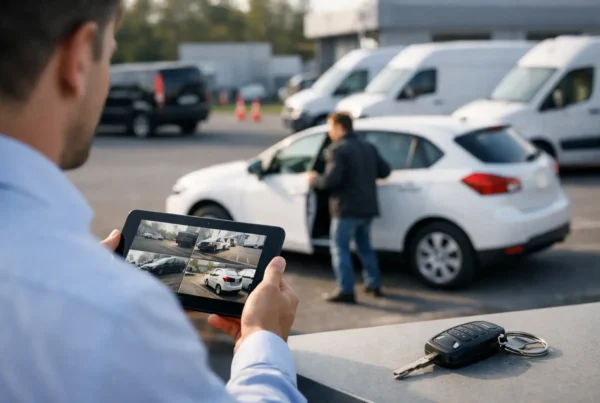

A collision at 15 mph in a customer’s car park can still mean vehicle downtime, an insurance claim, a difficult conversation with a driver and a missed appointment. That is why driver safety cannot be treated as an annual policy review or a generic online training module. For fleet operators, it is a daily operational discipline that protects people while reducing avoidable cost, disruption and reputational risk.
The strongest safety programmes do not rely on surveillance or punishment. They give managers a clear view of what is happening on the road, help drivers understand where risk is building, and make improvement practical to manage across busy, distributed teams.
Driver safety starts before the vehicle moves
Road risk is often discussed as if it begins with a driver’s decision behind the wheel. In reality, the conditions for safe driving are set much earlier. A rushed schedule, unclear journey plan, poorly maintained vehicle or unfamiliar temporary driver can all increase the likelihood of an incident.
Start with the basics that should be visible to the operation: licence checking, vehicle suitability, planned maintenance, driver induction and a clear driving-for-work policy. This should apply equally to company vehicles, leased vehicles and grey fleet drivers using their own cars for business journeys. Grey fleet is commonly overlooked, yet the duty of care does not disappear because the vehicle is privately owned.
Managers also need to consider whether a journey is necessary, whether it can be timed to avoid predictable congestion and whether the driver has enough time to complete it without pressure. Telematics can reveal recurring late arrivals or repeated speeding on particular routes, but the right response may be to adjust an unrealistic appointment window rather than simply blame the person driving.
Turn driver safety data into action
Vehicle tracking creates a detailed record of movement, but location alone does not improve safety. The value comes from turning events into useful conversations and targeted intervention.
A practical driver scorecard might bring together speeding, harsh braking, harsh acceleration, cornering, idling and time spent driving. These measures need context. One sharp braking event may reflect a pedestrian stepping into the road; a pattern of harsh braking on the same route could indicate following too closely, distraction or insufficient anticipation.
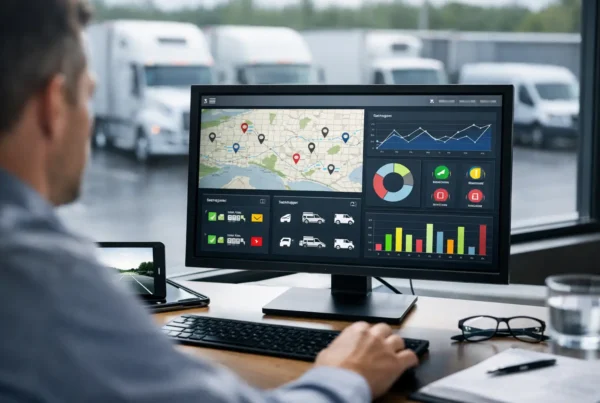
This is where configurable dashboards and reporting matter. A transport manager may need a weekly view of the highest-risk drivers and vehicles. An operations director may need to see trends by depot, contract or region. Supervisors may benefit from exception alerts that flag serious events immediately, rather than having to work through a month of raw data.
The aim is not to create more administration. It is to focus attention where it will have the greatest effect. A short, evidence-based driver debrief after a repeat event is more likely to change behaviour than a broad reminder sent to everyone.
Use fair thresholds and consistent rules
Driver behaviour data can quickly lose credibility if alert thresholds are poorly configured. A setting that generates constant low-level alerts leads to alert fatigue. One that is too relaxed may fail to identify genuine risk until after an incident.
Thresholds should reflect vehicle type, operating environment and the work being carried out. A car used by a regional sales team and a 3.5-tonne van completing urban deliveries face different hazards. Review settings after implementation, involve managers who understand the routes, and ensure drivers know what is measured and why.
Consistency also matters. If speeding is a concern, establish how managers will deal with repeated events, when coaching is appropriate and when formal action may be needed. Drivers should not receive different treatment simply because they report to different depots or supervisors.
Cameras provide the missing context
Forward-facing and driver-facing vehicle cameras can strengthen a driver safety programme when deployed with a clear purpose. They give context to high-risk telematics events, support fair incident review and can help defend a driver where they were not at fault.
For example, footage may show that a harsh braking event was an appropriate response to a vehicle pulling out unexpectedly. Equally, it may show late reaction to stationary traffic, use of a mobile phone or a failure to maintain safe separation. This replaces assumption with evidence.
Camera systems are particularly valuable in claims management. Prompt access to footage can help establish the facts while memories are fresh, support insurers and reduce the time vehicles and managers spend tied up in disputed incidents. The commercial benefit is not limited to the claim value. Faster resolution can protect customer service and keep the fleet productive.
There is a balance to strike. Drivers need clarity around camera placement, recording triggers, access to footage and the company’s data protection approach. Position cameras as a safety and protection tool, not a mechanism for catching people out. Where the system is introduced well, many drivers value the ability to prove what happened.
Coaching works better than blanket retraining
A driver who receives a generic warning about speeding may change behaviour for a few days. A driver who sees a specific event, understands the risk and agrees an achievable change is more likely to improve for the long term.
Effective coaching is timely, factual and proportionate. It should focus on a small number of behaviours, not overwhelm someone with every data point from the previous month. A manager might discuss repeated rapid acceleration and braking with a driver, then agree to create more space in traffic and review the next fortnight’s journey data.
Managers should also recognise good performance. Positive feedback for sustained safe driving supports engagement and avoids creating a culture where telematics is only mentioned when something goes wrong. Team-level improvement can be shared through regular safety briefings, provided individual data is handled appropriately.
Where risk remains high despite coaching, further assessment or training may be required. This is especially relevant after a collision, following a significant change in role, or where a driver regularly operates in demanding environments such as city centres, night work or severe weather.
Manage fatigue, distraction and journey pressure
Speeding is visible and easy to measure, but it is not the only driver safety risk. Fatigue, distraction and work pressure can be harder to spot until they contribute to an incident.
Telematics can help identify excessively long driving periods, unusual working patterns and journeys taking place at times that may warrant review. It cannot determine whether a person is tired, so managers should combine data with practical conversations, clear rest expectations and a culture in which drivers can report fatigue without being penalised for raising a concern.
Distraction requires the same direct approach. A ban on handheld mobile phone use is essential, but safe fleet policy should go further by setting expectations for calls, messaging, route changes and administrative tasks. If drivers are expected to update job status, speak to customers and navigate unfamiliar locations while working to a tight timetable, the process itself may be creating risk.
Give drivers a safe way to stop, update systems and seek support when plans change. That can reduce both unsafe behaviour and the frustration that often sits behind it.
Review incidents to prevent repeats
Every collision, near miss and serious telematics event is an opportunity to improve the operation. The review should examine more than the final seconds before impact. Look at route conditions, vehicle condition, shift length, workload, weather, training history and whether previous data showed a pattern.
This broader review protects against a simplistic conclusion that the driver was solely responsible. Personal accountability remains necessary, but fleet managers also need to identify system failures. If several drivers experience the same risk at the same site entrance, for example, the answer may be a changed route, revised delivery instruction or discussion with the customer.
Keep records of findings, actions and outcomes. Over time, this creates a defensible evidence base for health and safety management, insurer discussions and internal investment decisions. It also helps demonstrate whether interventions are actually reducing risk rather than merely generating reports.
Make safety performance commercially visible
Driver safety is often presented as a compliance cost. It should be measured as a business performance issue. Safer driving can reduce collision frequency, fuel consumption, wear on brakes and tyres, vehicle downtime, excess payments and management time spent resolving incidents.
The precise return depends on fleet size, mileage, claims history and the type of work undertaken. A high-mileage service fleet may see rapid value from reduced speeding and idling, while a construction-related operation may place greater emphasis on camera evidence, plant visibility and protection around high-risk sites.
Set a small number of meaningful measures from the outset. These may include collision rate per million miles, speeding events, preventable claims, driver coaching completion, vehicle downtime and fuel use. Compare trends before and after changes, and review them by location or contract where that reveals useful differences.
Technology should fit these measures rather than dictate them. A device-agnostic platform, appropriate camera configuration and reporting tailored to each management role make it easier to turn data into decisions without forcing the business into a one-size-fits-all process.
The best next step is usually not a major policy rewrite. Choose one visible risk, establish a fair baseline, give managers the information to act and show drivers how the change protects them. When safer driving becomes part of everyday fleet management, the benefits reach well beyond the road.