
A vehicle is delayed at a customer site, a driver reports minor damage, and an urgent job needs the nearest available engineer. If the answers sit across several tabs, inboxes and paper checksheets, the operational cost starts before anyone has made a decision. The fleet software vs spreadsheets question is not really about replacing a familiar tool. It is about whether your business can see, evidence and act on what is happening across its vehicles and mobile workforce quickly enough.
Spreadsheets have a legitimate place in fleet administration. They are flexible, inexpensive and familiar to almost every office-based team. For a small number of vehicles with simple requirements, they can be perfectly adequate. The difficulty begins when the spreadsheet becomes the main source of truth for vehicle location, mileage, servicing, driver performance, defect reporting, incidents and compliance.
At that point, the business is relying on manual updates to manage moving assets. That creates delays, gaps and unnecessary administration precisely where reliable information matters most.
Fleet software vs spreadsheets: the operational difference
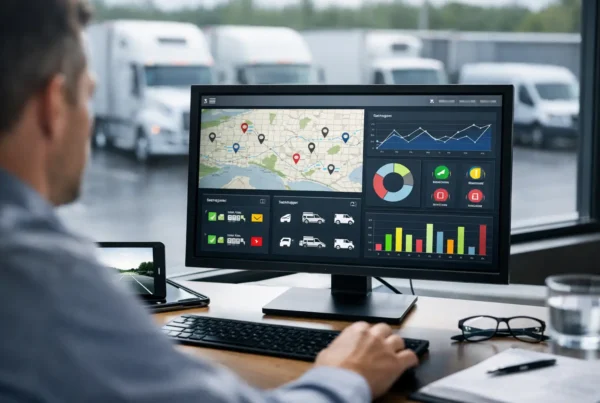
A spreadsheet records information after somebody has found it, checked it and entered it. Fleet software can collect information from vehicles, drivers and connected devices as activity occurs, then present it through live maps, alerts, dashboards and reports.
That distinction changes the role of fleet data. Rather than asking a coordinator to establish where a vehicle was two hours ago, an operations team can see its current position, journey status and expected arrival time. Rather than waiting for a monthly mileage return, managers can work with captured business mileage and journey data. Rather than discovering a service is overdue during an audit or breakdown, they can receive configurable reminders before the date passes.
This is not an argument that every fleet needs every available technology feature. A business with five locally based vehicles may not need the same reporting depth as a national engineering operation. But once vehicle availability, customer appointments, driver safety or insurance exposure affect daily performance, timely data has commercial value.
Where spreadsheets begin to create risk
The biggest weakness is not that spreadsheets are inaccurate by design. It is that they depend on consistent human input, clear version control and someone having time to maintain them. In a busy fleet, those conditions are difficult to sustain.
A transport manager may have one workbook for servicing, another for fuel, a separate tracker for driver licence checks and a shared file for vehicle allocations. Different depots may use their own formats. A team member may save a revised version locally. A vehicle can be off the road before the planner knows there is a problem.
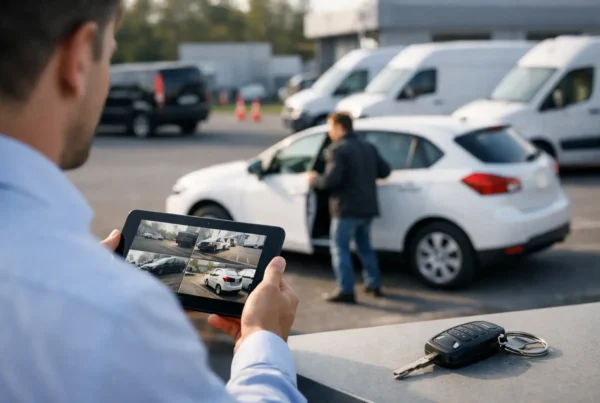
The resulting risk is wider than administration. Missing or late information can affect compliance, customer service and cost control. For example, if mileage is estimated rather than captured, service intervals and whole-life cost calculations become less dependable. If a driver reports damage by mobile phone and the details are not logged consistently, the business may struggle to build a clear incident timeline. If a customer asks for an accurate arrival update, the office may be left calling the driver rather than using verified location data.
Spreadsheets also make it harder to identify patterns. One speeding event might be recorded somewhere. Repeated speeding, harsh braking or unnecessary idling across a driver group is far more difficult to spot when the data is scattered, manually entered or only reviewed at month end.
What fleet software adds beyond a digital record
The practical benefit of fleet software is not simply that it stores more data. The right platform turns data into usable management information without adding work for drivers and office teams.
Live vehicle tracking supports better job allocation and more honest customer communication. A service manager can assign the closest suitable vehicle, explain a delay with confidence and reduce unproductive calls to drivers. For organisations operating time-sensitive work, this can improve response times without increasing fleet size.
Automated mileage capture creates a clearer picture of vehicle use. That supports maintenance planning, business mileage administration and decisions about utilisation. It can also highlight vehicles that are underused, overloaded with journeys or routinely travelling inefficient routes.
Driver behaviour reporting gives managers an evidence base for coaching. The aim should not be to catch people out. Used well, information on speeding, acceleration, braking, cornering and idling helps identify where a conversation, training intervention or route review is needed. Better driving can reduce fuel use, wear and tear, collision exposure and insurance pressure.
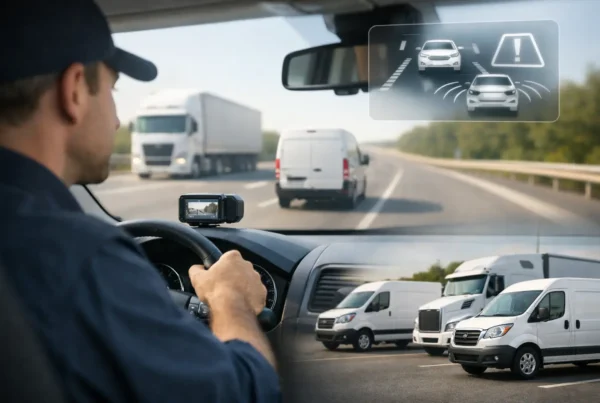
Vehicle cameras add another layer where road risk is high. Footage can support fair incident review, defend a business against disputed claims and help managers understand the circumstances behind an event. For drivers, an objective record can be as valuable as it is for the employer.
A configurable platform also lets each stakeholder see the information that matters to them. An operations director may need service performance and utilisation trends. A fleet manager may focus on maintenance exceptions and driver behaviour. Health and safety teams may need evidence of risk management and incident follow-up. This is more useful than distributing a large spreadsheet that asks everyone to interpret the same raw data.
The cost comparison is wider than licence fees
It is easy to compare the price of a spreadsheet licence with the monthly cost of telematics and decide that manual management is cheaper. That comparison misses the cost of collecting, reconciling and chasing information.
Consider the time spent asking drivers for mileage, updating service dates, checking vehicle whereabouts, investigating complaints, compiling reports and correcting data errors. Add the cost of avoidable idling, a missed appointment, an unsupported insurance claim or a vehicle taken off the road unexpectedly. The monthly software cost may be small beside one preventable operational failure.
That said, fleet software is not automatically a saving simply because it is installed. Value comes from selecting the right devices and using the information to make decisions. A system that produces reports nobody reviews will not reduce fuel spend or risk. Equally, an overly complex rollout can create resistance among drivers and managers.
The strongest business case is specific. It may be reducing excessive idling by a measurable percentage, cutting time spent preparing compliance reports, improving first-visit attendance, or providing video evidence that helps resolve claims quickly. Start with the cost or risk that is currently hardest to control, then build the solution around that outcome.
When a spreadsheet may still be enough
There are situations where a spreadsheet remains sensible. If a business has only a few vehicles, works within a tight local area and has straightforward maintenance requirements, a carefully managed record can be proportionate. It can also remain useful for one-off budget modelling or bespoke analysis alongside a fleet platform.
The warning signs appear when information needs regular chasing, more than one person is responsible for updates, vehicles work across multiple sites, or managers need evidence rather than estimates. Other triggers include frequent customer ETA requests, rising fuel costs, recurring vehicle damage, lone-worker exposure and an increasing burden of compliance administration.
At this stage, trying to make a spreadsheet behave like a fleet management system often creates more work than moving to a purpose-built platform. Formulas can calculate dates, but they cannot verify a vehicle’s location, stream camera footage, notify a manager of a driving event or capture a journey automatically.
Making the move without creating another admin project
A successful transition begins with operational questions, not a technology shopping list. Which vehicles need tracking? Do you need driver ID, mileage capture, cameras, asset tracking or lone-worker protection? Who needs live visibility, and which reports will actually influence decisions?
It is also worth agreeing how information will be used before installation. Drivers should understand the safety, service and fairness reasons behind the system. Managers need clear ownership of alerts and reports. If harsh braking alerts are enabled, someone must review the context and decide whether coaching is appropriate. If maintenance reminders are configured, there must be a process for booking work and recording completion.
Device choice matters too. Some fleets need discreet vehicle tracking, while others benefit from forward-facing or dual-facing cameras, plug-in devices, plant tracking or compatible hardware already in place. A consultative provider can help avoid paying for functions that do not solve a genuine problem, while ensuring the platform can grow as requirements change.
Fleet Software Solutions approaches this as a business improvement exercise: matching the technology, reporting and support to the fleet’s actual risks and operating pressures. The objective is not more data on a screen. It is better control of cost, service, safety and accountability.
The right time to move on from spreadsheets is usually not when a workbook finally fails. It is when your team is spending too much time finding answers that the fleet should already be able to provide.