
A fleet tracking app review should not start with a feature checklist. It should start with the operational problems your business needs to solve: missed arrival windows, uncertain vehicle use, rising fuel spend, disputed incidents, overdue inspections or hours spent chasing updates from drivers. The right platform turns those daily pressures into useful, timely information. The wrong one simply gives the team another screen to monitor.
For UK fleet operators, the best choice is rarely the app with the longest list of functions. It is the one that gives managers, drivers and decision-makers the visibility they need without creating extra administration. That means looking beyond a live map and assessing how the system will support service delivery, driver safety, compliance and commercial performance.
Start with the decisions the app must improve
Live vehicle location is valuable, but it is only the beginning. Ask what someone in the business will do differently because they can see a vehicle on a map. A transport manager may use it to allocate the nearest available engineer. A customer service team may provide an accurate arrival time rather than a vague promise. A health and safety lead may need to identify repeated speeding or harsh braking before it becomes an incident.
This question separates useful tracking from passive monitoring. A good fleet tracking app should help teams respond to exceptions, not force them to search through data for problems that have already affected the day.
Consider the situations that cost your operation time or money now. If unnecessary idling is increasing fuel use, the system needs clear idling reports and sensible alerts. If private use is a concern, out-of-hours activity and journey history need to be easy to review. If missed appointments are damaging customer confidence, live ETAs and route visibility should be accessible to the people who deal with customers.
Fleet tracking app review: assess day-to-day usability
A system can be technically capable and still fail in practice if it is difficult to use. Fleet teams often manage competing priorities, particularly in multi-site businesses where transport, operations, finance and health and safety all need different views of the same information.
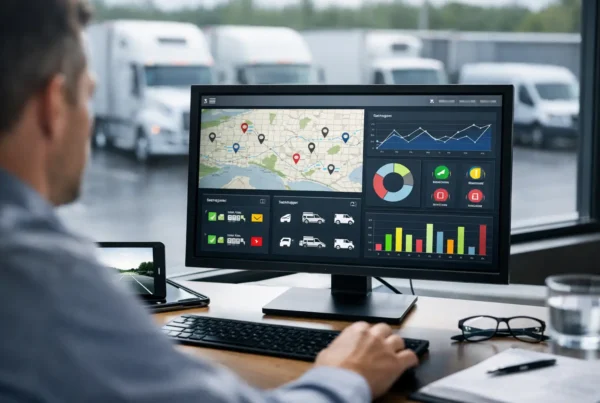
Test whether the dashboard can be tailored by role. A fleet manager may need an overview of vehicle status, driver behaviour exceptions and maintenance-related activity. An operations director may only need a concise view of utilisation, service performance and cost trends. Supervisors should be able to find an individual vehicle, journey or incident quickly, without relying on a specialist administrator.
The quality of the mobile app matters too. Managers are not always at a desk when a customer calls about a delayed job or a driver reports a problem. Check how easily authorised users can view location, journey history and alerts from a phone, and whether the interface remains clear when the fleet is busy.
It is also worth looking at alert fatigue. Notifications for every minor event soon become background noise. A better setup allows thresholds, working hours, vehicle groups and alert recipients to be configured around the operation. The aim is to highlight the events that need action, not to generate a constant stream of messages.
Look beyond location data
The commercial value of telematics lies in context. Location tells you where a vehicle is. Journey, driver, vehicle and camera data can help explain what happened, why it happened and what should change.
For example, a speeding alert may indicate a driver training need, but it could also reflect a route that places drivers under unreasonable time pressure. Repeated late arrivals may point to poor scheduling rather than poor driver performance. Excessive engine idling might be a behaviour issue, or it may show that crews are regularly waiting on site for access.
This is why reporting should be practical rather than overwhelming. Look for reports that identify trends by driver, vehicle, team, depot or time period. Scheduled reports can reduce manual administration, but they need to be relevant to the people receiving them. A monthly board report and a daily exception report should not contain the same level of detail.
Useful reporting typically supports questions such as:
- Which vehicles are underused, overworked or routinely travelling empty?
- Where are fuel-wasting behaviours occurring, including idling, harsh acceleration and poor route adherence?
- Which drivers or vehicle groups need a focused debrief?
- Can the business evidence attendance, visit times and journey history when a customer or insurer challenges an event?
The system should make those answers straightforward to find and credible enough to act upon.
Driver behaviour needs fair, usable evidence
Driver behaviour monitoring can reduce collision risk, fuel consumption and vehicle wear, but it must be introduced properly. Data used only to criticise drivers will quickly lose support. Data used for constructive coaching, recognition and targeted intervention is far more likely to improve standards.
Review how the platform captures speeding, harsh braking, acceleration, cornering and idling. Then ask how events are presented. A single score without journey context can be misleading. Managers need to see the location, time, severity and pattern behind an event before having a fair conversation.
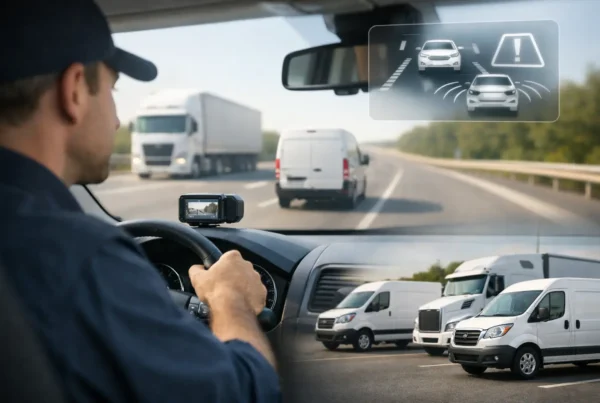
Camera integration can add vital context, particularly for fleets operating in congested urban areas, construction environments or high-mileage service work. Forward-facing footage may help establish the facts after a collision. Driver-facing cameras can support risk management where there is a clear policy and a proportionate business case. The trade-off is that camera programmes require careful communication, clear retention rules and a consistent process for reviewing footage.
When telematics and video are available in one operational view, incident review is usually faster. That can help protect drivers from false claims, strengthen insurer discussions and reduce the time managers spend reconstructing events from incomplete accounts.
Check hardware choice and installation realities
Not every fleet needs the same device. Cars used by sales staff, vans used by engineers, lorries making timed deliveries, plant working on private sites and non-powered assets all present different tracking requirements. A platform that can work with a range of approved hardware gives the business more freedom to match the device to the task.
During a fleet tracking app review, ask whether the provider can support existing compatible devices or whether a full replacement is necessary. Retaining suitable hardware may reduce disruption and cost. Equally, older devices may not provide the data quality, camera support or reliability needed for your future objectives. The right answer depends on the condition of the installed base and the improvements you expect from the programme.
Installation planning deserves the same attention as the software. A nationwide fleet may need phased installation around operational hours, regional engineer coverage and vehicle availability. Poor planning can leave mixed data sources, missing vehicles and frustrated drivers. A provider should be able to explain how installation, testing, driver communication and go-live support will be managed.
Measure ROI before committing
A fleet tracking solution should have a measurable business case. The return will vary by fleet, but the calculation should be specific. Start with current costs or risks that can be evidenced: excess mileage, fuel use, avoidable overtime, missed appointments, unauthorised use, collision costs, insurance excesses and administrative time.
Then agree which outcomes will be measured after implementation. For one business, a reduction in idle time may be the priority. For another, the biggest gain may come from proving visit attendance, reallocating nearby vehicles or resolving disputed incidents more quickly. Do not rely on broad promises of savings. Set a baseline and review progress at regular intervals.
It also helps to distinguish between direct savings and operational value. Reducing fuel use is easy to quantify. Improved customer communication, safer driver behaviour and better control of field activity may be harder to place on a spreadsheet, but they can protect contracts, reduce disruption and improve profitability over time.
Support determines whether data becomes improvement
Software does not improve fleet performance on its own. Someone needs to configure alerts, interpret reports, set priorities and maintain momentum after the initial rollout. This is where consultative support can make a material difference, especially for businesses without a dedicated telematics specialist.
Ask prospective providers what happens after installation. Will they help define dashboards and reports around your objectives? Can they advise on driver behaviour policies, camera use or the data needed for an insurance discussion? Is there a clear route for support when a vehicle changes, a device fails or an operational requirement evolves?
Fleet Software Solutions approaches tracking as part of a wider fleet improvement programme, with device, camera and reporting options selected around the operation rather than forced into a standard package. That approach is particularly useful where the fleet includes different vehicle types, sites or risk profiles.
The most effective platform is the one your team will use consistently, your drivers will understand and your business can improve with. Choose a system that gives people clearer evidence for better decisions, then give it enough attention to turn that evidence into safer journeys, stronger service and tighter operational control.