
When a customer asks where their engineer is, a fleet manager needs an answer in seconds, not a round of phone calls. The same applies when a van is delayed, a driver reports an incident, or fuel costs rise without an obvious explanation. Knowing how to monitor company vans properly gives operations teams the visibility to respond quickly, protect drivers and make decisions based on evidence rather than assumptions.
The objective is not to watch every movement for its own sake. Effective van monitoring should reduce avoidable admin while improving service delivery, vehicle utilisation, driver safety and cost control. The right approach depends on the work your vans do, how often routes change and the risks your business needs to manage.
Start with the operational questions you need answered
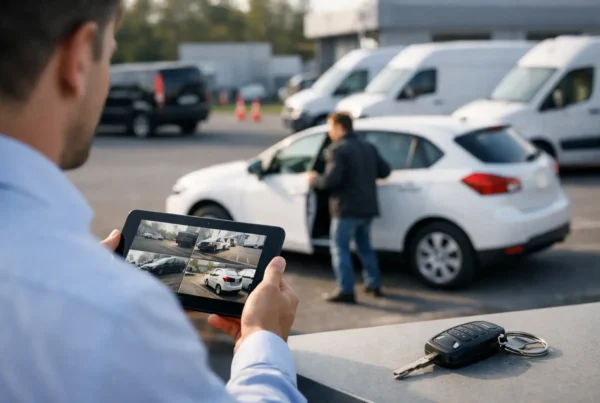
Before selecting any technology, identify the decisions that better visibility should support. A plumbing business running local call-outs may need live location and estimated arrival times. A multi-site contractor may need proof of attendance, mileage records and visibility of which vehicles are nearest to an urgent job. A fleet carrying tools or high-value stock may place greater emphasis on theft recovery and out-of-hours movement alerts.
This matters because a system with every available feature can still fail if the information is not useful to the people running the operation. Define a small number of measurable outcomes first. These could include reducing unauthorised vehicle use, lowering idling time, improving on-time arrival rates, cutting fuel spend or shortening the time required to investigate incidents.
Once those outcomes are clear, configure dashboards and alerts around exceptions. Fleet managers should not have to sift through hundreds of routine journeys to find the one vehicle that has left a geofenced area overnight or spent 25 minutes idling outside a job.
How to monitor company vans using telematics
GPS vehicle tracking is the foundation of most van monitoring programmes. A professionally installed tracking device reports a vehicle’s location, journey history, speed, ignition status and, depending on the device and vehicle, additional information such as engine diagnostics or fuel data.
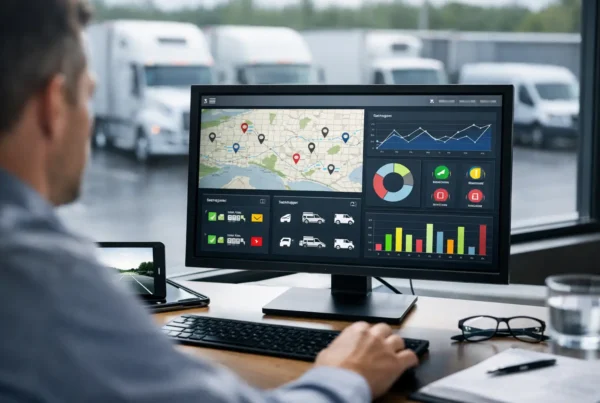
A live map gives the operations team a current view of vehicles in the field. This is particularly valuable for reactive work. Instead of sending the next available driver from a depot, a dispatcher can allocate the nearest suitable van, taking account of its location, direction of travel and likely arrival time. That can improve customer communication and reduce unnecessary mileage at the same time.
Journey history is equally valuable. It provides an auditable record of where a van has been, when it arrived and how long it remained at a location. For businesses that invoice by visit, manage service-level agreements or receive disputed attendance claims, this evidence can save substantial time.
The quality of the data matters. Choose a solution with reliable UK coverage, frequent location updates appropriate to the work being done and reporting that can be tailored to individual roles. An operations director may want a high-level view of utilisation and costs, while a supervisor may only need daily exceptions for their team.
Use geofences to automate routine checks
Geofences are virtual boundaries placed around meaningful locations, such as depots, customer sites, storage yards or drivers’ home addresses. When a van enters or leaves one of these areas, the platform can automatically create an event or send an alert.
For example, a geofence around a regular customer site can provide arrival and departure times without asking a driver to complete an extra form. A depot geofence can identify early departures, late returns or unexpected weekend activity. A boundary around a restricted area can alert management if a vehicle enters somewhere it should not be.
Geofencing works best when it supports a clear process. Alerts that no one owns quickly become background noise. Agree who will receive each notification, what action they should take and which alerts are genuinely business-critical. In many fleets, theft-risk alerts, excessive idling and unauthorised out-of-hours movements deserve immediate attention, while routine journey reports can be reviewed weekly.
Combine tracking with vehicle cameras where risk requires it
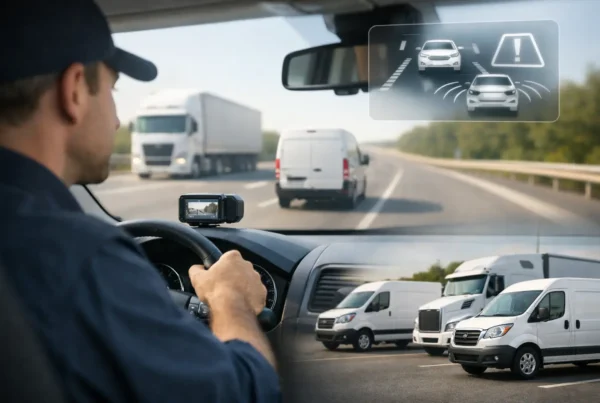
Location data explains where a van was. Vehicle cameras can help explain what happened. Forward-facing, road-facing and driver-facing camera options can provide valuable evidence following a collision, a third-party allegation or a complaint about driving standards.
For commercial vans operating in busy urban areas, camera footage can strengthen an insurance defence where the driver is not at fault. It can also speed up incident review, allowing managers to establish facts before memories fade and avoid prolonged disputes. Some camera systems can flag events such as harsh braking, impact, mobile phone use or failure to wear a seatbelt, depending on the chosen specification.
Cameras must be introduced thoughtfully. They are a risk-management and coaching tool, not a substitute for competent management. Drivers should understand what is recorded, when footage is reviewed and how it will be used. A clear policy, consistent application and constructive driver debriefs are far more likely to improve behaviour than a punitive approach.
There is also a practical choice to make. A basic forward-facing camera may be sufficient for a lower-risk fleet focused on collision evidence. Fleets with vulnerable road user exposure, regular claims or a need to address in-cab behaviours may justify multi-camera or AI-enabled options. The best fit should reflect the operating risk and the financial case, rather than simply selecting the most feature-rich package.
Turn driving data into safer, more economical habits
Telematics can identify behaviours that increase fuel use, wear and collision risk, including speeding, harsh acceleration, harsh braking, sharp cornering and prolonged idling. Used well, this information supports fair, evidence-led conversations with drivers.
Avoid relying on a single score without context. A driver completing short urban journeys in heavy traffic will face different conditions from someone covering motorway miles between planned appointments. Review trends over time, compare like-for-like routes where possible and investigate the operational causes behind poor results. Repeated idling, for instance, could point to driver behaviour, but it may also reveal scheduling gaps, unsuitable waiting locations or a vehicle with a mechanical issue.
Regular coaching is more effective than saving up data for an annual review. Brief conversations supported by specific examples help drivers understand the impact on safety, fuel and vehicle condition. Recognition for sustained improvement can be just as useful as intervention when standards slip.
Keep compliance and privacy central to the rollout
Monitoring employees’ vehicles involves personal data, so UK data protection obligations must be considered from the outset. Be open about what is being monitored, the business reasons for doing so, who can access the data and how long it will be retained. Your privacy information and vehicle policy should be clear, accessible and aligned with the way the system is actually used.
Employers should identify an appropriate lawful basis for processing rather than relying on employee consent, which is rarely freely given in an employment relationship. A data protection impact assessment may be appropriate where monitoring is likely to create a higher risk to individuals’ rights and freedoms, particularly where cameras or detailed behavioural analysis are involved.
Private use creates another important consideration. If drivers take vans home and are permitted personal use, a privacy mode or a clearly agreed approach to out-of-hours tracking may be needed. This is an area where policy, employment terms and technology settings need to work together. Seek appropriate data protection and employment advice for your circumstances.
Build reporting around action, not data volume
The most useful fleet reports are the ones that trigger a decision. Daily exception reports can show speeding events, unauthorised use, missed inspections or excess idling. Weekly management reports can track mileage, utilisation, fuel performance and driver trends. Monthly reporting can demonstrate whether the investment is reducing claims exposure, improving productivity or supporting better fleet replacement decisions.
Set a baseline before changing processes, then measure improvement against it. If your goal is to cut idling, record current idle hours and fuel cost. If the priority is customer service, measure appointment arrival performance and the number of calls requesting vehicle updates. This turns telematics from a tracking expense into a measurable operational improvement programme.
It is also worth connecting van monitoring to the wider fleet picture. Mileage capture supports tax and expense processes, vehicle check tools can strengthen defect reporting, and asset tracking can protect trailers, generators and valuable equipment carried between sites. Bringing relevant information into one reporting environment reduces duplication and gives managers a more complete view of field activity.
Make implementation practical for drivers and managers
A successful rollout starts with communication. Explain the reasons for the change in operational terms: quicker support when a driver is delayed, stronger evidence after an incident, more accurate customer updates and a fairer way to address driving concerns. Involve supervisors and drivers early, particularly when deciding alert thresholds and reporting routines.
Installation should be planned to minimise vehicle downtime, whether that means fitting devices at a depot, arranging regional appointments or using a nationwide engineering network. Once live, test alerts, geofences and report recipients before relying on the system for critical decisions. A short period of review also helps refine settings that generate too many exceptions.
The strongest monitoring programmes do not create a control room full of data. They give the right people timely, credible information and a clear process for acting on it. Start with the operational problem that costs your business the most, measure the change and build from there.