
A van making an unnecessary 20-mile detour, a lorry idling outside a site for 25 minutes, or a driver repeatedly accelerating hard can each look minor in isolation. Across a fleet, they become a substantial and recurring cost. The best ways to cut fuel costs are rarely about one dramatic change. They come from identifying where fuel is being lost, giving managers the right information and helping drivers make practical improvements that last.
For UK fleet operators, fuel reduction should not compromise service delivery, driver welfare or safety. The right approach reduces avoidable mileage and inefficient driving while making jobs easier to plan, monitor and complete.
1. Establish a fuel baseline before setting targets
A meaningful fuel-saving programme starts with an accurate baseline. Looking only at the total amount spent at the pump is not enough, particularly when fuel prices are moving. Track litres used, miles travelled, miles per gallon or litres per 100km, and fuel cost per mile for each vehicle type, depot, team and driver where appropriate.
This quickly separates a genuine efficiency issue from a price fluctuation. It also gives context. A heavily loaded vehicle completing urban multi-drop work will not produce the same economy as a car travelling between regional sites. Comparing like with like prevents unrealistic targets and makes conversations with drivers more credible.
Telematics data can add the operational detail that fuel card data alone cannot provide. It shows when a vehicle was moving, stopped, idling or diverted, allowing managers to investigate the reasons behind a poor result rather than simply reporting it.
2. Reduce excessive idling without creating unnecessary pressure
Idling consumes fuel while delivering no mileage, and it is one of the clearest areas for action. It can occur outside customer premises, at depots, during paperwork, while waiting for access or when drivers leave engines running for heating or cooling.
An idling report should distinguish between unavoidable and avoidable events. Refrigerated vehicles, specialist equipment and certain site procedures may require the engine to run. A blanket rule that ignores those realities will not be followed. Instead, define acceptable thresholds by vehicle and job type, then highlight repeated exceptions for a constructive discussion.
Real-time alerts can help where idling is persistent, but regular trend reporting is often more effective. It allows a fleet manager to spot a pattern at a particular location, route or customer site and address the operational cause. The answer might be a revised booking process or improved site access, not just a reminder to switch off.
3. Improve driver behaviour through fair, specific coaching
Harsh acceleration, heavy braking and speeding all increase fuel use. They also increase wear on tyres and brakes, raise collision risk and can damage a business’s reputation on the road. Driver behaviour is therefore one of the best ways to cut fuel costs while improving wider fleet performance.
The most productive programmes use evidence, not assumption. Driver scores and journey reports can identify patterns such as speeding on a particular stretch of road, prolonged high revs or repeated harsh braking approaching a customer location. That level of detail makes coaching practical: discuss what happened, why it happened and what could be done differently.
Avoid using telematics as a disciplinary tool by default. Drivers are more likely to engage when they understand that smoother driving reduces stress, lowers vehicle wear and supports safer working. Recognising improvement matters too. Small, consistent gains across a whole team usually deliver more value than focusing solely on the worst performer.
4. Plan routes around the real job, not just the shortest distance
The shortest route is not always the cheapest route. A route that appears shorter may involve congestion, repeated stop-start traffic, weight restrictions, unsuitable roads or unreliable access to a site. Equally, a longer motorway route may use less fuel and offer a more predictable arrival time.
Use actual journey history to understand which routes work in practice. Compare planned versus travelled mileage, journey duration, idling and recurring delays. If a driver regularly deviates from the suggested route, find out why before treating it as non-compliance. They may be avoiding a road closure, a difficult turning point or a location with poor parking.
For multi-drop operations, route planning should also consider appointment windows, vehicle capacity and the order of jobs. Removing one unnecessary cross-town journey per vehicle per day can have a greater impact than a marginal improvement in driving style.
5. Stop unauthorised and unnecessary mileage
Every unplanned mile has a cost in fuel, maintenance and vehicle depreciation. Private use may be permitted within some fleet policies, but it still needs to be visible and managed correctly. Unauthorised mileage, out-of-hours use and vehicles travelling to the wrong location can point to weak controls, unclear scheduling or, occasionally, misuse.
Geofences around depots, customer sites and approved operating areas give managers a clear view of vehicle movements without relying on manual timesheets. Configurable alerts can flag unusual out-of-hours activity or vehicles leaving a defined area. The aim is not to monitor every journey unnecessarily. It is to investigate exceptions quickly, with reliable evidence.
This visibility is particularly useful for grey fleet management. Where employees use their own vehicles for work, accurate mileage capture helps control reimbursement costs and provides a clearer picture of business travel that could potentially be consolidated, planned differently or avoided altogether.
6. Keep tyres, servicing and vehicle condition under control
Fuel economy deteriorates when vehicles are poorly maintained. Underinflated tyres increase rolling resistance, while incorrect wheel alignment, worn components, blocked filters and neglected servicing can all affect consumption. These issues are often gradual, which makes them easy to overlook until costs have already built up.
Set clear inspection routines and make drivers part of the process. A simple daily walk-round check can identify tyre damage, low pressures, leaks and warning lights before they develop into downtime or a roadside failure. Where vehicles cover high mileages, tyre pressure checks should be frequent enough to reflect the operating environment rather than treated as a monthly administrative task.
Maintenance reports should be considered alongside fuel performance. If one otherwise comparable vehicle suddenly starts using more fuel, it may require mechanical attention rather than another driver conversation. This is where integrated fleet data helps managers direct effort where it will have the most commercial effect.
7. Match the vehicle to the work being carried out
Oversized or unsuitable vehicles waste fuel. A vehicle that is heavier than necessary, repeatedly runs part-empty or spends most of its time in urban traffic may not be the right asset for the job. Conversely, reducing vehicle size too far can lead to additional journeys, overloading risks or poor service.
Review utilisation using journey, load and activity data. Look at how many miles each vehicle covers, how long it spends stationary, how frequently it returns to base and whether similar jobs could be grouped. This can reveal opportunities to reallocate vehicles between teams, replace short local journeys with more appropriate assets or reduce the number of vehicles needed at quieter times.
When considering electric vehicles, assess duty cycle rather than assuming they will suit every operation. Predictable routes with depot charging may provide a strong case, while long-distance, high-payload or remote-area work may require a different transition plan. Good fleet decisions are based on operating evidence, not a one-size-fits-all policy.
8. Use fuel data to identify fraud and loss early
Fuel card controls are essential, but they work best alongside vehicle location and usage data. A transaction that does not align with a vehicle’s location, tank capacity, time of day or recorded mileage should be investigated. It could be an innocent data issue, but it may also indicate incorrect fuelling, card sharing or theft.
Regular exception reporting is more effective than waiting for a large monthly variance. Set sensible triggers for unusual transaction values, multiple fills in a short period, fuel purchases outside normal operating hours and discrepancies between expected and recorded consumption. Clear processes protect the business and avoid unfair suspicion falling on drivers.
9. Give managers dashboards that lead to action
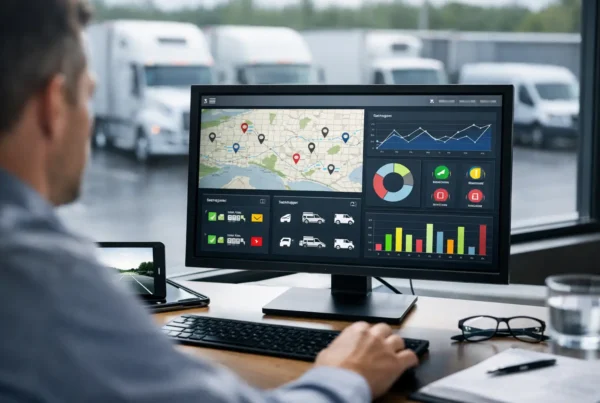
Fleet data has little value if it creates more administration. A useful dashboard should answer practical questions quickly: which vehicles have the poorest fuel economy, where is idling highest, which routes generate avoidable miles, and which trends need attention this week?
Different people need different views. An operations director may want cost and utilisation trends, while a transport manager needs daily exceptions and a supervisor needs evidence for driver debriefs. Configurable reporting makes it possible to focus each role on the measures they can influence.
Fleet Software Solutions works with operators to turn telematics, camera and vehicle data into this type of practical management information. The objective is measurable improvement, not a dashboard that looks impressive but is rarely used.
10. Review results, then refine the operating process
Fuel reduction is not a set-and-forget project. Review performance at a regular interval, compare it against the original baseline and account for changes in workload, seasonality, weather and fleet composition. A sudden increase in winter idling, for example, needs a different response from an ongoing rise in unnecessary mileage.
Share the outcome with drivers and managers. If a route change has reduced miles, or a team has improved its average fuel economy, make that visible. It reinforces the connection between everyday decisions and business results.
The most sustainable savings come when fuel efficiency becomes part of normal fleet management: plan accurately, maintain vehicles properly, support drivers with fair evidence and act on exceptions before they become expensive habits. Start with the data that exposes one repeatable source of waste, fix the operational cause and let the improvement build from there.