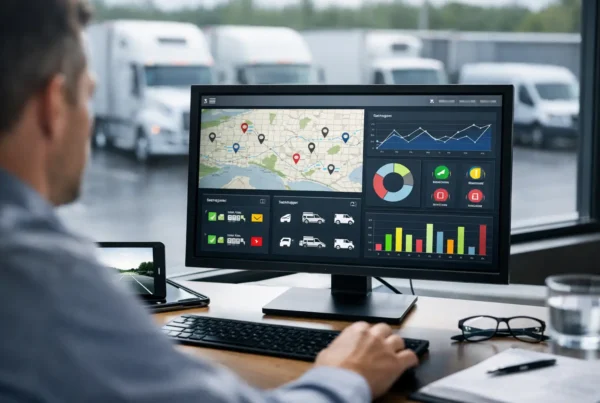

A monthly mileage claim should not require a pile of handwritten notes, map checks and manager follow-ups. Yet for many businesses, that is still the reality – particularly where employees use their own cars for work or where fleet drivers make a mixture of business and private journeys. Mileage capture software replaces estimates and retrospective administration with an accurate record of when, where and why journeys took place.
For fleet, transport and operations managers, the immediate benefit is less time chasing information. The bigger opportunity is better control over travel costs, grey fleet risk, customer visit activity and the quality of data used across the business. The right system should make mileage records easier for drivers to complete and more useful for the people responsible for approving claims, managing vehicles and improving performance.
Why manual mileage processes create avoidable risk
Spreadsheets are familiar, but they depend on people remembering every journey, entering the right postcode and applying the correct mileage rate. When claims are submitted weeks after a journey, details are easily missed. A short detour to collect parts, an extra customer visit or a private journey between appointments may not be recorded accurately.
That creates a cost issue, but it also creates a management problem. Finance teams have limited evidence behind a claim. Fleet teams cannot see the difference between planned and actual travel. Managers spend time querying totals rather than resolving exceptions. Where employees drive their own vehicles for work, incomplete mileage data can also make it harder to maintain a clear view of grey fleet activity.
Manual processes are not always wrong. A small business with occasional business travel may find a simple claim form sufficient. The balance changes when travel is frequent, the workforce is dispersed, claims are high in volume or a business needs reliable evidence for internal policy and HMRC record-keeping. At that point, administration becomes a recurring operational cost rather than a minor task.
What mileage capture software should do
Effective mileage capture software records journey information automatically or with minimal driver input, then turns that information into a clear, reviewable mileage log. Depending on the operating model, data may come from a vehicle tracking device, a driver app, an odometer reading or a combination of sources.
The strongest approach is not simply to collect location points. It is to give drivers a practical way to classify a journey as business, commuting or private, add a journey purpose where required and correct genuine exceptions without losing the audit trail. A visit to a customer, a route to a depot or travel between sites should be easy to identify. If a driver changes a classification, managers should be able to see what changed and why.
For a company fleet, automatic journey capture can sit alongside wider telematics data. This gives managers a more complete picture: mileage, route taken, vehicle utilisation, idling, driving behaviour and arrival times can all be reviewed from the same operational view. For grey fleet users, a mobile-led process is often more appropriate, provided it is simple enough to gain consistent adoption.
The details matter. A system that captures every trip but makes it difficult to distinguish private use from business travel will still leave work for the driver and approver. Equally, a solution that requires staff to manually start and stop every journey may be unsuitable for a busy field workforce. The best fit depends on how people travel, the number of vehicles involved and the level of evidence the business needs.
Better records support better decisions
Mileage claims are often treated as a finance task. In reality, reliable journey data is useful to several teams.
Operations can review whether engineers are covering sensible territories, whether customer appointments are being reached as planned and where travel time is affecting capacity. A pattern of long cross-region journeys might indicate a scheduling issue, a gap in local resource or an opportunity to reorganise work allocation.
Fleet managers can compare business mileage against vehicle use and servicing plans. Accurate mileage readings help avoid servicing based on guesswork and can support more informed replacement decisions. If certain vehicles consistently cover low business mileage, the business may be paying to operate capacity it does not need.
Health and safety teams gain a clearer understanding of work-related driving. This is particularly relevant for grey fleet, where employers need proportionate visibility of employees who drive for work without creating unnecessary administration. Mileage records can help identify regular drivers, prompt appropriate checks and support a more consistent policy.
Finance benefits from cleaner claims and fewer disputes. Rather than approving a total with limited context, approvers can review a journey record, its purpose and its classification. That reduces the likelihood of overclaims while making legitimate claims quicker to process.
Make driver adoption part of the plan
Technology only improves records if people use it properly. Drivers will understandably question a system that appears to monitor them outside work, creates extra tasks or provides no visible benefit. A clear rollout should explain what is being captured, when it is captured, who can access it and how private travel is handled.
For many organisations, privacy settings are central to acceptance. A driver may need a simple private mode for personal use of a company vehicle, or the ability to classify journeys through an app. The policy must be clear, consistently applied and aligned with the organisation’s data protection responsibilities. Capturing more data than the business genuinely needs can undermine trust and add complexity.
Training should focus on the few actions that matter: checking journey classifications, adding a reason for business travel where needed and resolving exceptions promptly. Avoid turning a useful system into another lengthy compliance task. If managers want drivers to act each week, they must also ensure the process takes minutes rather than hours.
Choosing mileage capture software for your operation
The right solution should reflect your fleet mix and working practices, not force every driver into the same process. Before selecting a platform, establish where your mileage data currently comes from, who checks it and which decisions are being delayed by poor information.
Ask practical questions such as:
- Can the system separate business, private and commuting mileage in a way that suits our policy?
- Will it work for both company vehicles and employees using their own cars?
- Can drivers and managers correct mistakes while retaining a clear audit history?
- Does it provide reports that finance, fleet and operations teams can actually use?
- Can it sit alongside existing vehicle tracking, cameras or reporting rather than creating another disconnected system?
Device flexibility is especially valuable for mixed fleets. A business may already have tracking hardware fitted to vans, while needing an app-based process for occasional drivers or employees in personal vehicles. A single reporting environment can reduce administration and give decision-makers a more consistent view of business travel.
Reporting should also be considered early. Standard monthly mileage totals may be enough for one organisation, while another needs reports by cost centre, employee, vehicle, project or customer contract. Configurable dashboards and scheduled exception reports can help managers focus on what needs attention, rather than searching through raw journey data.
Measure the commercial case, not just the claims process
A mileage system is easier to justify when it is measured against operational outcomes. Start with the current effort involved in collecting, checking and correcting claims. Include the time spent by drivers, line managers, finance and fleet administrators. Then consider the hidden costs: delayed claim processing, disputed mileage, weak visibility of grey fleet activity and missed opportunities to improve routing or vehicle use.
The return may come from several small improvements rather than one dramatic saving. A reduction in overclaimed mileage, fewer hours spent reconciling spreadsheets, more accurate servicing forecasts and improved scheduling can all contribute. Where mileage capture is integrated with telematics, the value can extend to customer service through more reliable arrival information and better evidence when a visit is questioned.
Implementation should begin with a pilot group that represents real working conditions. Include regular drivers, occasional business users and managers who approve claims. This quickly exposes policy gaps, confusing journey categories or reports that need tailoring before a wider rollout. It also gives the business credible internal examples of time saved and issues resolved.
Fleet Software Solutions approaches mileage capture as part of a broader operational picture. The objective is not to generate more data for its own sake, but to give fleet and operations teams accurate information they can use to control costs, support drivers and make better decisions.
A well-designed mileage process should fade into the background of the working day. Drivers should be able to confirm journeys without frustration, managers should see exceptions without chasing paperwork, and the business should have dependable records when a question is asked. That is when mileage data stops being an administrative burden and starts supporting a more controlled, profitable operation.