
A customer rings asking where their engineer is. Your dispatcher checks three different systems, phones the driver, gets voicemail, and gives the customer a vague arrival window that may or may not hold. That is usually the moment businesses start asking, what is vehicle tracking, and whether it could remove the guesswork from day-to-day fleet operations.
At its simplest, vehicle tracking is a telematics system that shows where a vehicle is, where it has been, and how it is being used. A tracking device installed in a van, car, lorry or plant item sends location and vehicle data to software, allowing fleet managers and operations teams to see activity in near real time and review historical journeys later.
For most businesses, though, the value is not the dot on a map. It is the control that comes with it. When you can see vehicle movements clearly, you can answer customer queries faster, reduce wasted mileage, improve driver accountability, and make better decisions about productivity, safety and cost.
What is vehicle tracking and how does it work?
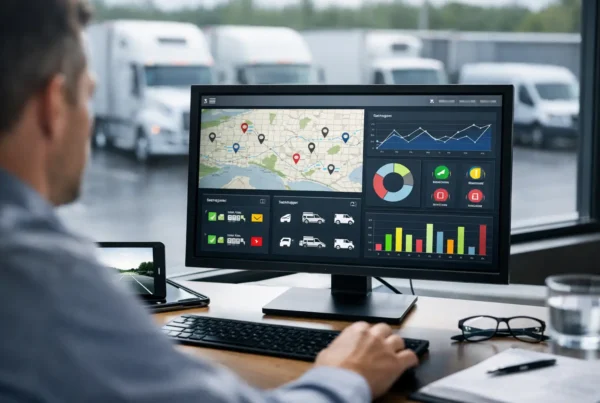
A vehicle tracking system usually combines three elements: a device fitted to the vehicle, satellite positioning technology such as GPS, and a software platform that turns raw data into usable information. The device records location, movement and, depending on setup, data such as speed, ignition status, idling time and route history. That information is then transmitted to a central platform where authorised users can view live maps, alerts, dashboards and reports.
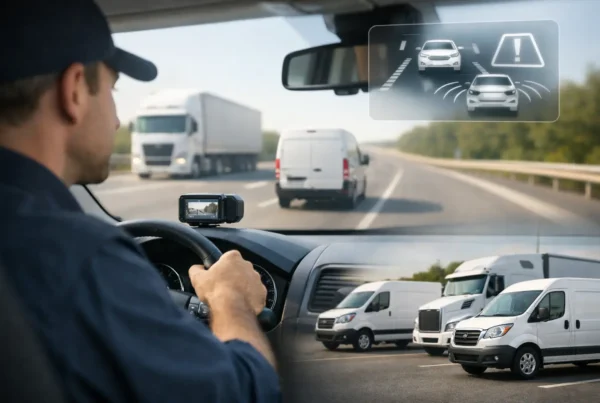
The principle is straightforward. The practical detail depends on the operation. A single-site SME running ten service vans will not necessarily need the same setup as a national operator managing mixed vehicles, grey fleet drivers and specialist assets across several regions. Some businesses want basic visibility and mileage capture. Others need integrated cameras, driver behaviour reporting, geofencing, compliance support and tailored management information.
That is why the better question is often not just what is vehicle tracking, but what should it do for your business.
What data does a vehicle tracking system collect?
Most systems record core movement data such as vehicle location, trip start and stop times, journey history and total mileage. From there, the picture can become much richer. Depending on the device and vehicle type, businesses may also see speed events, harsh braking, acceleration, idling, unauthorised use, geofence entries and exits, and in some cases engine or vehicle diagnostics.
This matters because fleet decisions are rarely made on location alone. If a driver is consistently idling for long periods, taking inefficient routes or regularly speeding, the issue is not simply where the vehicle is. It is how that behaviour affects fuel spend, maintenance, customer service and insurance risk.
For managers under pressure to do more with the same headcount, the best systems reduce admin rather than add to it. Automated reports, configurable alerts and role-specific dashboards are often more valuable than an endless stream of raw data. Information only creates value when someone can act on it.
Why businesses use vehicle tracking
The commercial case for vehicle tracking usually starts with visibility, but it rarely ends there. Once businesses can see what is really happening on the road, they tend to find opportunities across cost control, service delivery and risk reduction.
Customer service is one of the quickest wins. If your team can see the nearest available driver, current ETA and actual route progress, they can communicate with customers more confidently and allocate work more effectively. That matters whether you run field engineers, delivery vans, welfare vehicles or time-critical maintenance teams.
Fuel savings are another common driver. Excessive idling, unnecessary mileage and poor route discipline are expensive habits, especially across a fleet. Vehicle tracking helps identify where fuel is being wasted and supports more targeted driver conversations. It does not eliminate fuel costs on its own, but it gives managers evidence rather than assumptions.
There is also a strong health and safety case. If a business needs to understand speeding trends, out-of-hours use, route compliance or the movements of lone workers and remote teams, telematics provides a much clearer audit trail. In the event of a complaint, collision or disputed job attendance, accurate journey data can be extremely useful.
For many UK operators, insurance impact is part of the equation as well. Better risk visibility, supported incident review and stronger driver management can help improve the overall insurance position. That does not mean every insurer will respond in the same way, but reliable data puts businesses in a stronger place than guesswork.
Vehicle tracking is not just for transport fleets
One common misconception is that tracking only suits logistics businesses with dozens of lorries. In reality, it is used across a wide range of sectors and fleet sizes. Utilities, construction, facilities management, healthcare, security, local services and trade businesses all use vehicle tracking for different operational reasons.
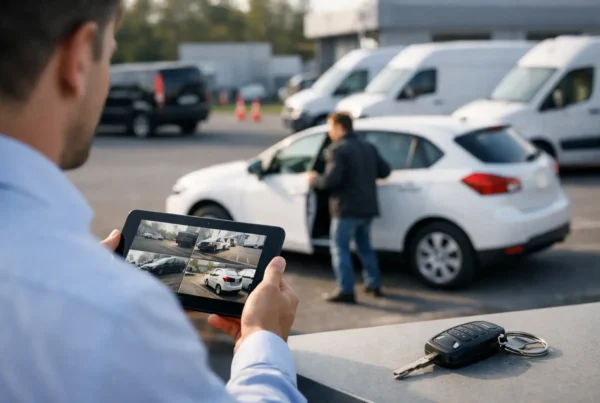
A plumbing and heating firm might use it to improve job allocation and prove attendance. A housing provider may need better oversight of mobile teams and lone workers. A construction business could track both vans and non-powered assets to reduce losses and improve utilisation. A company using employee-owned vehicles for business travel may focus more on mileage capture and grey fleet governance.
The technology is flexible, but the use case needs to match the operation. The right solution is rarely the one with the longest feature list. It is the one that solves the actual operational problem without creating unnecessary complexity.
What vehicle tracking does not do
Vehicle tracking is powerful, but it is not a cure-all. It will not automatically improve driver behaviour unless the business reviews the data and acts on it. It will not fix poor scheduling if planning processes are weak. It will not create savings if managers are too stretched to use the system properly.
This is where implementation and support matter. Fleets often get better results when telematics is introduced as part of a wider operational improvement effort, not simply as hardware fitted to vehicles. Drivers need clear communication. Managers need reports that are relevant. Senior stakeholders need to understand what success looks like, whether that is fewer insurance claims, lower fuel spend, faster response times or improved compliance.
There can also be cultural concerns. Some drivers worry that tracking is about surveillance rather than support. If the rollout is handled badly, resistance is understandable. Businesses generally get better adoption when they explain the purpose clearly: protecting staff, improving planning, reducing disputes and making the working day more manageable.
Choosing the right system for your fleet
If you are evaluating options, start with operational outcomes rather than technology jargon. Ask what your team needs to see, who needs access, what reports are currently missing, and where time or money is being lost today.
For some fleets, a straightforward live tracking platform with basic reporting is enough. For others, value comes from combining tracking with vehicle cameras, asset tracking, grey fleet management or lone worker protection. A mixed operation may need different device types across different vehicle classes, plus tailored dashboards for operations, compliance and senior leadership.
Hardware choice matters, but software usability matters just as much. If the platform is difficult to navigate or the reporting does not reflect how the business actually runs, adoption will suffer. Likewise, installation quality, support responsiveness and consultancy should not be treated as secondary. A cheaper system can become expensive quickly if it fails to deliver usable information or does not fit the fleet.
This is one reason many organisations prefer a consultative approach. Providers such as Fleet Software Solutions work with businesses to identify the best-fit setup rather than forcing every fleet into the same model. That tends to produce a stronger business case and a smoother rollout, especially where fleets have a mix of vehicles, camera requirements or operational priorities.
Is vehicle tracking worth it?
For most fleets, the answer depends on whether the business is prepared to use the data well. If you only want occasional reassurance that vehicles are moving, the return may feel limited. If you want tighter control over service delivery, stronger evidence in disputes, better driver management and clearer operational reporting, the value can be significant.
The strongest returns often come from small improvements repeated across the fleet: a reduction in idling here, a faster response time there, fewer unnecessary miles, better recovery of lost assets, more accurate mileage records and less time spent chasing drivers for updates. None of those changes are dramatic on their own. Together, they can materially improve margin and reduce operational friction.
Vehicle tracking is best understood as a management tool, not a map. Used properly, it helps businesses replace assumptions with evidence and react less often from a position of uncertainty. If your fleet operation still relies on phone calls, paper trails and educated guesses, that is usually the clearest sign that tracking could do more than show location – it could give you better control of the business behind the wheel.